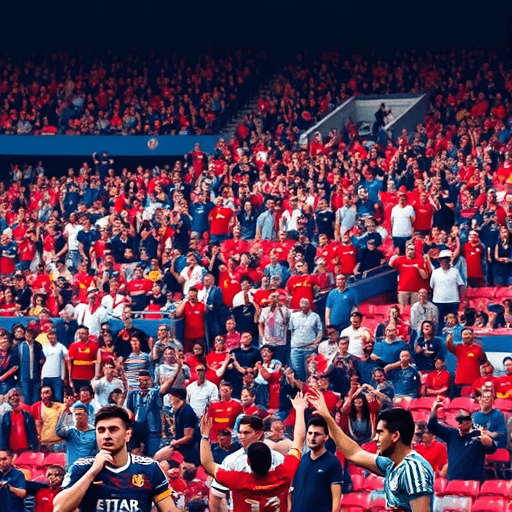
In today’s hyperconnected stadiums, the question is no longer if fans can influence the matchday atmosphere, but how to harness fan-generated data to create a truly immersive real-time experience. By systematically gathering live fan stats—from smartphone-based player heatmaps to social media sentiment—and feeding them into an instant analytics engine, clubs can adjust tactics on the fly, customize in‑stadium displays, and deliver personalized content that keeps fans engaged from kickoff to final whistle.
1. Defining the Data Capture Strategy
Before any data can be analyzed, it must be collected in a structured, reliable way. A well‑designed capture strategy aligns with both the club’s technical stack and the fans’ preferred devices.
1.1 Identify Key Fan‑Sourced Metrics
- Player Movement Heatmaps: Using location data from fans’ smartphones or wearable tags in the stadium, teams can generate near‑real‑time heatmaps of player positions.
- Pitch‑Side Reaction Scores: Crowd microphones or acoustic sensors gauge excitement levels in specific zones.
- Social Media Sentiment: Live tweets, posts, and emojis filtered by match hashtags reveal shifting supporter moods.
- Real‑Time Polls & Gamification: Fans vote on tactical decisions (e.g., “Should we switch to a 4‑3‑3?”) via a mobile app, providing instant feedback.
- In‑Stadium Interaction Logs: NFC tap‑ins, QR scans, and interactive screens record engagement points for later analysis.
1.2 Design Data Collection Channels
Each metric requires a specific capture method. Mobile app SDKs, Wi‑Fi triangulation, and Bluetooth Low Energy (BLE) beacons form the backbone of fan‑sourced data pipelines.
- App SDKs: Embed APIs that push player movement and poll responses directly to the club’s servers.
- Edge Gateways: Deploy local nodes near the pitch to collect acoustic and beacon signals, reducing latency.
- Social Media API Hooks: Use Twitter’s filtered stream and Instagram’s Graph API to harvest match‑related content in real time.
2. Building the Real‑Time Data Pipeline
Collecting data is only half the battle. A robust pipeline transforms raw fan input into actionable insights.
2.1 Ingestion Layer
Utilize a message broker (Kafka, RabbitMQ) to queue fan events as they arrive. Each event includes metadata—timestamp, fan ID hash, device type, and geolocation—to enable fine‑grained analysis.
2.2 Validation & Enrichment
- Data Quality Checks: Remove duplicates, filter out noise (e.g., accidental sensor spikes), and flag outliers.
- Geo‑Enrichment: Map fan positions to stadium zones, converting raw GPS coordinates into “East Stand” or “Pitch‑side” labels.
- Sentiment Scoring: Run NLP models on text feeds to assign sentiment scores to each fan message.
2.3 Real‑Time Analytics Engine
Deploy a streaming analytics platform (Apache Flink, Spark Structured Streaming) that aggregates fan metrics every second.
- Heatmap Generation: Continuously update player movement maps with fan‑derived positional data.
- Emotion Radar: Overlay acoustic and sentiment data onto stadium zones, creating an “emotion radar” visual.
- Decision Scores: Compute weighted averages of poll votes to surface the most popular tactical suggestion.
2.4 Visualization & Dashboard Layer
Integrate with Power BI or Tableau dashboards that feed into in‑stadium displays and coaching consoles. Visuals should update in under two seconds to maintain relevance.
3. Acting on Fan‑Generated Insights
Data only becomes valuable when it triggers real actions. Below are actionable use‑cases that turn fan statistics into tangible matchday enhancements.
3.1 Tactical Adjustments
Coaches receive instant alerts when fan sentiment indicates a desire to switch formations. The coaching staff can review heatmap data and decide whether to adapt strategies during the game.
3.2 Dynamic In‑Stadium Content
Emotion radar feeds can control LED displays or soundscapes: a surge in excitement at the East Stand might trigger a 3‑second “cheer” audio clip for the home team.
3.3 Personalized Fan Experiences
Players’ on‑field movement heatmaps, derived from fan devices, can be displayed on personal screens in the fan lounge or streamed to individual mobile apps, offering a unique perspective that fans only see in real time.
3.4 Post‑Match Engagement
Aggregate fan polls and sentiment scores into a post‑match report that highlights what the supporters felt during key moments. This content can be used for social media, newsletters, or the club’s website.
4. Ensuring Privacy and Security
Fan-generated data is sensitive. Clubs must adhere to GDPR and local privacy laws while maintaining trust.
- Data Anonymization: Hash fan IDs and strip personally identifying information from all feeds.
- Consent Management: Implement in‑app prompts that let users opt‑in to data sharing for live match analytics.
- Secure Transmission: Use TLS 1.3 for all data channels and encrypt data at rest in cloud storage.
5. Scaling the Workflow for Major Events
During tournaments, data volumes surge. A scalable architecture using serverless functions (AWS Lambda, Azure Functions) and auto‑scaling Kafka clusters ensures that the pipeline remains robust under load.
5.1 Edge Computing for Low Latency
Deploy edge nodes at stadiums to preprocess data locally before sending aggregates to central analytics, cutting latency from 500 ms to 100 ms.
5.2 Multi‑Region Deployment
Host analytics in multiple geographic regions to reduce bottlenecks and provide redundancy, ensuring continuity during high‑traffic periods.
6. Measuring Success
Quantify the impact of fan‑generated data through KPI dashboards that track:
- Average fan engagement time per match
- Number of tactical adjustments influenced by fan input
- In‑stadium display interaction rates
- Social media sentiment shift before and after key match events
These metrics inform continuous improvement, helping clubs refine data capture methods and analytics models over time.
Conclusion
By weaving fan-generated data into the fabric of matchday operations—capturing live stats, processing them instantly, and acting on insights—clubs can create a responsive, immersive experience that delights supporters and gives teams a competitive edge. The workflow outlined above offers a practical roadmap for turning raw fan chatter into decisive on‑field and off‑field actions, setting the standard for the next era of sports analytics.