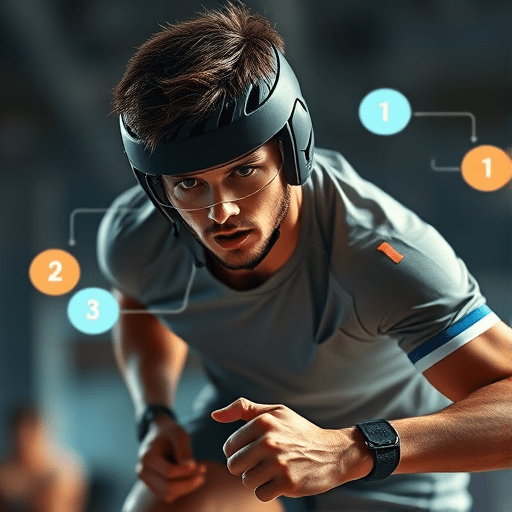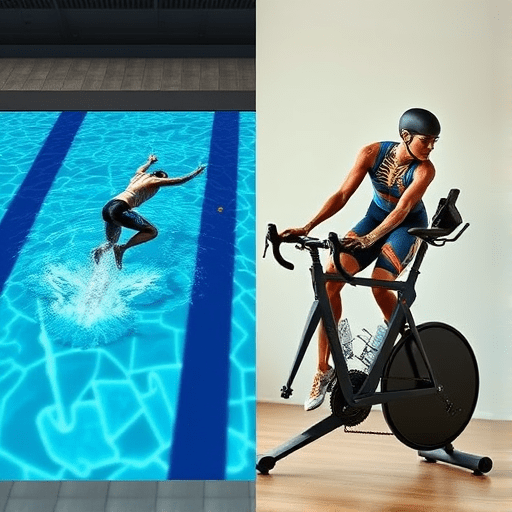
The most detailed bike fit of your career used to require a plumb line, a goniometer, and a lot of guesswork. But for swimmers — a group with uniquely imbalanced shoulders, hypermobile joints, and a deep reliance on latissimus dorsi recruitment — traditional fitting methods often miss the real story. Enter the new wave of AI bike fit for swimmers, where swim stroke motion capture is used to set bike posture with a precision that static measurements alone cannot match. By analyzing how you move in the water, AI-driven systems can now predict how your body will react on the saddle, reducing injury risk and unlocking sustainable power.
This isn’t just about transferring physiological numbers. It’s about understanding the entire kinetic chain — from hand entry in the pool to pedal stroke on the road — and using that data to create a bike fit that works with your swimming-adapted anatomy, not against it.
The Missing Link in Swim-to-Bike Injury Prevention
Triathletes and swim-focused cyclists have always known that the bike feels different after a hard swim. But the reason is rarely discussed in traditional bike fitting. Swimmers often develop anterior shoulder tightness, thoracic kyphosis, and a powerful but potentially overactive lat complex. When they transition to the bike, they tend to pull themselves onto the handlebars using that same lat dominance, which collapses the chest and forces the neck into extension. The result? Lower back pain, shoulder impingement, and numbness in the hands — all classic complaints that a standard fit rarely solves.
Why Traditional Bike Fits Miss Swimmer-Specific Imbalances
Standard bike fitting protocols typically measure joint angles, flexibility, and leg length, then make static adjustments. But those protocols were designed for general cyclists, not for athletes whose sport has literally reshaped their posture. A swimmer’s shoulder range of motion, pelvic tilt, and even breathing pattern are influenced by thousands of hours of stroke work. Static measurements can’t capture how a swimmer’s body dynamically responds to load, especially when both the upper and lower body are engaged simultaneously.
That’s where motion capture changes everything. Instead of seeing the athlete as a static object, AI-driven systems watch them move — first in the pool, then on the trainer — and identify asymmetries that are invisible to the eye.
What Swim Stroke Motion Capture Reveals
High-speed cameras and inertial sensors can track stroke kinematics with millimeter-level accuracy. The system captures shoulder rotation, elbow angle, hand path, and trunk twist during freestyle, breaststroke, or butterfly. But the real magic happens when that data is processed by machine learning algorithms that recognize patterns of compensation. For instance, a swimmer who consistently dips their hip on one side to avoid a restricted shoulder will show that same compensation on the bike — unless the fit is adjusted to correct, rather than accommodate, the imbalance.
By feeding swim stroke data into a bike fit engine, AI can identify which side of the body is more likely to overwork during a long ride. It can flag a latissimus dorsi that’s firing earlier in the pull, which might be pulling the pelvis anteriorly on the same side when you’re in aero position. This level of insight is the future of injury prevention for multi-sport athletes.
How AI Translates Stroke Mechanics into Saddle and Cockpit Adjustments
The core premise of this new approach is simple: your swim stroke is a blueprint for your bike posture. If your right shoulder is stronger and more stable during the pull, your bike fit can reflect that by slightly shifting saddle pressure and bar height to keep your spine neutral. If your trunk rotation is limited on one side, AI can recommend a shorter reach or a slightly more upright aero position to protect your lower back.
Mapping Shoulder Rotation to Handlebar Reach
One of the most common issues swimmers face on the bike is excessive reach to the handlebars. In the pool, the shoulder is in a forward and downward position, with the lats eccentrically controlling arm movement. On the bike, a long reach puts the shoulders in a similar forward position but without water to support the limb. This can overload the rotator cuff and the anterior joint capsule. AI bike fit systems using swim stroke motion capture can compare the swimmer’s active shoulder extension range (from the stroke) against their passive flexibility, and then calculate a handlebar reach that keeps the shoulder in a safe zone — typically 10 to 20 millimeters shorter than a standard fit might suggest.
The system can also adjust stack height based on thoracic mobility. Swimmers with a pronounced thoracic kyphosis (the “swimmer’s hunch”) may need their bars raised to avoid over-rotating the neck. The AI model learns from the swimmer’s ability to maintain a neutral spine during the stroke, then applies that same neutral spine logic to the bike fit.
Pelvic Stability and Power Transfer
In swimming, the pelvis is the anchor for the entire stroke. If the pelvis drifts, the stroke falls apart. The same is true on the bike. A swimmer with strong erector spinae but weak deep core muscles will often show a visible anterior pelvic tilt during a sprint set. That pattern carries directly into the bike, where it manifests as rocking hips and a loss of power to the pedals.
Using motion capture from the swim stroke, AI can assess how often the pelvis moves outside a neutral band. It then recommends a saddle setback and tilt that stabilizes the pelvis, even under fatigue. Some systems even suggest cleat shimming when a unilateral hip drop is detected, based on the asymmetry found in the swim stroke.
The Science You Can’t See: Capturing the Full Kinetic Chain
One of the most exciting developments in 2026 is the use of continuous, unobtrusive motion capture — think sensor-lined swimwear or poolside camera arrays that don’t require markers. This allows coaches and fitters to collect stroke data during actual training sessions, not just in a one-off lab test. The result is a live profile that updates as the swimmer’s form changes over the season.
That same AI model can then generate a dynamic bike fit recommendation that evolves with the athlete. If a swimmer is recovering from a shoulder injury and their stroke shows a cautious pull pattern, the bike fit can be temporarily modified to reduce handlebar pressure. When the stroke returns to full power, the fit can be returned to a more aggressive aero posture. This closed-loop approach is the architectural shift that injury prevention has long needed.
What a Modern AI Bike Fit Visit Looks Like
Forget the cleat blocks and plumb bobs for a moment. A future-forward AI bike fit for swimmers is a session that starts at the pool deck. After a 15-minute swim set with captured 3D motion data, you move to the bike lab. There, the fit system overlays your stroke mechanics onto a 3D model of your cycling position. A display shows your shoulder angle in the pool versus your shoulder angle on the bike. It highlights where your lat tightness forces your wrists to compensate. It even predicts which muscles will fatigue first during a 40K time trial.
The fit itself becomes a conversation between you, the fitter, and the AI. You might be asked to adjust your pedal stroke slightly to match the internal cadence your body prefers from swimming. You might see a live muscle activation heat map that shows how your left glute is working harder because your right lat is pulling the ribcage down. Adjustments are made in real time, and the AI continuously recalculates the optimal posture based on your unique swim stroke signature.
The Bottom Line for Coaches and Athletes
For too long, swim and bike have been treated as separate sports with separate biomechanics. But for the athlete who races triathlons or simply trains in the pool before heading out on the road, the connection is unavoidable. Every stroke you take influences how you sit on the saddle. Every lap you swim leaves a trace — a trail of compensations, strengths, and asymmetries that you carry with you onto the bike.
Using AI bike fit for swimmers with swim stroke motion capture is not just a clever use of technology. It is a proactive, data-driven approach to injury prevention that addresses the root cause rather than chasing symptoms. As this technology becomes more accessible, the athletes who adopt it will not only feel better on the bike — they will ride longer, stronger, and smarter, with a posture that honors the swimmer’s body while optimizing the cyclist inside.
In the end, the pool and the road are parts of the same athletic story. With AI and motion capture, that story can finally be read in full — and adjusted before a small imbalance becomes a season-ending injury.