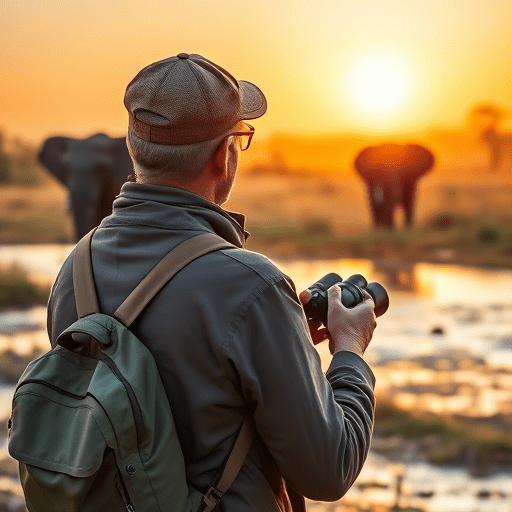
The last thing any responsible traveler wants is to pay for a holiday that actively harms the creatures they came to admire. Yet “greenwashed” wildlife tours have become an industry-wide problem, blending clever marketing with carefully edited images to convince well-meaning tourists that a truly exploitative operation is a sanctuary. Spotting greenwashed wildlife tours: a 5-point checklist can save you from funding animal abuse and help ensure your money supports authentic restoration work. With new “eco-tourism” labels appearing faster than independent audits can keep up, the need to verify conservation claims before booking has never been more urgent.
The challenge is that greenwashing has evolved. Operators now borrow the exact language of genuine conservationists—biodiversity, habitat protection, rewilding—and pair it with professional drone footage that makes even a cramped pen look like untouched wilderness. AI-generated imagery, deepfake animal encounters, and polished influencer partnerships have made it dangerously easy to hide the truth behind a pixel-perfect website. That is why a methodical, evidence-based checklist is your most reliable travel companion for 2026 and beyond.
Why Greenwashing Thrives in an Age of AI and Viral Eco-Tourism
Wildlife tourism is booming, and so is the appetite for feel-good stories. Tour operators know that a video of a rescued elephant or a rehabilitated sea turtle drives bookings far more effectively than science-heavy reports. The rise of generative AI has turbocharged this trend: fabricated photos of orphaned cubs, computer-generated “release” scenes, and untraceable certification logos can be assembled in minutes. Meanwhile, the on-the-ground reality—a long-term rescue program with no public-facing flash—often lacks the viral appeal that dominates social feeds.
This doesn’t mean every wildlife tour operator is deceiving you. Many do exceptional work with limited staff and budget. But because the industry is largely self-regulated, verifying conservation claims before booking is a personal responsibility. A few minutes of research can separate an authentic rehabilitation center from a roadside “sanctuary” that breeds animals for public handling.
Point 1: Scrutinize the Certifications and Accreditation Sources
Start by asking which organization, outside the tour company itself, has verified their conservation claims. Genuine certifications come from third-party bodies with published standards, unannounced inspections, and a transparent complaint process. Be wary of badges that seem invented, such as a “Green Wildlife Approved” label with no governing body. When in doubt, visit the certifier’s website and look for the operator’s name listed on their current member directory.
For 2026, pay special attention to “meta-certifications” that bundle multiple vague criteria. A tour might boast about being “compliant with international welfare standards” without specifying which standards, who enforces them, or when the last inspection actually occurred. A half-hour spent researching the accrediting organization is the simplest way to avoid falling for a logo that was designed in the same afternoon as the website.
Point 2: Follow the Money with Specific Questions
Conservation work is expensive. A credible operator should be able to explain, in clear numbers, how your tour fee contributes to projects beyond their daily operations. Ask questions that require concrete answers:
- What percentage of each booking directly funds conservation fieldwork, and how is that figure calculated?
- Which external organizations or academic partners receive that funding? Are their names listed publicly?
- Is the operator financially transparent about salaries, land costs, and veterinary care?
You are not looking for audited financial statements of every small operator, but you should notice the difference between a tour site that proudly mentions its partnership with a respected local university and one that simply states “we reinvest in local conservation.” If the only answer is a vague waving at a nonprofit, that is a warning sign. Legitimate projects usually have no problem sharing at least one named partner or collaborator because they are proud of the work and want you to investigate further.
Point 3: Demand Evidence That the Animals’ Wildness Is Protected
A central question separates a wildlife tour from a wildlife attraction: does the organization actively preserve the natural behavior and independence of the animals, or does it depend on keeping them habituated to human contact? Check the wording of their claims. Phrases like “our rescued animals are used to visitors” often mean the animals were deliberately conditioned to tolerate people for photo opportunities. In contrast, a conservation-focused tour explains how they keep viewing distances, noise levels, and group sizes carefully controlled so that the animals do not change their natural routines.
Ask whether animals are ever released back into the wild and, more importantly, whether those releases are documented with scientific papers or follow-up reports. Some operations exploit the word “release” to describe simply returning a hand-raised animal to an enclosure. Verify that the tour does not offer rides, swimming with animals, hugging, or anything that requires taming. The best encounters are the most respectful—and often the least shareable on social media.
Point 4: Hunt for Independent Reviews, Not Just Testimonials
Website testimonials are easily cherry-picked. Instead, search for the operator’s name on multiple independent platforms, from well-known review sites to environmental forums and regional travel blogs. Look for comments from visitors who mention specifics: the name of a guide, a particular research project, a veterinary practice, or a conservation success story. A pattern of vague reviews that read like copywriting is a sign that the comments may be curated.
For a tech-aware reader, this is also the moment to use AI detection tools. Run suspicious “rescue story” passages through a reverse image search to see if the same photos appear on unrelated stock sites or gallery collections. In recent years, several high-profile “sanctuary” campaigns were exposed simply because their emotional photographs were traced back to a digital asset marketplace. This step takes only a few minutes and is one of the most effective ways to verify conservation claims before booking a tour.
Point 5: Watch for Hands-On Encounters Priced as Premium “Experiences”
There is an uncomfortable pattern in the tourism industry: the more exploitative the interaction, the higher the price tag. Entering an enclosure to feed a big cat, walking with captive elephants, or bathing a baby bear feels intimate but is typically a clear indication that an animal’s welfare has been sacrificed for revenue. Genuine conservation tours rarely offer these opportunities because close contact compromises the animal’s fitness for survival in the wild.
Use your own comfort as a compass. If a tour promises you will “touch, feed, and walk alongside” wildlife, ask why a truly wild animal would ever tolerate that behavior. Even if the operator claims to be a rescue facility, the long goal of any credible rehabilitation program is to observe the animal from a respectful distance and ultimately facilitate its return to a natural habitat. The absence of that goal points toward a breeding operation or a commercial attraction pretending to be a conservation project.
Turning the Checklist into a Pre-Booking Habit
Before you complete a booking, force yourself through these five points one final time. The process is not about finding a perfect entity—almost every tour has logistical compromises—but about detecting the difference between transparent imperfection and outright deception. Print out the operator’s claims in a separate tab, then compare them with independent sources, third-party maps, and local news coverage. If the only proof appears on the operator’s own social media, your suspicion is justified.
Also consider whether the tour operator restricts group sizes, employs local field biologists, and supports community involvement beyond the immediate vicinity of the animals. These broader signals are powerful indicators of a genuine commitment to conservation rather than a short-term revenue opportunity. Conservation is long, messy, and largely unspectacular work; if a tour company presents it as a constant stream of cuddly moments, you are probably looking at a greenwashed product.
Conclusion
Spotting greenwashed wildlife tours is not about cynical skepticism toward every business, but about developing a sharper eye for the disconnect between pretty marketing and verifiable impact. By auditing certifications, following the funds, examining photographic claims, researching independent reviews, and avoiding hands-on encounters, you can confidently protect your money and the animals you travel to celebrate. The five-point checklist above is a practical tool that turns vague hopes into clear, checkable questions—and that is exactly the kind of care that real conservation projects deserve.