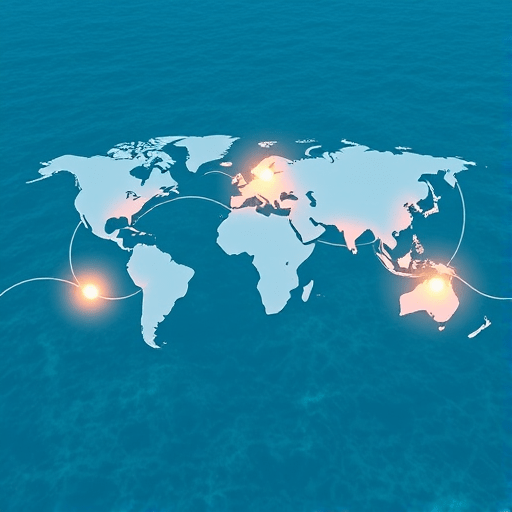
The phrase “headquarters” is quietly disappearing from startup org charts. In 2026, the most resilient young companies are not the ones with a prestigious office zip code; they are the ones that can run a startup across 3 ecosystems without a headquarters and still deliver fast, compliant, and emotionally coherent work. If you are moving between three very different regional ecosystems — for example, a sales pod in the Middle East, an engineering pod in Central Europe, and a support pod in Southeast Asia — the old model of “one core site, two satellites” collapses under time-zone friction, payroll complexity, and data-residency rules.
The good news: you do not need to invent a new management science. You need a tactical operating system that treats each ecosystem as an autonomous hub with a clear mandate. Below is a 2026-grade playbook for making that split work.
Step 1: Assign Each Ecosystem a Single Primary Function
Do not try to make every regional office a miniature version of the entire company. The fastest way to fail across three ecosystems is to staff sales, engineering, and support together in each region. Instead, give each location one core mandate. This is the tactical heart of a headquarters-less model: every ecosystem owns a function, and the other two ecosystems know exactly who to trust for that function.
The Sales Ecosystem: Own Relationships and Time Zones
Your sales pod should live inside the regional time zone where your buyers are most active, not where the founders happen to sleep. In a three-pod setup, the sales region handles all first-response commercial conversations, pricing negotiation, and localized product demos. A key 2026 shift: sales teams are now measured less on number of calls and more on how accurately they capture local procurement requirements, especially in ecosystems with fast-changing AI procurement rules.
The Engineering Ecosystem: Own the Delivery Rhythm
Engineering should have full authority over code architecture, CI/CD, and the technical roadmap. The other pods must not treat engineering as a ticket-taker. One practical way to enforce this: engineering owns the on-call schedule and the feature release calendar, and they publish a weekly “what is landing” note. That autonomy removes the need for a central headquarters product owner.
The Support Ecosystem: Own the Feedback Loop into Product
Support is not a cost center; it is the company’s early-warning radar. In a no-HQ structure, the support pod should have the authority to escalate bugs and to suggest product changes directly to engineering without needing a manager in a different time zone to approve. The tactical rule here: support leads join the weekly engineering review and have equal voice.
Step 2: Operate with an Asynchronous-First Meeting Charter
When your startup has no headquarters, the worst thing you can do is force everyone into a daily all-hands call that is bad for every time zone. Instead, adopt an asynchronous-first charter. That means decisions start in written documents, conversations happen in recorded video threads, and synchronous meetings are reserved only for things that genuinely need real-time interaction.
Use a Written Decision Log
Every major decision — a new pricing tier, a legal entity choice, an outage response — lives in a single, searchable decision log. The log includes four fields: the context, the options considered, the decision, and the owner. This becomes your institutional memory when there is no HQ lobby to run into.
Make the “Anchor Overlap” Deliberate
You cannot avoid all synchronous time. The trick is to choose just one four-hour overlap window per week where all three pods can meet, and then treat that window as the scarcest resource in the company. Schedule only high-signal work in it: incident reviews, contract approvals, and product roadmap trade-offs. All other communication is asynchronous.
Step 3: Treat Local Compliance as a Product Requirement
The biggest hidden killer of a three-ecosystem startup is compliance fragmentation. Payroll, tax registration, data residency, and AI model governance all differ significantly across regional ecosystems. By 2026, many procurement teams will not even let your startup into their vendor portal unless you can prove a clear data-residency map. Your goal is to treat compliance as a core engineering feature, not an annoying legal side quest.
Build a Data-Sovereignty Layer Early
Before you hire in a third ecosystem, decide where customer data actually sleeps. You might need one database replica in the EU for GDPR, one in the Middle East for local data-sovereignty rules, and one in Asia for latency. Yes, that is operationally harder. But it is much cheaper to build this layer now than to retrofit it after a sales deal falls through because you could not guarantee data location.
Standardize Your Entity and Contractor Mix
In a no-HQ model, you do not have to form a full subsidiary in every ecosystem on day one. A common 2026 pattern is: one established entity in the region with the strictest employee protection laws, and a combination of local contractors or employer-of-record (EOR) partners in the other two. The key is to standardize how your service agreement reads across all three so nobody is treated like a second-class citizen.
Step 4: Instrument the Entire Company for Distributed Trust
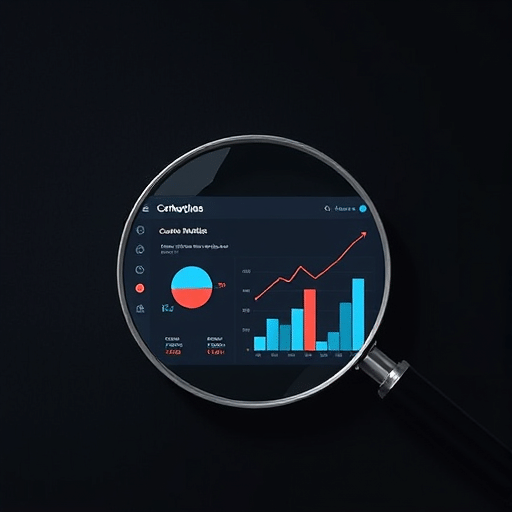
When there is no headquarters, trust cannot come from walking by someone’s desk. It has to come from visibility. That means every team’s work needs to be visibly measured against a small set of shared metrics that everyone can see live. Do not use busywork dashboards. Instead, use a very small set of indicators that each pod fully owns.
- Sales pod: pipeline coverage ratio and forecast accuracy by region, not just total revenue.
- Engineering pod: mean time to resolve incidents and cycle time from commit to production.
- Support pod: customer-effort score and first-response-to-resolution time across all three ecosystems.
If every pod can see the other pods’ numbers, you build a culture of mutual accountability without needing a manager in the middle. This is the “degree of transparency” that replaces the physical office.
Step 5: Build a Deliberately Distributed Culture
Running a startup across three ecosystems without a headquarters is not just a process challenge; it is a cultural challenge. Culture does not come from a mission statement — it comes from repeated behavior in small moments. Since you cannot force those small moments to happen in a shared kitchen, you have to design them:
- Celebrate wins that happen in one pod by explaining to the other pods why the win matters strategically.
- Rotate a “weekly pod spotlight” so each team explains what they shipped and how it affects users.
- Invest in an in-person meetup once a quarter, but rotate the location among the three ecosystems rather than always flying to one hub.
Support your team’s preferred working hours. In a headquarters-less startup, you do not need to defend a 9-to-5 norm from a single region. You only need to make sure that the handoff between pods works, which usually means writing excellent handoff notes and recording short loom-style videos instead of relying on memory.
Step 6: Plan for What Happens When One Ecosystem Fails
Finally, a 2026 playbook would be incomplete without planning for geopolitical or infrastructure disruption. One of your ecosystems might face a power outage, a natural disaster, a sudden internet restriction, or a change in local employment law. Ask yourself: if the sales pod became inaccessible for two weeks, can the engineering pod use the recorded sales objections to keep drafting a new pitch? Can support answer the first line of questions before escalating?
Your goal is to make each pod not fully redundant — that would be too expensive — but aware enough to pick up each other’s essential work during an emergency. For example, keep a lightweight playbook where each pod has one named person who can step into a read-only version of another pod’s tools. This resilience is the direct result of having no headquarters: you are forced to build for independence rather than relying on a central command.
Conclusion
Running a startup across three ecosystems without a headquarters is not about being distributed for its own sake; it is about capturing the best talent, the most relevant market context, and the most favorable operational conditions in each region. By assigning a single primary function to each ecosystem, embracing asynchronous-first operations, building compliance as a product layer, and measuring the whole company through a shared, transparent dashboard, you can make the no-HQ model work better than a conventional office. The startups that treat this not as an experiment but as a deliberate, systemized operating model will have a major edge in 2026.