The healthcare industry in 2026 is quietly shifting from “consent as a document” to “consent as a cryptographic proof.” Using zero-knowledge proofs for patient consent, hospitals, researchers, and health information exchanges can verify that a patient has authorized data sharing without revealing the underlying protected health information (PHI), the specific terms of consent, or even the patient’s identity. This is not a theoretical privacy enhancement — it is becoming a practical compliance layer for audit trails, research access requests, and cross-organization data exchange.
Why Consent Verification Needs a Privacy Layer
Traditional consent records are now a liability. When a healthcare organization stores a signed PDF consent form, it retains a copy of patient data that can be breached, subpoenaed, or accidentally shared. Worse, the metadata around consent — who was asked, when, by whom, and under what conditions — often exposes more about a patient than the clinical record itself. In 2026, regulators are asking harder questions about minimum necessary data use, and patients expect more granular control over every data movement.
Consent verification should not require the verifier to see the original consent form or even the patient’s demographics. The key is to verify three things: that consent exists, that it covers the requested use case, and that it was valid at the time of access. Zero-knowledge proofs (ZKPs) provide exactly that: a mathematically sound way to prove a statement is true without revealing why it is true.
How ZKP-Based Consent Tools Work
Zero-knowledge proofs for patient consent rely on a patient-held credential, often stored in a mobile health wallet or a secure enterprise system. This credential contains the patient’s consent preferences encrypted and signed by a trusted authority, such as a hospital or a national identity provider. When a downstream organization asks, “Does this patient consent to share oncology records with a research registry?” the patient’s system can generate a proof that answers “yes” while revealing nothing else.
The Mathematics in Plain Terms
You can think of a ZKP as a puzzle where one party proves they know the solution without ever handing over the puzzle. For consent, the proof may involve checking a digital signature, verifying a policy rule, and confirming a timestamp — all without decrypting the underlying consent preferences. The verifier only receives a compact cryptographic token that can be checked against a public key.
The Consent Proof Lifecycle
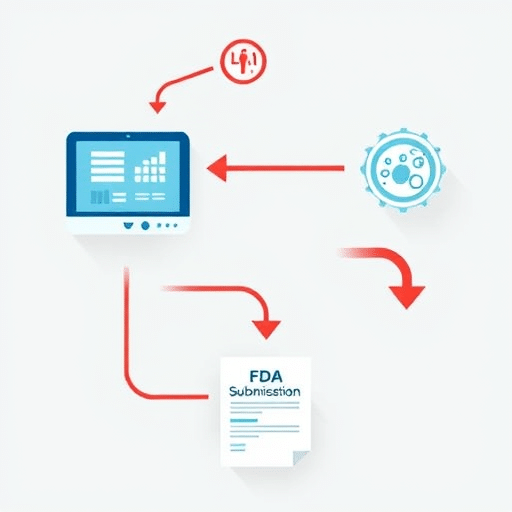
In a typical 2026 implementation, the lifecycle begins with patient registration. During registration, the patient’s consent choices are encoded as a structured privacy policy, signed by the issuing institution, and stored locally or in a decentralized identifier (DID). When data is requested, the patient’s agent creates a zero-knowledge proof linked to that specific request. The proof includes a scope hash, a validity period, and a nonce to prevent replay attacks. The verifier checks the proof against the issuer’s public key, but never sees the original consent policy.
This approach changes the consent audit from “find the signed form” to “verify the proof chain.” If an auditor asks whether consent was valid at 2:14 PM on a Tuesday, the proof can answer that question without reproducing the patient’s exact preferences or medical history.
Key Benefits Over Traditional Consent Logs
- Minimal disclosure: No PHI is transmitted during verification. The verifier learns only the binary answer to a specific permission question.
- Portable consent: Patients can carry their consent credentials across different provider portals and research platforms without duplicating administrative paperwork.
- Stronger auditability: ZKPs are timestamped and signed, giving regulators a tamper-evident trail of every consent verification event.
- Revocation-friendly: Even after a proof is issued, a patient can revoke the underlying credential, and the verifying party can check a zero-knowledge revocation state without learning which specific policy was revoked.
- Reduced breach surface: There is no central database full of consent PDFs to steal. The most sensitive data stays in the patient’s own wallet.
Real-World Use Cases in 2026
ZKP-based consent is moving from pilot studies into operational environments. Here are the patterns gaining traction this year.
Clinical Research Recruitment and Enrollment
Researchers often need to confirm that a patient has agreed to be contacted for a study while avoiding any leakage of diagnosis or treatment history. With zero-knowledge proof, a recruitment platform can verify that a patient meets pre-consent criteria — such as “has consented to research outreach,” “is over 18,” and “has been treated at an affiliated site” — without seeing any actual clinical data.
Health Information Exchange Handoffs
When a patient moves from urgent care to a specialist, the receiving clinician needs to know whether the patient approved the exchange of records. A ZKP can confirm that the patient’s consent policy includes “family medicine” and “specialist follow-up” scopes. The receiving system can immediately access the required records while the exchange logs only the proof, not a copy of the consent document.
Payer Audits and Compliance Reviews
Medicare Advantage and commercial payers increasingly require proof of patient consent before auditing claims that involve behavioral health or substance use disorder data. A ZKP-based consent receipt gives the payer the compliance assurance it needs without requiring the provider to expose sensitive clinical narratives. In 2026, several payer-provider data partnerships are piloting this exact workflow for high-risk data categories.
Implementation Challenges and Workarounds
Despite the promise, there are real engineering and governance obstacles. First, ZKP systems require careful key management. If a healthcare organization loses its signing key, every consent credential it issued becomes unverifiable. The emerging answer is multi-party computation for key custody, so no single administrator can lose or misuse the signing material.
Second, performance and interoperability remain uneven. Generating a zero-knowledge proof can take several seconds on older mobile devices, though optimized circuits and hardware-based security modules are closing the gap. Healthcare systems are also starting to align on open standards such as W3C Verifiable Credentials and the HL7 FHIR Consent resource, which makes it easier to map ZKP-based proofs to existing clinical workflows.
Third, patients need clear explanations. The term “zero-knowledge proof” does not inspire trust by itself. Effective rollout strategies in 2026 include plain-language consent wallet interfaces, step-by-step proof status dashboards, and patient education videos that show exactly what is disclosed during verification: nothing beyond the requested answer.
The Road Ahead for Zero-Knowledge Consent
The next twelve months will likely bring more regulatory sandboxes around ZKP-based consent, especially in the European Health Data Space and state-level privacy efforts in the U.S. As electronic health records become increasingly federated and AI-powered research relies on broader datasets, the ability to verify consent without centralizing sensitive patient decisions will become a competitive and ethical advantage. Zero-knowledge proofs will not replace clinician judgment or regulatory oversight, but they can remove the need for every data exchange to start with a full PHI transfer.
Conclusion
Zero-knowledge proofs for patient consent represent a patient-first approach to data governance. Instead of asking organizations to trust a stamp, a log entry, or a scanned document, 2026 systems can verify consent using cryptographic certainty. The proof itself carries no PHI, no browser history, no diagnosis, and no unnecessary context. It simply says “yes, this patient permitted this action at this time” — and that may be exactly the kind of quiet efficiency healthcare has been waiting for.