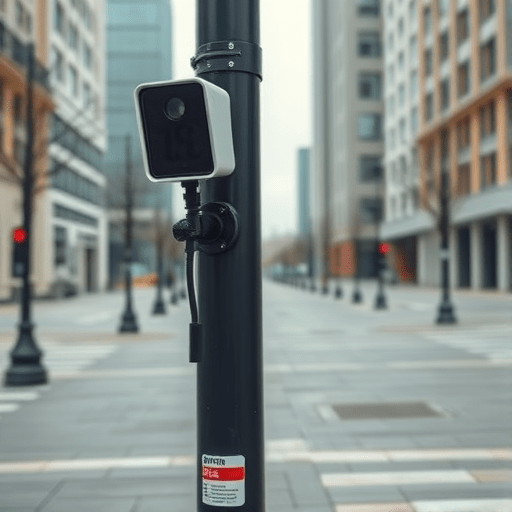
Across North America and Europe, mid-tier cities are pouring public funds into smart city IoT pilots — only to watch them stall after the ribbon-cutting moment. The Sidewater Labs Toronto experiment became the loudest cautionary tale of the decade, but the failures it exposed are quietly repeating in places like Columbus, Kansas City, and dozens of smaller municipalities. The common threads are budget overruns, vendor lock-in, and a citizen base that never truly bought in. Here is what is going wrong, and what the next generation of municipal tech leaders should do differently in 2026 and beyond.
The Sidewalk Labs Legacy: A Cautionary Tale Without a Clean Ending
When Alphabet’s Sidewalk Labs announced its Quayside project in Toronto in 2017, it promised a clean-slate urban district powered by sensors, adaptive traffic lights, and modular data governance. By 2020, the project had collapsed under the weight of public mistrust, data-sovereignty disputes, and an awkward realization that no private partner could quietly build a city inside a city.
What survived Sidewalk Labs was not a district but a doctrine. Cities absorbed the vocabulary — digital twins, adaptive curb management, participatory sensing — without inheriting the capital, governance, or patience that made those concepts tractable. The result is a wave of mid-tier pilots that look like Quayside on a postcard and unravel like a SaaS contract gone bad.
Three Failure Patterns That Keep Repeating
- Budget overruns disguised as “phase one.” Pilots are scoped for one neighborhood, one corridor, one intersection — then quietly extended with change orders that no council ever approved as a program.
- Vendor lock-in through proprietary data models. Sensor vendors ship dashboards, not open APIs. The city ends up renting insights from its own infrastructure.
- Citizen disengagement dressed up as consent. A handful of town halls and a QR code on a lamppost do not constitute participation. When utility bills rise, the absence of trust becomes impossible to ignore.
Budget Overruns: When a Pilot Becomes a Subsidy
The most common financial pathology in mid-tier smart city IoT pilots is what procurement officers privately call “the creep.” A $4 million adaptive lighting pilot becomes a $14 million citywide lighting-as-a-service contract. A traffic-sensor pilot becomes a decade-long subscription to a vendor’s cloud, with per-API-call fees that were never itemized in the original proposal.
The mechanism is consistent. Pilots are funded by innovation grants that explicitly prohibit capital costs, which pushes vendors toward subscription models. Once the sensors are in the ground, switching costs make cancellation more expensive than continuation. Cities that budgeted for a three-year experiment end up paying a thirty-year annuity for the privilege of watching dashboards.
The fix is unglamorous: cap total contract value, separate hardware ownership from software subscriptions, and require open data export clauses from day one. None of these are technically exotic. They are procurement hygiene that most RFP templates still omit.
Vendor Lock-In: How Cities Lose Ownership of Their Own Infrastructure
Vendor lock-in in smart city IoT is not a software problem — it is an urban planning problem. When a city’s stormwater sensors can only be read by one vendor’s dashboard, that vendor becomes part of the city’s critical infrastructure. When the data model is proprietary, even a successful RFP for replacement hardware can fail because the new vendor’s schema does not match the old one’s.
Sidewalk Labs tried to address this with a proposed Civic Data Trust. Most mid-tier cities do not have that luxury. Instead, they inherit the vendor’s data model on day one and discover the cost of escaping it years later, often after a change in mayoral administration.
Three Lock-In Vectors to Audit Early
- Proprietary sensor firmware. Can the city re-flash devices, or is the firmware signed and tied to the vendor’s cloud?
- Closed data schemas. Are exports available in open formats, or only as PDFs and vendor-branded dashboards?
- Managed-service dependencies. Does the city employ staff who can operate the system without the vendor’s professional services arm?
The most resilient cities in 2026 are the ones that insisted on a separation of concerns from the beginning: hardware here, connectivity here, data here, application here. None of that required waiting for a perfect open standard. It required an RFP that asked the right questions.
Citizen Disengagement: The Hidden Cost of Skipping Trust
Perhaps the deepest lesson from the Sidewalk Labs post-mortem is that citizens do not experience smart city infrastructure as technology. They experience it as a change in how their street works, who gets to see their movement patterns, and whether their council asked them first. Pilots that treat engagement as a checkbox — a survey, a focus group, a one-off open house — are building on sand.
Disengagement shows up in unexpected places. Sidewalk cameras get spray-painted within weeks of installation. Adaptive signals get overridden by frustrated drivers who did not understand why a green light shortened. Air quality sensors get repositioned by residents who do not trust where the originals were placed. None of this is NIMBYism. It is the predictable outcome of deploying infrastructure without co-design.
The pilots that survived past year three in cities like Barcelona and Helsinki did something different: they gave residents a vote on sensor placement, a stake in the data governance model, and a clear path to challenge the outputs. That is more work upfront. It is also dramatically cheaper than replacing vandalized hardware.
What Mid-Tier Cities Should Do Differently in 2026
The temptation in 2026 is to chase the next shiny thing — AI-driven curb management, generative digital twins, edge-deployed computer vision. None of those will save a city from the structural failures that took down Sidewalk Labs and dozens of quieter pilots. The work is less glamorous and more durable.
A Practical Pre-Pilot Checklist
- Define the citizen problem before defining the sensor stack.
- Require open data schemas and hardware-agnostic firmware in every RFP.
- Cap pilot budgets with explicit exit clauses and data portability guarantees.
- Build a citizen data trust or equivalent governance body before the first sensor ships.
- Budget for ongoing community stewardship, not just deployment.
None of this is revolutionary. All of it is missing from the typical mid-tier smart city playbook, which is why most pilots fail to scale. The cities that get this right will not produce a Sidewalk Labs-style headline. They will produce something rarer: infrastructure that quietly works, for decades, without anyone needing to ask who owns it.
Conclusion
The Sidewalk Labs story is often told as a story about Toronto, or about Alphabet’s appetite for risk. It is more useful as a story about what happens when ambitious urban technology arrives without the procurement discipline, open standards, and citizen consent that make it durable. Mid-tier cities do not need another flagship district. They need fewer pilots and more infrastructure that survives a change of administration, a vendor acquisition, and a public that was never asked. That is the real lesson, and it is the one most smart city programs are still learning the slow way.