The most uncomfortable question after any electronic health record (EHR) implementation is a quiet one: why do doctors still use paper after EHR go-live? It lingers in every break room, where a trusted printout of the daily schedule sits next to a keyboard, and at every nurses’ station where a sticky note with a lab value clings to a monitor. These artifacts are often dismissed as “old habits” or “resistance to change,” but they are actually a sophisticated form of shadow IT — unofficial tools that clinicians build, adopt, and defend because the official system doesn’t match the reality of patient care. By 2026, the conversation around EHR optimization has shifted: smart health systems are no longer asking how to eliminate paper entirely, but rather how to listen to what paper is telling them. The most effective tool for this? A well-conducted set of workflow interviews.
The Hidden Life of Paper: It’s Not a Failure, It’s Feedback
Paper persists in clinical settings for reasons that have almost nothing to do with technophobia. When a physician reaches for a piece of paper, they are usually solving a specific, immediate problem that the EHR has not solved. It is not a rejection of technology; it is a pragmatic response to friction.
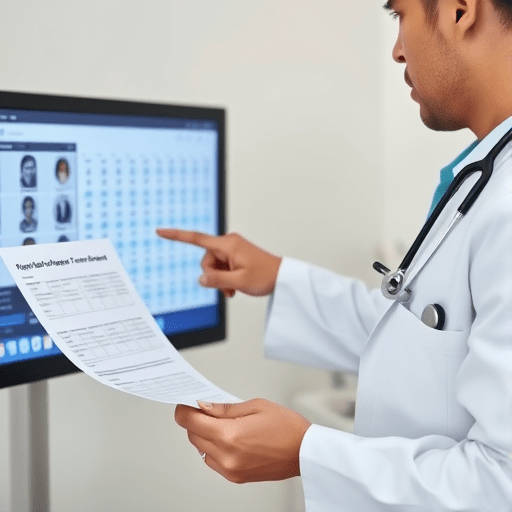
Consider the typical rounding sheet in a hospital. It lists patients, room numbers, medications, and morning labs — all of which exist in the EHR. But the paper version fits in a hunched pocket, survives a 6 a.m. walk, and supports vertical reading of seven patients at a glance. The EHR, by contrast, requires logins, clicks, and tab switches. The paper is not a backup; it is a cognitive artifact, designed to offload working memory and support fast decisions.
Clinicians call these workarounds “the second chart.” It may be a spiral notebook, printed after-visit summaries, or an index card with a differential diagnosis. Rather than removing the paper, the organization should treat it as a bright signal that a workflow is broken. Any attempt to retrain shadow IT without first understanding why it exists will fail.
Conduct Workflow Interviews to Uncover the “Second Chart”
A sprint to re-educate every physician in the broadest possible way is not an answer. Meeting the problem at its source requires interviews that uncover the specific moment when paper takes over. Workflow interviews are short, focused conversations designed to reveal how and when clinicians deviate from documented workflows. They are not performance reviews, and they must never feel like policing.
Who to Interview and How Many
Health systems often make the mistake of interviewing their EHR super-users, precisely the people who least represent typical behavior. To uncover shadow IT, you need a different population.
- Include physicians who were slow to adopt, part-time staff, and locum tenens providers — they will have different patterns than full-time insiders.
- Interview nurses, medical assistants, and front-desk staff; they often maintain their own paper systems that compensate for gaps in physician workflows.
- Set a practical target: at least 8 to 12 interviews per department or clinical unit, spread across roles and shifts. A handful will rarely reveal the full scope of paper use.
- Conduct interviews in two sessions: one early after go-live to catch emergent workarounds, and another at the 6-month mark to catch entrenched ones.
Questions That Go Beyond “Why Don’t You Use the EHR?”
The most direct question often yields the least truthful answer. Ask “why don’t you use the EHR?” and you will hear “I do use it.” Instead, ask about their day — and let the paper reveal itself.
- “Walk me through your last patient encounter from check-in to check-out. Where did you write or print anything?”
- “What is the first thing you look at when you start a shift? Where does that information live?”
- “If you could instantly add one field, button, or workflow to the EHR, what would it be?”
- “What did you print today, and why did you print that specific document rather than reading it on screen?”
These questions work because they do not frame paper as an enemy. They frame it as a diagnostic clue. When a physician answers “I print the med list because I need to see all allergies at once without scrolling,” you have just learned more about the EHR’s information architecture than a month of dashboard metrics.
The Observation Walkthrough
Interviews are powerful, but people are not always aware of their own shortcuts. Pair every interview with a short observation session, ideally 60 to 90 minutes. Ask the physician to work normally while you shadow at a respectful distance. Take notes on every piece of paper encountered, even the napkin with a patient’s last name.
During observation, look for silent signs of shadow IT: sticky notes on laminated monitors, printed schedules tucked into drawers, paper flags used for triage, and handheld notes written before (but never entered into) the chart. These observations will make your interviews far more productive, because you will be able to say, “I noticed you re-entered the glucose reading on paper first. What happened there?”
Retraining Without Blame: From Shadow IT to Supported Workflow
Once you know where the paper lives, the natural impulse is to demand compliance. Resist it. Clinicians developed these workarounds because they care about patient safety and efficiency; punishing their creativity will only drive it underground. Instead, use what you learned to retrain with precision.
Separate Compliant Workarounds from Dangerous Shadow IT
All paper is not equal. A clinician jotting down a mental note during a chaotic code and then entering it into the EHR at the end of the shift is using a harmless external memory aid. That same notebook becoming the official record — never transcribed, never scanned, never seen by anyone else — is dangerous shadow IT that threatens patient safety and legal defensibility.
Your interviews will uncover both types. Sort them into three buckets:
- Safety-grade: must be eliminated immediately, such as paper medication orders that never reach the pharmacy.
- Productivity-grade: the workaround saves time but bypasses the record; these need a digital equivalent.
- Acceptable: transient, non-recorded shorthand that does not affect care delivery or medicolegal risk.
Co-Design the Workaround into the EHR
If the paper exists because the EHR takes too many clicks, do not retrain the physician to click more. Make the workaround part of the system. Interview findings often justify small changes that yield massive adoption gains:
- Build a “rounding view” that shows all key data on a single screen with minimal navigation.
- Add one-click order sets for the highest-volume discharge diagnoses, which removes the reason a doctor writes discharge instructions by hand.
- Create a quick-note template that mimics the structured format of the printed worksheet, enabling fast verbal transcription at point of care.
- Enable voice dictation for the free-text section clinicians habitually scribble on paper.
When the official workflow absorbs the convenience of the paper one, the paper naturally disappears. No coercion required.
Targeted Retraining, Not Massive Refresher
Mass retraining is a waste of time for veteran users. Use interview data to design micro-learning modules aimed at the exact friction points identified. For example, if a unit consistently uses paper because the EHR’s “telephone encounter” feature is hidden, train directly on finding and using that button during a 10-minute tip sheet. If another unit prints medication reconciliation sheets because of workflow preferences, focus your retraining on the new comprehensive reconciliation dashboard instead.
Follow the retraining with a “paper audit” after two weeks. Ask the same staff: what did you print yesterday? Compare answers to the pre-interview baseline. You will see your shadow IT index drop where it matters, and you will spot new workarounds before they harden into permanent practice.
Measuring Success: Did the Paper Shrink?
Vague impressions are not enough. Use measurable outcomes that reflect the true health of your digital workspace. Track the number of scanned or uploaded paper documents per provider per week, the rate of chart completion within 24 hours, and the number of paper forms requested by a unit from the print room each month. Most importantly, measure the gap between the daily census and the number of patients with an active, open, and updated EHR chart.
Give clinicians access to this data transparently. When a team sees that its paper index dropped by 40% over a quarter, that is a stronger motivator than a mandate. And keep the conversation open: schedule a shorter workflow interview every six months. Shadow IT is not a one-time bug; it is a recurring signal of how your EHR is (and is not) adapting to clinical reality.
Conclusion
The persistence of paper after an EHR go-live is never just an individual habit. It is an honest diagnostic signal from the front line about the mismatches between technology and care. Workflow interviews give you a structured, blame-free way to hear that signal, trust it, and act on it. Doctors will always find a way to do what is right for their patients—the best thing an organization can do is design the digital system so that the right path is also the easiest one. When you do that, the leftover paper becomes a relic not of resistance, but of an old way of working that no one needs anymore.