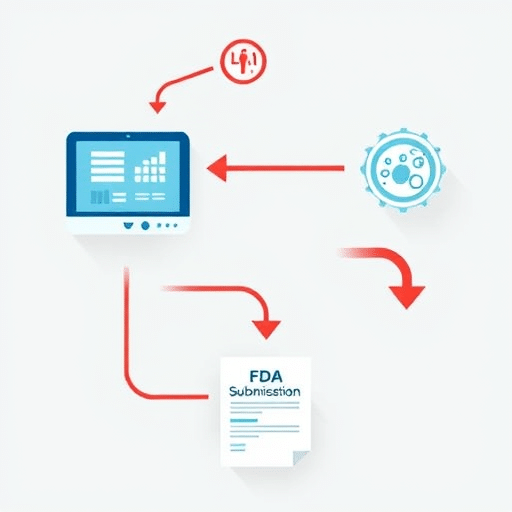
For the 300 million people worldwide living with a rare disease, the diagnostic journey is still painfully slow — averaging five to seven years and multiple specialist visits before a confirmed answer. In 2026, a new clinical tool is quietly rewriting that timeline: wearable-powered digital twins. By streaming continuous data from smartwatches, ECG patches, and biosensors into a personalized computational model, patients and clinicians can now simulate disease trajectories, test interventions virtually, and detect subtle physiological shifts long before they show up in a blood panel. This is not science fiction; it is the emerging standard of care in a handful of pioneering rare disease centers.
What Exactly Is a Digital Twin in Rare Disease?
A digital twin is a dynamic, patient-specific computer model that mirrors the physiology of an individual in near real time. Unlike a static EHR record or a population-level clinical guideline, a digital twin learns from the unique signal patterns of one person’s body. When built from wearable data streams, the twin updates continuously as new heart rate variability, sleep architecture, respiratory rate, skin temperature, or glucose readings arrive.
In rare disease contexts, where patient cohorts are tiny and natural history data is scarce, this individualized approach offers something conventional trials cannot: a control arm of one. Researchers can compare a patient’s actual physiological state against their own simulated baseline, isolating deviations that might signal disease progression or treatment response.
Why Rare Disease Is the Ideal Proving Ground
Rare conditions such as Friedreich’s ataxia, narcolepsy type 1, pulmonary arterial hypertension, and Huntington’s disease produce highly variable symptoms that fluctuate day to day. A single clinic visit captures a snapshot; a wearable-fed digital twin captures the movie. This continuous view is especially valuable for:
- Symptom-triggered events such as cataplexy attacks or arrhythmia flares
- Subtle motor decline detected through gait and accelerometer patterns
- Therapy response monitoring without repeated invasive testing
- Pre-symptomatic detection in genetically confirmed but not yet manifesting individuals
The Anatomy of a Wearable-Fed Virtual Patient Model
Building a digital twin from wearables involves four interlocking layers: data acquisition, signal processing, physiological modeling, and clinical interpretation. Each layer has matured significantly since the first consumer smartwatches arrived a decade ago.
1. Data Acquisition Layer
Modern clinical-grade wearables go far beyond step counts. The 2026 generation includes FDA-cleared patches that record single-lead ECG continuously for 14 days, wristbands that estimate galvanic skin response, and even ingestible sensors that transmit core temperature and gastric pH. For rare disease patients, the priority is selecting devices that capture the biomarkers most relevant to their specific condition. A patient with myasthenia gravis, for instance, might benefit from EMG-adjacent muscle activity sensors, while someone with postural orthostatic tachycardia syndrome needs continuous orthostatic heart rate monitoring.
2. Signal Processing Layer
Raw wearable signals are noisy. Movement artifacts, ambient temperature changes, and skin-contact variability can corrupt readings. Sophisticated preprocessing pipelines now use machine learning to denoise the streams in real time, separating physiological signal from environmental noise. The cleaned data is then mapped to standardized clinical variables such as resting heart rate, HRV recovery slope, sleep efficiency, and respiratory sinus arrhythmia.
3. Physiological Modeling Layer
This is where the digital twin truly takes shape. Mechanistic models — built from systems pharmacology, cardio-respiratory dynamics, and metabolic networks — are calibrated to each patient’s baseline signature. Hybrid approaches combine these first-principles models with data-driven neural networks, allowing the twin to make predictions even when only sparse clinical measurements are available. A well-calibrated twin for a patient with a rare metabolic disorder might simulate how a hypothetical enzyme replacement therapy would shift substrate levels over weeks.
4. Clinical Interpretation Layer
The final layer translates model outputs into clinically meaningful insights. Dashboards show divergence scores between predicted and observed state, flagging anomalies that warrant follow-up. Importantly, modern twin platforms are designed with clinician-in-the-loop workflows, meaning no therapeutic decision is automated without human review.
Real-World Applications Emerging in 2026
Three concrete use cases are moving from research pilots into routine practice this year.
Accelerated diagnosis in pediatric rare disease. Children’s hospitals are deploying twin-building programs for undiagnosed cases referred through genetic sequencing programs. By capturing two to four weeks of continuous wearable data and comparing physiological patterns against phenotype-matched reference cohorts, some centers are narrowing diagnostic differentials in weeks rather than years.
Virtual clinical trials for ultra-rare conditions. When a disease affects only a few hundred people globally, traditional randomized trials are often impossible. Synthetic control arms derived from patient-specific digital twins are now being accepted by regulators as supplementary evidence, allowing smaller, shorter trials to demonstrate efficacy.
Personalized dosing for high-risk therapies. Gene therapies and enzyme replacements for rare diseases often have narrow therapeutic windows. A wearable-fed twin can simulate pharmacodynamic effects before administration, helping clinicians anticipate adverse responses and optimize dosing schedules.
Challenges That Still Need Solving
Despite the momentum, building reliable virtual patient models from wearable data is not without hurdles.
- Data quality and device heterogeneity — different wearables use different algorithms for the same metric, making cross-patient comparisons difficult.
- Privacy and data sovereignty — continuous biometric streams raise new questions about consent, ownership, and cross-border data transfer.
- Model validation — a twin that works beautifully for one patient may not generalize to the next, especially across age groups and disease stages.
- Equity of access — high-cost wearables and cloud modeling platforms risk creating a two-tier system unless reimbursement pathways evolve.
What Patients Should Know Before Joining a Twin Program
If you are considering enrolling in a digital twin study or a clinical program offering virtual patient modeling, here are the key questions to ask your care team:
- Which specific biomarkers will be captured, and how will they relate to my condition?
- Who owns the raw wearable data, and how long is it retained?
- Will the model be shared with my regular specialists, or kept within the research team?
- How is model accuracy validated for my specific disease subtype?
- What happens if the twin predicts an anomaly — is there a 24/7 response pathway?
Conclusion
Wearable-powered digital twins represent a genuine shift in how rare diseases can be understood, monitored, and treated. By turning the continuous hum of daily physiological signals into a personalized simulation environment, this technology offers something rare disease communities have rarely had: time. Time to detect early, time to intervene precisely, and time to test ideas without risking the patient in front of you. As validation frameworks mature and reimbursement catches up, the virtual patient model is poised to become as routine in rare disease clinics as the stethoscope once was in general practice.