Every athlete knows the feeling: hands trembling before the whistle, the crowd roaring in the ears, the sudden tightening in the chest that turns a practiced routine into a fog of doubt. The gap between practice performance and game-day execution often comes down to nerves, not skill. That’s where VR mental training for athletes has quietly transformed the landscape, shifting from a novelty to a crucial component in sports psychology. By placing players inside realistic, high-pressure environments before a single real-world point is scored, this technology teaches the brain to treat competition as just another familiar afternoon. It no longer feels like a once-yearly final; it feels like a place you’ve visited dozens of times.
How VR Exposure Rewires Pre-Game Anxiety
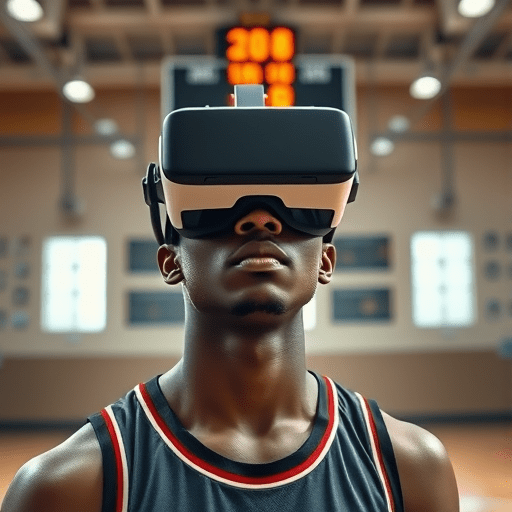
The core of VR mental training rests on exposure therapy principles borrowed from clinical psychology. When an athlete dons a headset and steps into a simulated arena, the brain cannot fully distinguish between a rendered crowd and a physical one. The visual cortex lights up, the vestibular system reacts, and the amygdala — that alarm bell in the center of your head — receives enough sensory input to trigger a genuine stress response. Over repeated sessions, the same neural pathways that fire during real competition start to habituate. The perceived threat becomes less threatening. Panic gives way to alertness, and adrenaline shifts from a flood to a trickle.
This process is not just about “getting used to it.” Research in spatial cognition shows that immersive environments encode stronger and more detailed memories than flat imagery on a screen. Every corner of the court, every sound of the buzzer, every visual cue from an opponent’s stance gets filed into the athlete’s memory as if it actually happened. When gameday arrives, the brain retrieves these files and says, “I know exactly what this is.” The result is a measurable drop in self-reported anxiety and a rise in pre-game focus, as documented in early studies on virtual red-zone drills and foul-shot simulations.
Why VR Beats Traditional Mental Visualization
Mental visualization has been a staple of sports psychology for decades. Champions close their eyes and imagine the perfect swing, the clean line, the roaring applause. But visualization has a critical flaw: it depends on the athlete’s ability to maintain lucid, vivid imagery while ignoring internal distractions. A wandering mind can turn a useful exercise into a daydream. VR eliminates that gap by presenting an external, consistent, and fully controllable stimulus. You cannot accidentally skip a step or miss a detail because the environment is rendered for you. Your body follows the input, and your sensory systems respond as though it is real.
There’s also a useful distinction between explicit and implicit memory. Visualization primarily engages explicit memory — the conscious recollection of a situation. VR pulls in implicit, procedural memory as well, because your body is moving, your head is turning, your eyes are tracking, and your hands are reaching. This motor-cognitive linkage is what makes VR mental training more effective for skill execution. A swimmer can practice a turn sequence in a virtual pool; a basketball point guard can run a press break against digital defenders. The neural trace left behind is richer, more textured, and far closer to actual competition than a still image in the mind’s eye.
The Role of Presence in Nervous System Calibration
Presence — the subjective feeling of “being there” — is the difference between watching a video and living an event. High-end VR systems with 6DoF tracking and 120Hz refresh rates now deliver presence so reliably that athletes often report feeling fatigued or sweaty after a 20-minute session. This is exactly what you want for nerve reduction. If the body believes it is in the final minute of a tied championship game, then the stress hormones it releases are the same ones you need to manage. By repeatedly surviving that virtual gauntlet, the nervous system learns a new baseline. The once-terrifying stimulus becomes mundane, and the athlete walks onto the real field with the calm confidence of a veteran.
The 2026 Shift: Adaptive VR Scenarios for Personalized Pressure
What’s new in the present year is not just better graphics — it’s adaptive artificial intelligence that comes with a built-in sports psychologist. Modern VR mental training platforms now use biometric sensors in the headset to track heart rate, breathing patterns, and even gaze fixation. As your pulse climbs, the software adjusts the challenge in real time. It might ramp up crowd noise, shorten the shot clock, or introduce a vocal taunt from a virtual opponent. If you stay calm, the scenario gets harder. If you start to panic, it dials the pressure down slightly until you regain composure. This fine-grained calibration is far more effective than a static one-size-fits-all exposure because it operates right at the edge of your comfort zone.
Athletes are not the only ones benefiting. Coaches and sports psychologists can review detailed dashboards after each session, showing where your gaze flickered, when your breathing became shallow, and how many seconds passed before you made a decision under pressure. This data turns mental training from a vague “feel good” activity into a measurable, trainable skill. In 2026, the leading programs allow you to build a digital twin of your own stadium, complete with your team’s uniform colors, your rival’s specific celebration moves, and the exact lighting conditions of a sunny afternoon match. That level of specificity is the difference between practice and preparation.
Building a VR Mental Rehearsal Routine That Works
To get the most out of VR exposure, you need more than a headset and a random app. A deliberate routine ensures the familiarity effect fully takes hold on game day. Consider the following structure used by collegiate teams and elite performers:
- Start with a low-distraction scan: Spend five minutes in a quiet virtual arena, simply looking around and controlling your breath. This sets the context for your nervous system.
- Introduce one stressful variable: Add a virtual opponent, a ticking clock, or a loud crowd. The goal is not to overwhelm yourself but to feel the early tingle of nerves and practice steadying your breathing.
- Simulate critical moments: Program your exact game scenario — a final free throw, a penalty shootout, a third-down pass. Repeat it seven to ten times in a session, consciously focusing on a positive outcome.
- End with a reset ritual: Take off the headset, do a few groundings, and replay the best execution in your mind. This helps the brain anchor the memory of success rather than anxiety.
Sessions of about 20 minutes, two to three times per week, are often enough to produce noticeable changes in pre-game confidence. It is also essential to combine VR mental training with physical practice; the virtual arena is a rehearsal studio, not a replacement for sweat and muscle memory. Think of it as the dress rehearsal where the lights are the brightest and the stakes feel real, so that when the actual curtain rises, the stage already feels like home.
Choosing the Right VR Mental Training System
With the growing popularity of immersive technology, not all systems in 2026 are created equal. For athletes and coaches looking to integrate VR mental training, focus on these key features:
- Biometric feedback: A system with built-in heart rate and breathing tracking is crucial for calibrating pressure levels.
- Realistic 3D spatial audio: Crowd sounds and referee whistles must be directional and responsive to your head movements; this is what drives the illusion.
- Custom scenario builder: You need the ability to recreate your own venue, opponent colors, and specific game situations rather than relying on generic environments.
- Comfort and weight: A headset that causes neck fatigue or motion sickness will distract from mental rehearsal. Lightweight, well-balanced designs are worth the investment.
- Data privacy and analytics: An easy-to-understand reporting interface that shows your anxiety trends over time helps your coach make informed adjustments.
The best systems of this era are not the flashiest ones but those that prioritize psychological accuracy. A virtual stadium with poor textures and laggy movement is less useful than a simple, rock-solid simulation that feels smooth and immediate. If you can, trial a few platforms before committing. The goal is to find a system that feels less like a video game and more like an invisible training partner who never lets you practice alone.
Conclusion
Game-day nerves are not a sign of weakness; they are a biological response to an uncertain outcome. VR mental training offers a unique remedy by replacing uncertainty with familiarity. Instead of hoping you’ll stay calm when it counts, you can actively rehearse the chaos and the pressure in a controlled, adaptive environment. The more many times you step into that virtual arena, the more your brain learns to interpret the loudest moment as just another repetition. That is what it means to perform like you’ve been there before — not because you got lucky, but because you have truly been there, thousands of times, within the pixels and the sound waves of a world you built for exactly that purpose.