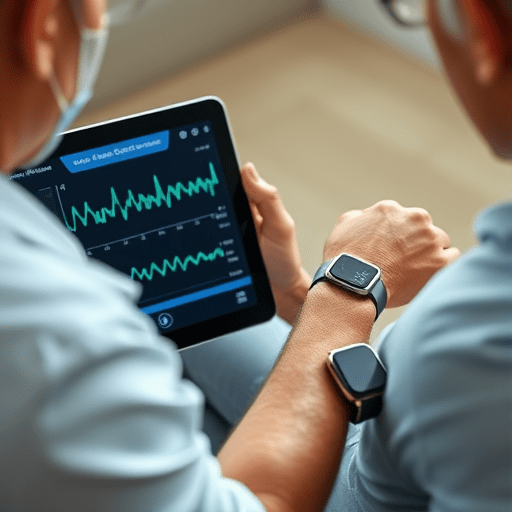
Remote monitoring programs have moved far beyond step counting and sleep tracking. Today, clinicians are expected to interpret photoplethysmography traces, rhythm alerts, respiratory rate trends, and oxygen saturation readings from consumer wearables and medical-grade patches. The challenge is no longer getting enough data — it’s knowing how to quickly validate patient-generated data before clinical decisions. With device accuracy varying by sensor, firmware version, and even skin tone, remote care teams need a practical approach for separating genuine physiological signals from the noise that wearable devices generate throughout the day.
Why Wearable Data Noise Is Now a Clinical Bottleneck
In 2026, remote monitoring programs are scaling faster than the evidence base for interpreting every data stream. A single patient can generate thousands of data points overnight: heart rate every second, oxygen saturation every minute, and activity classification every few seconds. But not all of those points are equal. A wrist-worn optical sensor can interpret a lack of contact as a bradycardic episode. A chest patch can record rubbing against bed sheets as a sustained tachycardia. And a patient’s overnight cough can momentarily turn a respiratory rate estimate into an outlier that would trigger an unnecessary alert.
When clinicians lack a fast validation workflow, they face two equally dangerous outcomes: alert fatigue from acting on noise, or delayed response because they no longer trust any generated alert. The answer is not to add another dashboard. The answer is to build a structured method for validating the quality and context of every piece of remotely generated data before it reaches a decision point.
Build a Fast-Track Validation Workflow with “Data Safety Checks”
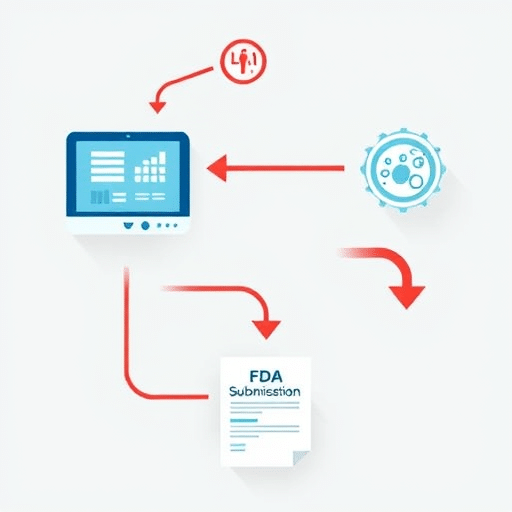
To cut through wearable data noise without adding hours to the workday, remote monitoring teams should adopt a four-step validation workflow. These checks are not meant to replace clinical judgment; they exist to flag which data is reliable enough to base decisions on.
1. Start with Waveform-Level and Metadata Flags
The fastest way to validate patient-generated data is to look at the raw signal’s quality metrics before reading the interpreted value. Most modern devices report signal quality, contact level, or motion artifacts. A blood oxygen reading taken while the finger is still in motion should never be acted on. Likewise, a heart rate variability metric derived from a noisy PPG waveform is not a meaningful number. Build your validation protocol around the device’s native quality flags: if the signal quality is poor, the derived vital sign must be considered invalid until confirmed.
2. Contextualize with Patient-Reported Anchors
Data without context is just noise. A patient with a normal heart rate at 3:00 AM might still be experiencing extreme discomfort. Conversely, an elevated respiratory rate during a panic attack might be clinically significant even if it is not caused by a pulmonary issue. Including a short symptom prompt in the remote monitoring app — such as “How are you feeling right now?” — gives clinicians a fast way to validate whether a measured deviation matches the patient’s self-report. When the two align, confidence goes up. When they conflict, the next step is to re-measure, not to act on the data alone.
3. Apply Parity Checks Across Devices
In many remote monitoring programs, patients use more than one device. They might have a smartwatch, a pulse oximeter, and a connected blood pressure cuff. Before making a treatment call, compare the values from different devices within a short time window. A smartwatch heart rate of 120 beats per minute that is not echoed by a three-minute manual pulse check or a single-lead ECG should be treated as suspect. Cross-device parity is one of the strongest and fastest signals that the wearable data is real. If two independent sensors agree within a reasonable clinical tolerance, the likelihood of a device artifact drops significantly.
4. Use AI Triage as a Second Reader, Not Final Arbiter
Artificial intelligence can help prioritize which alerts deserve human attention, but it should never be the sole validator. Modern remote monitoring platforms use machine learning to identify patterns of motion artifacts, sensor dropout, and implausible physiological values. These tools are excellent at filtering out obvious noise. However, because they are trained on population data, they can miss patient-specific nuance. The safest workflow is to have AI sort alert clusters and mark likely artifacts, while a clinician or trained monitor reviews the flagged subset. This human-in-the-loop step is what transforms a noisy feed into clinically actionable information.
Clinical Decision-Grade Metrics: What to Keep, What to Discard
Patients generate many data points that are entertaining but not decisive. Not every metric from a wearable needs to be validated before a clinical decision. The key is to separate metrics that directly affect treatment from those that only add context. Use the following guidelines to build your validation checklist:
- Keep: Heart rate and rhythm alerts when they are accompanied by a coherent waveform and match the patient’s reported symptoms.
- Keep: Oxygen saturation readings with a stable pleth waveform and a simultaneous heart rate value close to the wearable’s own heart rate.
- Keep: Blood pressure measurements taken in accordance with the device’s positioning requirements, with no heart rhythm irregularity detected.
- Discard: Step counts and calorie estimates as indicators of clinical deterioration; they are too sensitive to device placement and user behavior.
- Discard: Sleep-stage breakdowns unless the device has been clinically validated for that specific use case; consumer sleep staging is still largely algorithmic guesswork.
- Discard: Any reading with a visible artifact, low battery warning, or poor skin contact flag when no other confirmatory source is available.
Avoid Common Pitfalls in Remote Monitoring Validation
Even the most careful validation workflow can fail when teams fall into familiar traps. One of the most common is treating the wearable’s displayed value as ground truth because it looks precise. A heart rate of 84, for instance, implies an accuracy that consumer-grade optical sensors may not deliver. Always ask whether the raw signal supports the number.
Another pitfall is ignoring device context. A smartwatch that loses skin contact can record a sliding heart rate that looks like a vagal episode. A wearable on the non-dominant arm may underestimate blood pressure changes during a hypertensive crisis. The device’s location, attachment method, and ambient environment should be documented at the start of monitoring and revisited whenever a questionable reading appears.
Finally, be careful not to over-correct by discarding all data that does not immediately match clinical expectations. Patient-generated data often contains early warning signs that are subtle and non-linear. A slight increase in nighttime heart rate variability might be more meaningful than a single dramatic alert. The goal is not to silence the noise entirely — it is to know which signals remain after the noise is removed.
Build Validation into the Monitoring Protocol from Day One
Fast validation works best when it is part of the remote monitoring workflow design, not an afterthought. For each data stream, define a minimum quality threshold, a confirmation step, and a decision window. For example, a single abnormal oxygen saturation reading should trigger a second measurement after a brief rest. Two consecutive low readings with good waveform quality should then prompt a clinical review. Three readings separated by several minutes can justify a patient outreach or a change in treatment.
This tiered approach does more than reduce false alarms. It gives clinicians permission to trust the data that remains. It also creates a clear documentation trail for later review, which matters in shared accountability models and telehealth audits. When patients see that their data is being interpreted thoughtfully rather than blindly, they become more engaged and more likely to wear their devices correctly — which in turn improves data quality at the source.
Conclusion
Remote monitoring accuracy depends less on the raw power of wearable sensors and more on how quickly and reliably patient-generated data is validated before it reaches a clinical decision point. By checking waveform-quality flags, incorporating patient context, comparing across devices, and keeping AI in a supporting role, care teams can cut through wearable data noise and act only on signals worth their attention. The future of remote monitoring is not collecting more data; it is making every counting value earn its place in the patient’s record.