The most powerful moments in role-playing games rarely announce themselves. In a medium where a sweeping orchestral score, chattering companions, and diegetic UI sounds constantly compete for a player’s attention, silence has quietly become the most underused tool in the narrative designer’s toolkit. Understanding how silence builds tension in RPG narrative design is not just about turning down an audio slider; it is a philosophy of pacing, environmental storytelling, and radical player trust. When executed well, a genuinely quiet scene can outlast any boss battle or plot twist in a player’s memory, lingering long after the save file is forgotten.
Pacing and Pauses: The Rhythm of Restraint
Human brains are pattern-matching machines. When a game establishes a rhythm—combat, dialogue, exploration, repeat—players settle into a comfortable groove. The moment that groove is broken, the brain snaps to attention. Silence is the most effective way to break that rhythm because it denies the player the audible reassurance they have come to expect from the medium.
Pacing matters on a granular level. A two-second pause after a character delivers devastating news reads as natural hesitation. A five-second pause turns that hesitation into dread. A ten-second pause, with no ambient sting or musical swell, forces the player to sit inside the emotional weight of the moment. The silence becomes a question: Why is this scene allowed to be given so much space? The player begins to search the screen for clues, and that active searching is exactly what keeps tension alive.
Designers often fear the pause. They worry that players will get bored, alt-tab, or reach for their phones. But the most effective RPGs understand that the pause is a form of permission. It tells the player: you don’t need to do anything right now, but you may want to look closer.
Environmental Cues: Storytelling Through Absence
Silence in RPGs is never purely auditory. It is also the visual quiet of an environment that has been stripped of the usual game clutter: no quest markers, no glowing interactive objects, no compass at the top of the screen. When the UI falls away, the world itself begins to speak.
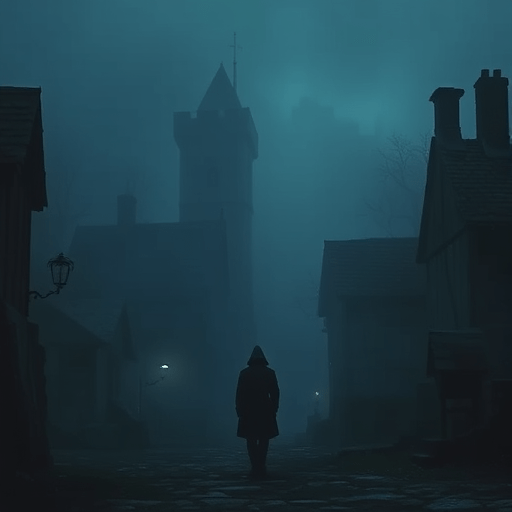
An empty campsite with a still-burning fire tells a story the moment the music drops out. A corridor where the ambient hum of machinery has stopped creates an immediate, instinctive unease. The cliché “calm before the storm” works in games because designers can literally remove every sound cue that signals safety. The sound of nothing becomes louder than anything the score could add.
Sound design plays a role too. Silence does not mean a complete absence of audio; it means the right absence. A single creak, a distant drip of water, or a character’s slow, deliberate breathing can hold a scene together while the orchestral layer is removed. These diegetic sounds anchor the player in a physical space while the narrative hangs in suspense. The key insight is that environmental silence is a canvas, not a void. A room where a missing companion’s footsteps used to echo is a contradiction the player’s brain cannot ignore.
The Interactive Side of Silence: Player Agency and Ambiguity
A cutscene can show two characters staring at each other in silence. But an RPG can do something far more compelling: it can hand the silence to the player. Interactive silence is the difference between watching a moment of stillness and participating in it.
Consider the dialogue wheel where the game holds its breath while the player decides what to say. With no background music, even the cursor’s movement through dialogue options feels louder. The weight of every choice is magnified by the absence of emotional steering. This is where RPGs have a unique advantage over film or literature—they can hold a pause indefinitely until the player is ready to break it.
Some of the genre’s most memorable quiet scenes are non-interactive by design yet remain interactive in a looser sense. A companion who stops talking after a dangerous event, a vendor who refuses to trade in a village that has been recently raided, or a quest log entry that simply reads “Wait.” These moments turn silence into a puzzle. The player is not told how to feel; they are trusted to interpret the absence of information and carry that ambiguity forward.
When Silence Fails: Finding the Right Balance
Not every quiet scene lands. Silence requires context and crafting; without them, it quickly becomes tedium. A game that is relentlessly muted loses the contrast that makes silence meaningful. If the entire experience is sparse, the player has no emotional baseline against which the quiet can be measured.
Designers must also respect the modern attention economy. A long stretch of nothing, with no interactive anchor, will lose even the most patient player. The remedy is not to shorten silence but to give it texture. Allow the player to move through the silence, to open a journal, to investigate the environment, or to simply decide where to look. The moment a player becomes responsible for their own pacing, silence stops being a passive interlude and becomes an active narrative event.
Testing is crucial. What feels like a profound pause to a designer can feel like a loading screen to a player. Observing sessions and noting when playtesters shift in their seats or reach for their phones will tell you more than any analytics dashboard. The goal is not to eliminate the risk but to ensure the silence is expected enough to feel intentional, yet unpredictable enough to produce tension.
A Practical Checklist for Designing Memorable Quiet Scenes
For narrative designers looking to incorporate restraint into their next project, the following principles provide a strong foundation:
- Soundscape first: Design what remains after you strip the music away. Footsteps, fabric rustle, distant thunder, a character’s breathing—these become the anchors of a quiet scene.
- Remove visual noise too: Silence is multimedial. Remove quest markers, floating icons, and minimap clutter to make the world feel as quiet visually as it does audibly.
- Earn the silence: A quiet moment is most effective after a loud one. Build a contrast curve in your level or story structure so that stillness feels like a reward and a warning at the same time.
- Let dialogue run dry: Force conversations into awkward, unscripted pauses. Let NPCs hesitate, stop mid-sentence, or refuse to elaborate. Unfinished sentences are more unsettling than exposition.
- Give the player a task in the quiet: Do not just turn off the sound; give the player something contemplative to do. A slow walk, an optional note, a door to push open. Silence demands a physical presence.
- Vary the silence: A three-second pause protects a secret. A thirty-second environmental stillness builds dread. A full minute of interactive reflection after a major narrative beat allows catharsis. Different silences serve different scenes.
The best quiet scenes are those that trust the player to feel the weight of what is not being said. That trust is the rarest resource in interactive media.
Conclusion
Silence in RPG narrative design is not an absence of content. It is a carefully engineered space where pacing, environmental cues, and player agency converge. When designers stop fearing the quiet and start treating it as a creative medium of its own, they unlock some of the most emotional and haunting moments the genre can offer. The tension that silence builds is not a gap in the story—it is the story, told in a language that only the player can hear.