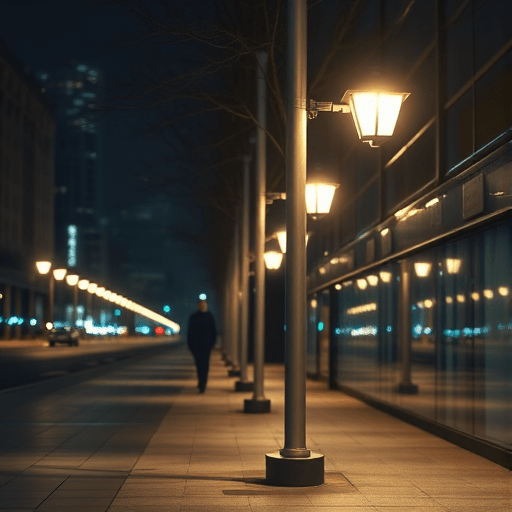
Walk down a busy corridor after dusk in cities like Helsinki, Seoul, or Pittsburgh today and you may notice something subtle: the streetlight ahead brightens as you approach, then eases back down once you pass. That is not a glitch. It is an adaptive IoT pedestrian lighting system, a network of dimmable LEDs, motion sensors, and small processors that respond to foot traffic in real time. Early pilots suggest these responsive sidewalk lights are cutting pedestrian injuries in ways that older timer-based streetlights simply cannot.
Why Fixed Streetlights Fall Short at Night
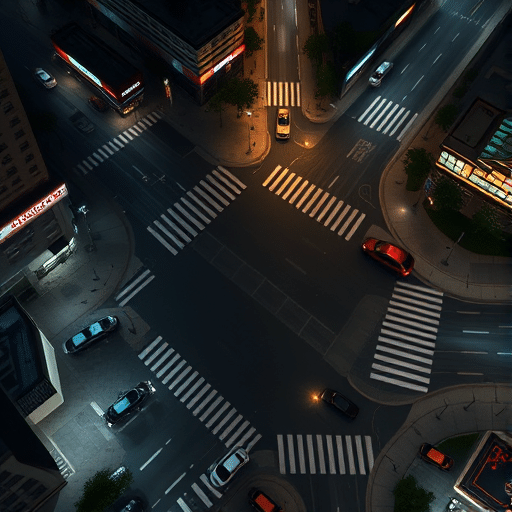
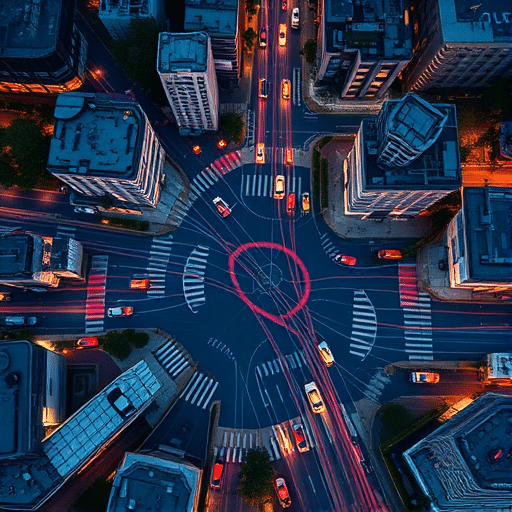
For most of the 20th century, municipal lighting followed a simple rule: switch on at sunset, switch off at sunrise. That approach is reliable, but it ignores the actual problem it is supposed to solve. Most pedestrian collisions happen not on uniformly dark streets, but at specific points of confusion: the midblock crosswalk nobody sees, the bus stop where the curb is broken, the alley mouth where cyclists merge with walkers.
Uniform lighting also produces uniform energy waste. A street that is empty at 2 a.m. is lit just as brightly as one that is busy at 7 p.m. The result is higher operating costs, more light pollution, and a lighting profile that is, paradoxically, less safe where it matters most because glare from over-lit stretches makes the dark patches feel darker.
How Adaptive IoT Lighting Works on a Sidewalk
An adaptive sidewalk lighting system combines a few hardware layers with a quiet software brain:
- Pedestrian detection sensors: small radar, lidar, or thermal units mounted on the pole, plus optional cameras running on-device analytics. Many vendors now rely on radar alone to address privacy concerns.
- Dimmable LED luminaires: fixtures that can shift from a low ambient level, often around 20 to 30 percent output, up to full brightness in under a second.
- Edge controllers: small processors that fuse sensor inputs, decide how bright the light should be, and talk to neighboring poles over a mesh network.
- A central dashboard: a cloud tool the city uses to monitor outages, adjust response curves, and review aggregated (not individual) movement data.
When a pedestrian enters a pole’s detection zone, that pole brightens and signals its neighbors, creating a soft pool of light that travels with the walker. When the path is empty, the system drops to a low standby level that is enough for orientation but far less intrusive.
The Injury Numbers Cities Are Seeing
Real-world results from the past two years are starting to come in. Helsinki reported a 28 percent drop in nighttime pedestrian incidents along its Kalasatama test corridor after installing adaptive lighting in late 2024. Seoul’s smart sidewalk pilots in Gangnam saw a similar pattern: pedestrian near-misses at marked crosswalks fell by roughly a third, and reported slips and falls dropped noticeably in areas where the curb was uneven.
Pittsburgh’s deployment, focused on hilly residential streets with older residents, is one of the most studied so far. Independent reviewers found that adaptive lighting reduced pedestrian crashes per mile by about 22 percent compared with control streets that kept conventional lighting. Cities without published pilots, including Barcelona and Singapore, are now publishing their own data as 2026 procurement cycles kick off.
Beyond Brightness: Lighting That Responds to Risk
The freshest angle in 2026 is that adaptive lighting is no longer just about detecting people. It is also about detecting risk. Newer systems tie into city data layers, so the lights brighten not only when someone walks by, but also:
- When a 311 report flags a broken sidewalk segment nearby, pulling hazard data from the same workflow residents already use.
- When an accessible pedestrian signal (APS) is activated, so the crosswalk ramps up the moment a button is pressed, not just when someone steps off the curb.
- When transit data shows a bus is approaching a stop, giving waiting riders a brighter, safer platform.
- When weather feeds report icy pavement or heavy rain, raising baseline brightness across a whole corridor.
This shifts the question from “how bright is the street” to “how bright should this specific square meter be right now, for this specific person, given these specific conditions.” That is a meaningful change in how cities think about lighting as a public health tool.
Energy and Light Pollution: The Quiet Co-Benefit
Because adaptive systems spend most of the night at low output, energy use typically falls by 40 to 60 percent compared with always-on LEDs at full power. That is attractive to budget-conscious transit and public works departments, especially since the savings help pay back the sensor upgrade within a few years.
The environmental angle matters too. Astronomers and ecologists have pushed back on bright urban skies for years, and adaptive lighting directly addresses their concerns. Skyglow drops sharply when fewer fixtures run at high output, and wildlife corridors benefit from darker intervals between pedestrian events. For cities that have signed onto dark-sky or biodiversity pledges, this is one of the easier wins on the list.
Privacy, Equity, and the Questions Cities Still Wrestle With
Adaptive lighting is not without controversy. The most common objections center on surveillance, since cameras and sensors can, in principle, track movement. The leading vendors have responded by processing video on-device, deleting raw footage within seconds, and only sending aggregate counts to the cloud. Cities like Amsterdam and Toronto have published data-retention rules specifically for sidewalk sensors, and those rules are starting to spread.
Equity is the second big question. There is a real risk that adaptive lighting gets installed first in already well-served downtown corridors while under-lit outer neighborhoods wait their turn. The most thoughtful 2026 deployments are tying adaptive lighting explicitly to pedestrian safety audits, prioritizing streets with high crash rates, older populations, and proximity to schools and transit, not just areas with the loudest business improvement districts.
What to Watch Next in Adaptive Sidewalk Lighting
Three trends are worth tracking through the rest of 2026 and into 2027. First, the convergence of adaptive lighting with connected vehicle data, where an approaching car communicates with the sidewalk poles to brighten a crosswalk before the driver even sees the pedestrian. Second, the use of small solar canopies and battery-backed poles that let adaptive lighting expand into parks and trails without trenching for power. Third, the rise of open standards, including the recent TALQ consortium updates, which should make it easier for cities to mix vendors without locking into a single proprietary platform.
None of this replaces good urban design. A well-lit, poorly designed intersection is still a dangerous intersection. But adaptive IoT lighting gives cities a layer of responsiveness that static infrastructure simply cannot match, and the early injury data suggests it is paying off where it has been deployed thoughtfully.
Adaptive sidewalk lighting is shaping up to be one of those rare public safety investments that is cheaper to run, better for the environment, and measurably safer for the people it serves. As more cities publish their results, the conversation is shifting from whether to deploy these systems to how quickly the rest of the street grid can catch up.