Adaptive AI diagnostic tools that learn and recalibrate from live clinical data promise earlier detection, fewer missed findings, and more personalized care pathways. Yet most hospitals still run these systems as isolated pilots rather than embedded clinical services. The bottleneck is rarely the algorithm; it is the evidence package, governance structure, and post-market lifecycle that regulators expect. This roadmap outlines how health systems can move adaptive AI diagnostics from sandbox validation to real-world FDA-approved clinical use in 2026 and beyond.
Why Adaptive AI Stalls Between Pilot and Production
Most adaptive diagnostic pilots share a familiar pattern. A promising model performs well in retrospective data, a vendor or academic partner runs a small prospective evaluation, and the results are published or presented. Then the project sits. The reasons are structural, not scientific.
- Evidence gaps: Pilots rarely generate the locked-down datasets, prespecified endpoints, or subgroup analyses that regulators expect.
- Locked models vs. adaptive models: Once an algorithm updates itself from live data, it no longer behaves like the version that was validated, creating ambiguity about what is actually being deployed.
- Fragmented governance: Clinical, IT, legal, and compliance teams each hold part of the decision but lack a shared framework for adaptive systems.
- Reimbursement uncertainty: Payer policies have not caught up with continuously learning diagnostics, so ROI projections remain soft.
Closing these gaps is the work that turns an impressive pilot into an FDA-approved clinical tool.
Understanding the Regulatory Pathway for Adaptive Diagnostics
The FDA has signaled growing comfort with algorithms that change after deployment, but only when manufacturers can demonstrate robust pre-specification and monitoring. Two frameworks matter most for hospital-led efforts.
Predetermined Change Control Plans
A Predetermined Change Control Plan (PCCP) describes in advance what kinds of modifications the manufacturer can make, the methods used to assess them, and the impact analysis that accompanies each change. For an adaptive diagnostic, the PCCP must specify:
- The performance boundaries the algorithm is allowed to operate within.
- The data sources used for retraining and the safeguards against drift.
- The version control and traceability process for every deployed update.
For hospitals, the practical implication is that vendor contracts should require transparency about the PCCP, including which changes can occur silently and which require hospital sign-off.
Software-as-a-Medical-Device Categories
Most adaptive diagnostic tools fall under the FDA’s software-as-a-medical-device (SaMD) framework, where risk class determines the evidence burden. Continuous-learning systems typically land in Class II or III depending on the clinical consequence of a missed or false diagnosis. Hospitals planning to scale should map each candidate tool to its SaMD risk profile early, because the validation depth scales accordingly.
Phase 1: Sandbox Validation with a Regulatory Lens
The sandbox phase is where most pilots either earn their future regulatory pathway or quietly disqualify themselves. Treat retrospective validation as a regulatory dry run.
- Lock the reference standard. Define what “ground truth” means for the diagnostic and document adjudication procedures.
- Pre-specify subgroups. Age, sex, comorbidity, imaging equipment, and acquisition protocols all matter. Subgroup performance should be a primary endpoint, not an afterthought.
- Simulate deployment drift. Test the model on data collected under different conditions than training data to estimate how quickly performance will degrade.
Sandbox outputs should feed directly into the design of the prospective study.
Phase 2: Prospective Clinical Validation as a Pivotal Study
For the FDA, a pivotal study is the central evidence source. Hospitals running these studies should treat their protocols with the same rigor as a registrational trial.
Endpoints That Regulators Trust
Diagnostic accuracy endpoints (sensitivity, specificity, AUC) are necessary but rarely sufficient. Stronger pivotal designs also capture:
- Time-to-diagnosis compared with standard of care.
- Clinical decision impact, including changes in treatment selection.
- Reader study outcomes when the AI augments a clinician.
Site Diversity and Generalizability
A single-site pivotal study invites scrutiny. Multi-site enrollment across different patient populations, equipment vendors, and care settings is now considered the default expectation for adaptive diagnostics. Hospitals that contribute sites gain early influence over deployment design and post-market commitments.
Phase 3: Building Governance for Continuously Learning Systems
An adaptive diagnostic approved today will be a different model tomorrow. Hospital governance must reflect that reality.
- Algorithm change review board: A standing committee that reviews each update, verifies PCCP compliance, and approves go-live.
- Local performance monitoring: Continuous tracking of model outputs against ground truth, with predefined thresholds for pause or rollback.
- Equity audits: Periodic subgroup performance reviews to detect emerging disparities as patient mix shifts.
Governance documentation should mirror the structure regulators expect for the manufacturer’s PCCP, creating parallel accountability on the hospital side.
Phase 4: Post-Market Evidence and Real-World Performance
Approval is not the end of evidence generation; it is the beginning of a different phase. Post-market data has become central to maintaining AI diagnostic approvals, especially for adaptive systems.
Real-World Performance Dashboards
Dashboards should expose key metrics to clinical, operational, and compliance stakeholders in near real time. Useful indicators include alert-to-action ratios, calibration drift, and time-saved-per-case estimates.
Periodic Safety Reporting
Scheduled reports should summarize adverse events, performance deviations, and any modifications made under the PCCP. Hospitals that contribute structured data to these reports strengthen their negotiating position for future pilots and reduce the risk of unexpected market withdrawals.
Budgeting, Reimbursement, and the Business Case
The financial case for adaptive AI diagnostics in 2026 rests on three levers:
- Coding pathways: New CPT category III codes and emerging category I codes for AI-augmented diagnostics create fee-for-service revenue in selected use cases.
- Value-based contracts: Payers increasingly accept performance guarantees tied to diagnostic accuracy or downstream outcomes.
- Operational savings: Reduced repeat imaging, shorter length of stay, and lower inter-clinician variability are quantifiable but require disciplined measurement.
Hospitals should build a phased financial model that ties each milestone (pivotal study completion, approval, payer coverage) to investment unlocks, avoiding the common mistake of funding a full deployment on speculative savings.
Workforce and Change Management
Adaptive AI changes how clinicians work, and adoption failure is more often cultural than technical. Practical steps include embedding clinicians in the validation team, naming “AI champions” in each department, and creating explicit override pathways that respect clinician judgment without creating parallel workflows.
Training should be ongoing, not a single onboarding module. Each model update may subtly change alert behavior, and users need timely refreshers to maintain trust and avoid alert fatigue.
A Practical 12-Month Scaling Sequence
Hospitals serious about moving from sandbox to FDA-approved use can use the following sequence as a baseline.
- Months 1-3: Map candidate tools to SaMD risk class; select one or two with strong commercial partners and credible PCCPs.
- Months 4-6: Conduct sandbox validation with regulatory-grade documentation; finalize pivotal study protocol.
- Months 7-9: Launch multi-site pivotal study; stand up algorithm change review board.
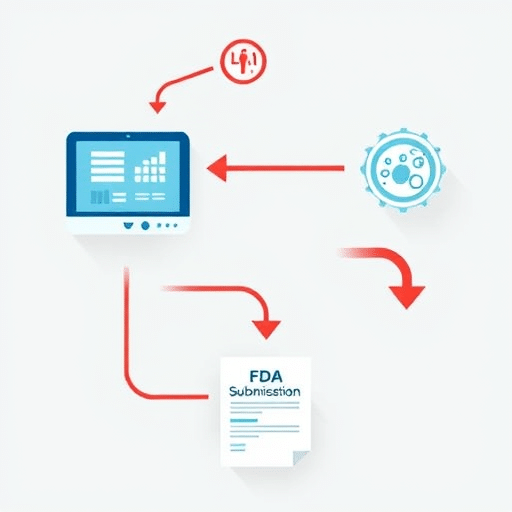
- Months 10-12: Submit or support regulatory submission; design post-market dashboards; negotiate payer coverage.
Adaptive diagnostics do not fail because the underlying science is weak. They fail because the surrounding evidence, governance, and financial scaffolding are built as an afterthought. Hospitals that treat regulatory readiness as a first-class engineering problem, not a legal checkbox, are the ones whose pilots become standard of care.