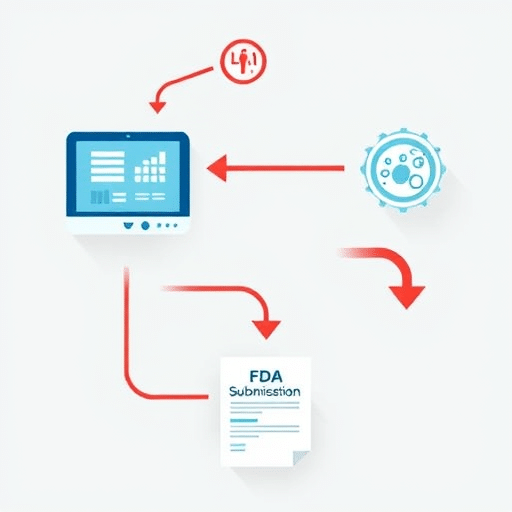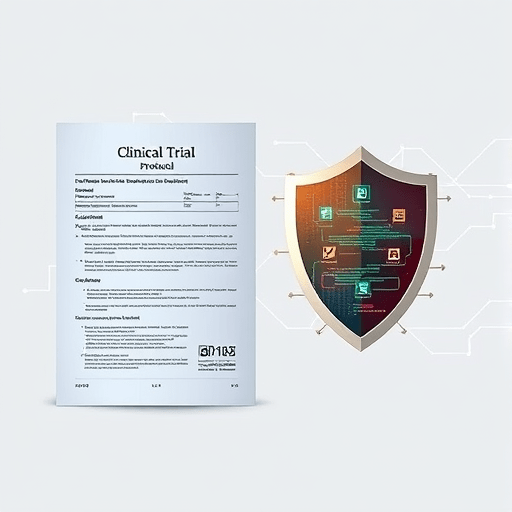
The era of treating clinical evaluation and cybersecurity as separate regulatory tracks for Software as a Medical Device (SaMD) is over. For sponsors navigating a SaMD clinical trials FDA vs EU MDR evidence roadmap, the challenge in 2026 is no longer simply checking two sets of boxes. It is about weaving clinical performance data, safety data, and security assurance into a single, defensible narrative that speaks to both regulators—even when their expectations differ. This article peers into that convergence, offering a practical evidence roadmap for sponsors who want to avoid duplicate studies, reduce review cycles, and create a dossier robust enough to satisfy both the U.S. Food and Drug Administration and the European Union Medical Device Regulation.
The State of SaMD Evidence: FDA and EU MDR Divergence in 2026
Both the FDA and EU regulators have moved away from viewing cybersecurity as a post-market compliance issue. For SaMD, cybersecurity is now accepted as a core component of clinical safety. Yet, the two regulatory ecosystems still approach evidence construction from different philosophical angles. The FDA emphasizes the Total Product Life Cycle (TPLC) and risk-based security engineering, expecting sponsors to demonstrate that both clinical performance and security controls remain resilient across software updates. The EU MDR, meanwhile, embeds cybersecurity explicitly in the General Safety and Performance Requirements (GSPRs), particularly under Annex I, requiring clinical evaluation to incorporate cybersecurity risk management as part of benefit-risk determination.
FDA’s TPLC Approach and the Modern Premarket Submission
The FDA’s 2023 premarket cybersecurity guidance (still fully applicable in 2026) made one thing clear: a SaMD device’s cybersecurity state directly impacts its safety and probable benefit. That means a premarket submission must include a cybersecurity risk management report, a software bill of materials (SBOM), and evidence that the device’s security architecture adequately mitigates exploitable vulnerabilities. Critically, the FDA expects this security documentation to link to clinical data—if a vulnerability leads to a delay in therapy, the clinical evaluation should acknowledge and address that scenario.
EU MDR’s Clinical Evaluation and the Risk-Based Security Nexus
Under EU MDR, the clinical evaluation process is a scientific, continuous assessment that must conclude whether the device is safe and does what it purports to do. The 2026 environment, shaped by MDCG guidance and the impending Cyber Resilience Act, has pushed cybersecurity into the clinical evaluation report (CER) in a more meaningful way. The CER must now reference cybersecurity as a characteristic that influences clinical safety, especially when a security failure could cause a patient harm. For sponsors, this marks a shift from sporadic vulnerability patches to a structured cybersecurity clinical risk assessment from day one.
The 2026 Imperative: Merging Clinical and Cybersecurity Evidence
Why is alignment so critical now? First, the volume of digital health connected devices is exploding, and cross-border trials rely on data flows that regulators examine with increased scrutiny. Second, both the FDA and European notified bodies are looking for signs that sponsors understand that a cyber-attack could be a clinical event—not just a data privacy problem. In practice, this means a single evidence roadmap should connect usability testing, human factors, software verification, threat modeling, and clinical outcome measurements. When those pieces remain siloed, regulators issue deficiency letters, and clinical trials get put on hold.
Building a Unified Evidence Roadmap for FDA and EU MDR Submission
To succeed in 2026, sponsors should design an evidence roadmap that treats clinical evaluation and cybersecurity as two facets of the same question: does the device maintain its intended clinical benefit under realistic usage conditions, including adversarial ones? The following steps provide a practical framework.
Step 1: Define Intended Purpose and Use Contexts to Cover Security States
A SaMD intended for use in a hospital network and one used on a patient’s personal smartphone present vastly different cybersecurity estates. The clinical evaluation protocol must specify the intended technical environment, including connectivity, data flow, and user handling of security updates. Sponsors should document how degradation of security controls might impact the intended purpose. For example, if a breach results in a temporary loss of data integrity, the clinical evaluation should explain how this is mitigated by design and whether it is acceptable under the intended medical indication.
Step 2: Map Clinical Evaluation to Cybersecurity Risk Management
Develop a crosswalk between cybersecurity risks and clinical risks. For each hazard identified in the cybersecurity risk analysis (e.g., unauthorized modification of therapeutic parameters), define a corresponding clinical risk scenario. Then connect both to the clinical evaluation activities that generate evidence. This crosswalk becomes the central artifact that demonstrates alignment to both FDA reviewers and EU notified bodies. It should also feed directly into the device’s risk management file under ISO 14971.
Step 3: Generate Evidence Through Integrated Trial Protocols
Instead of running a clinical trial and a separate cybersecurity threat assessment, integrate security endpoints into the study design. For instance, in case of an oncology AI SaMD, investigators might collect data on how the system behaves when a network anomaly is introduced during the study, or how clinicians interact with cybersecurity alerts. The FDA is receptive to adaptive trial designs that include cybersecurity-related performance and safety endpoints. EU MDR, meanwhile, allows the clinical evaluation to leverage the clinical data generated from such integrated studies, particularly if the study is conducted in a clinical setting that mirrors the intended use environment. This approach shortens the evidence generation timeline and yields richer context.
Step 4: Use Post-Market Surveillance to Close Evidence Gaps
A unified roadmap does not end at premarket approval. Post-market surveillance (PMS) should be structured so that cybersecurity incidents feed directly into the periodic safety update report for the EU and the post-market surveillance plan for the FDA. In 2026, regulators expect that a security vulnerability discovered in the field is analysed for its clinical impact, not just its software patch severity. By aligning the PMS plan with the clinical evaluation plan, sponsors can iterate on both documents in sync, making the ongoing evaluation of SaMD more credible and less burdensome.
Leveraging Standards and Harmonized Documents in the Evidence Roadmap
Standards are the grease that reduces friction between FDA and EU MDR requirements. The IEC 81001-5-1 health software standard, for example, provides a security lifecycle that aligns remarkably well with both regulators’ expectations. Sponsors should reference this standard in the clinical evaluation as a best-practice for secure design. Similarly, the EU’s MDCG 2019-16 guidance outlines cybersecurity aspects for devices, while the FDA’s recognized consensus standards can tell sponsors which testing needs to be performed. Building an evidence dossier that cites these references in both submissions—and explains how each one maps to the other—can drastically reduce redundant documentation.
Common Pitfalls to Avoid When Crafting the Evidence Dossier
One frequent mistake is preparing cybersecurity documentation after the clinical evaluation report has been finalized. That sequencing fails to reflect the integrated nature of risk in modern SaMD. Another pitfall is treating a penetration test as a proxy for clinical cybersecurity evidence. A penetration test shows that specific vulnerabilities were found and fixed, but it does not show how likely a security failure is to lead to patient harm. Regulators want to see a disciplined link between threat models and clinical outcomes. Moreover, sponsors should not assume that an FDA-approved SBOM format is automatically accepted by a European notified body. While they are similar, mapping differences must be explained. Finally, ignoring the reality that cybersecurity updates may alter the device’s clinical performance can lead to a regulatory nightmare. The evidence roadmap must include a change management plan that triggers a clinical evaluation update for every meaningful security modification.
Aligning the Roadmap to a Mixed Regulatory Environment
In 2026, most SaMD developers are not choosing between FDA and EU MDR—they are entering both markets. The most efficient approach is not to duplicate work but to create an evidence engine that generates a single pool of data, then filters it through the appropriate submission templates. Clinical studies should be designed with both regulators in mind from day one. That means including cybersecurity-related endpoints that are relevant to the FDA’s TPLC and also consistent with EU MDR’s clinical evaluation requirements. A well-constructed evidence roadmap thus becomes a competitive advantage: it shortens timelines, lowers development costs, and prevents last-minute discovery of critical data gaps.
The path is not lawless. It requires a mindset shift. Clinical teams must speak the language of security, and security engineers must understand clinical reasoning. When that happens, the evidence roadmap stops being a set of disconnected deliverables and becomes a coherent demonstration of a safe and effective medical product. Regulators in both Washington and Brussels will reward that coherence with shorter review cycles and fewer questions. For sponsors willing to invest in aligning their evidence generation around patient safety, the tools and standards are available today. The only remaining question is whether you are ready to make cybersecurity a first-class citizen in your clinical evaluation strategy.
In summary, the SaMD clinical trials FDA vs EU MDR evidence roadmap of 2026 is not about doing more work, but about doing better-integrated work. By linking clinical protocols to threat models, using standards as shared language, and building post-market feedback loops, sponsors can create a dossier that feels familiar to both regulators and stands up to rigorous scrutiny.
Conclusion: The convergence of clinical evaluation and cybersecurity evidence is no longer an option. It is the defining feature of successful SaMD submissions in 2026. Sponsors who embrace this unified roadmap will not only meet the letter of FDA and EU MDR requirements but also secure a faster, more predictable journey to market.