When software as a medical device (SaMD) is being evaluated in an ongoing clinical trial, unexpected bugs, algorithm refinements, or protocol-driven updates are almost inevitable. The question is whether those modifications trigger a new 510(k). SaMD changes in ongoing clinical trials demand a careful regulatory path, but a well-timed Q-Sub can give sponsors the clarity they need to update software without starting the clearance process over.
The Mid-Trial Change Paradox
SaMD is never truly finished. It is refined in response to real-world data, user feedback, and the realities of the clinical environment. But ongoing clinical trials are designed around a locked protocol, a fixed study population, and a device whose essential safety and effectiveness profile has been agreed upon with the FDA. When software changes mid-trial, the fundamental tension becomes obvious: the device must evolve, but the clinical evidence must stay reliable enough to support a future submission.
Many sponsors default to one of two extremes. Some freeze development entirely until the trial ends, which creates outdated software and wasted clinical data. Others make changes quickly and only later realize that the changes should have been reported to FDA. A Q-Sub sits in the middle. It gives sponsors a structured way to ask FDA whether a proposed change requires a new 510(k) before the change is implemented, and before trial integrity is put at risk.
What a Q-Sub Actually Does, and Does Not Do
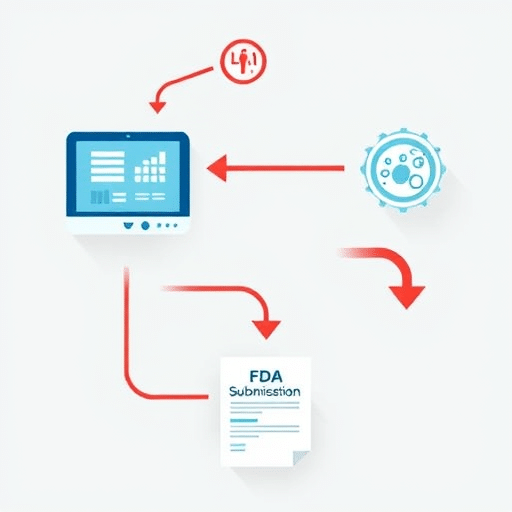
The FDA’s Q-Submission program, often called the Pre-Submission process, is not an approval mechanism. It is a written feedback mechanism. You submit a request, include data and rationale, and FDA provides feedback on a specific regulatory question. For SaMD changes in ongoing clinical trials, the most valuable question is often: “Does this software change significantly affect safety or effectiveness, and does it require a new 510(k)?”
A Q-Sub does not legally bind FDA to accept a future submission, but in practice it creates a documented regulatory position that can be used in the trial’s records, IRB discussions, and future audit trails. When FDA responds in writing that a proposed change falls within the existing clearance, sponsors can proceed with reasonable confidence that a new 510(k) will not be required. That is the shortcut.
When the Q-Sub Shortcut Works: Scenarios That Avoid a New 510(k)
Not every software change deserves a new 510(k), and FDA has long recognized that. The key is deciding whether the change significantly alters the risk profile or intended use. In a Q-Sub, you can present evidence that the change is minor, well-scoped, and adequately verified. The most common scenarios where a new 510(k) can be avoided include:
- Bug fixes that restore intended performance: When the change returns the software to its originally cleared behavior, it is typically not a significant change.
- Performance improvements within the cleared intended use: A faster processing speed or better sensitivity margin can often be handled with verification and validation evidence.
- Cybersecurity patches that address emerging threats: If the patch reduces existing risks without adding new ones, it is usually a maintenance change.
- Changes to user interface elements that do not impact clinical decision-making: If the displayed data and the clinical workflow remain unchanged, the risk may not increase.
- Server-side updates with no effect on the SaMD’s core algorithm: When the change is purely infrastructural, the clinical claim remains intact.
For any of these scenarios, the Q-Sub should include a side-by-side comparison of the cleared device’s specifications and the proposed version. FDA can then evaluate whether the change is truly within the scope of the original clearance.
When a Q-Sub Won’t Save You: Red Flags for a New 510(k)
There are situations where no amount of pre-submission framing will convince FDA that a new 510(k) is unnecessary. A new patient population, a materially different disease indication, a new output that changes treatment decisions, or a complete rewrite of the core algorithm will likely require a new submission. In those cases, the Q-Sub can still be useful, but the question changes from “Do we need a new 510(k)?” to “How do we plan the new 510(k) while keeping the trial valid?”
It is also important to remember that a Q-Sub cannot protect a sponsor from the legal obligation to hold an IDE supplement if the change affects the clinical investigation plan. A device can be cleared for marketing, but if it is being studied in a clinical trial for a new use, the IDE rules still apply. The Q-Sub addresses the 510(k) side, but it does not replace IRB oversight or the sponsor’s responsibility to update the investigation plan.
Building a Q-Sub for a Mid-Trial Software Change
The quality of the Q-Sub determines the usefulness of the feedback. A vague change description will produce a vague response. Sponsors should structure the Q-Sub around the specific change in the context of the ongoing trial.
1. Separate the Change from the Clinical Data
Explain exactly which parts of the software are being modified and why. If the change is driven by data from the trial, describe how the data points to the modification. FDA will want to know whether the change is responsive to a safety issue, a usability problem, or an emerging clinical insight.
2. Include the Validation Evidence
Software change submissions live and die by verification and validation evidence. Include test plans, expected results, actual results, traceability matrices, and any bench data that demonstrates the change does not degrade performance. If you can show that the change was handled through a robust quality management system, FDA can rely on that.
3. Address Study Continuity
An ongoing clinical trial introduces a second layer of concern. How will the change affect subjects who have already completed the study? Will the change affect the interpretation of data already collected? FDA may ask whether the trial needs a pause, a protocol amendment, or updated informed consent forms. Addressing these questions proactively in the Q-Sub shows FDA that you understand the larger context.
4. Be Clear About Risk
Use the same risk language that appears in the original 510(k). If the original submission identified a risk as “moderate,” do not claim in the Q-Sub that the new change reduces it to “low” without evidence. The more consistent the risk language, the easier it is for FDA to agree that the change is not significant.
Timing the Q-Sub for Maximum Trial Protection
Q-Subs are not instant. FDA typically provides written feedback within seventy days, and meeting requests can add weeks to the timeline. Sponsors who wait until the software has already been updated in the field have missed the window for a true shortcut. The better strategy is to build a Q-Sub trigger plan before the trial ever begins.
Define which classes of software changes will require a Q-Sub, which changes can be handled internally, and which will require a new 510(k) regardless of the Q-Sub outcome. That way, when the inevitable mid-trial change arrives, the sponsor can quickly assemble the submission package and get the regulatory answer before disrupting trial sites. With this approach, the Q-Sub is not an emergency measure; it is a strategic lane on the regulatory highway.
The Q-Sub as a Competitive Advantage for SaMD Teams
Software companies are used to moving fast, and clinical trials feel painfully slow. Waiting for a 510(k) clearance can add months to an already long development cycle. The Q-Sub shortcut allows a SaMD team to keep its clinical trial moving and to keep a cleared product available while making necessary improvements. In a fast-moving landscape, that documented feedback can also reassure clinical sites and institutional review boards that the change has been considered in a regulatory context.
The ultimate goal is not to avoid accountability. It is to avoid redundant regulatory paperwork for changes that are already well understood and well controlled. FDA’s Q-Submission program is designed for exactly this kind of collaboration, and sponsors who use it strategically can make SaMD changes in ongoing clinical trials feel less like a crisis and more like a calibrated step forward.
Conclusion
Q-Sub will not remove FDA oversight, but it allows SaMD sponsors to turn a potentially ambiguous mid-trial software change into a documented, agreed-upon regulatory decision. When used early and with focused evidence, the Q-Sub shortcut can keep an ongoing clinical trial on course and prevent an unnecessary new 510(k). In a world where software evolves faster than clinical evidence, that alignment is not just helpful; it is becoming the new standard for responsible SaMD development.