Battle pass fatigue has quietly become the defining monetization crisis of the live-service era. Players log in, see a 70-day grind ahead of them, and instead of feeling excitement, they feel the weight of a second job. Yet the solution may not be abolition—it may be rotation. Rotating cosmetic vaults, a system that reintroduces old skins on a precise schedule, are proving to be the most reliable way to generate recurring revenue while rebuilding the player trust that endless battle passes have worn thin. In 2026, the games winning the long game are not the ones adding more passes; they are the ones bringing back the skins everyone thought were gone forever.
The Hidden Cost of Permanent Exclusivity
For years, the industry assumed that scarcity was the only engine of cosmetic value. Drop a skin once, promise it will “never return,” and you create instant demand. But that logic has a serious flaw: every exclusive item is a permanent relationship tax. New players who missed the battle pass feel punished. Veteran players who own everything feel no incentive to buy. Meanwhile, the community leaks stories of “I would pay double if that skin came back,” and the studio hears those stories but does nothing—because removing exclusivity feels like betraying early adopters.
The result is a slow bleed. Battle pass sales drop as players realize they are paying for content they won’t finish. The pressure to release increasingly aggressive offers rises, which only deepens the fatigue. By 2025, industry surveys of live-service gamers consistently showed that “too many limited-time items” ranked among the top reasons for churn, alongside content droughts and aggressive monetization. The old model wasn’t just slowing down; it was actively pushing players away.
What Is a Rotating Cosmetic Vault?
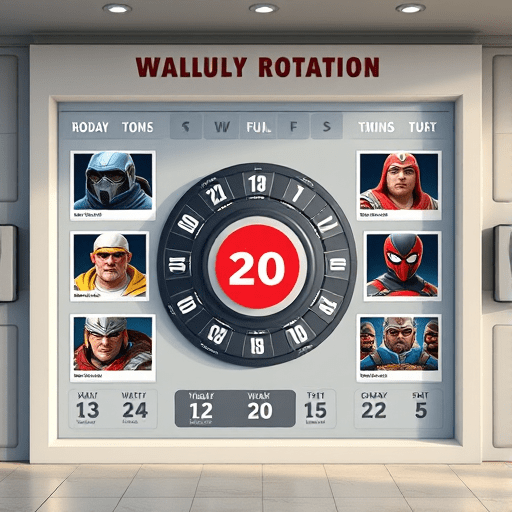
A rotating cosmetic vault is not a loot box and not a battle pass. It is a scheduled catalog of older cosmetics that returns to the store for a short, clearly communicated window—say, two weeks—before going back into the vault for several months. Think of it as a seasonal library where every item has a public calendar. Players never know exactly what will arrive, but they know exactly when to check, and they know that missing a rotation is not a forever goodbye.
The key difference from a simple “legacy store” is the rhythm. A legacy store that carries all old cosmetics permanently becomes overwhelming, and it reduces urgency to zero. A vault that rotates creates anticipation without creating panic. The player can say, “I want that skin, and I know it will appear sometime this season,” rather than, “I have twenty hours to buy it or it’s gone forever.” That shift in emotional tone is what separates a vault from a manipulative countdown timer.
Case Study: The Rotation That Reversed a Revenue Slide
Consider a mid-sized live-service title—a team-based shooter with about 8 million monthly players—that had leaned heavily on battle passes since 2022. By early 2024, its battle pass completion rates had fallen below 40 percent, and for the first time, quarterly cosmetic revenue declined year over year. Internal research blamed fatigue and an overflowing backlog of unobtainable items. The community’s most repeated request was not for new content; it was for the chance to buy the skins they had missed.
The studio tested a rotating cosmetic vault over a three-month period. Each week, ten legacy skins returned for a 48-hour “spotlight,” and five additional skins rotated in for a fuller two-week window. Prices were kept consistent with the item’s original rarity, and no items were listed as “limited edition” or “ultimate exclusive.” The schedule was published a month in advance, so players could plan around paydays.
The results were striking. Revenue from the vault window alone matched 60 percent of the revenue the previous battle pass had produced over its entire seventy-day run—without the requirement to grind. Player sentiment scores, measured monthly, rose by 18 points, with the highest-positive responses coming from players who had joined after the battle pass they missed. More importantly, the studio saw no meaningful drop in new-cosmetic purchases. Rather than cannibalizing new items, the vault acted as a gateway purchase that pulled lapsed spenders back into the full store, where they then purchased current-season items as well.
The Psychology of “Fresh Nostalgia”
The success of rotating vaults is not about rarity mechanics—it is about the difference between fear and desire. Battle passes rely on fear of missing out: a finite clock, a long list, and lost progress. A rotating vault relies on a softer emotional trigger that game designers call “fresh nostalgia.” A player sees an old skin they loved, remembers the good times playing that season, and feels a desire to reconnect. That desire is not rooted in the fear of loss; it is rooted in the positive memory of the game itself.
This is why vaults boost revenue on a schedule instead of in a rush. A player who sees a favorite skin rotate in is more likely to log in regularly, check the store, and keep the game in their weekly routine. On social media, the announcement of a vault rotation generates organic conversation, fan art, and screenshots—because players love sharing the moment they finally got the “one that got away.” In the case study above, vault weeks produced a 40 percent increase in daily active users, and the game’s social mentions doubled on every spotlight day.
Building a Player-Trust-First Rotation Schedule
No rotation system will boost revenue if players believe it is just another trap. The difference between a well-received vault and a hated one comes down to a few clear rules:
- Scheduling transparency. Publish the full rotation calendar at the start of each season, with the caveat that dates may shift slightly for live events. Players should never feel the need to check the store hourly.
- Honest tiering. Do not rewrite the rarity of old items. A legendary skin should return at legendary pricing, and an item that was originally battle-pass exclusive should not be given a new “vault elite” label that implies a higher status than it had.
- No random gating. The selected items should be announced before each window. Avoid “surprise” rotations that drop at 2 a.m., and never bundle vault items into RNG loot boxes.
- Fair value for veterans. If an item is returning that a long-term player already owns, give them a small alternate reward—such as a matching banner, a currency discount on a future rotation, or a profile badge—so they feel recognized rather than ignored.
- Rotation off-switch. Leave the door open for items to go back into the vault for extended periods. The schedule is not a promise that something will return every month, only that nothing is deleted from the universe forever.
Making the Vault the Centerpiece, Not a Side Dish
The most successful implementations do not treat the vault as a marketing stunt squeezed between battle passes. They make the vault the primary store structure, with the battle pass reduced to a shorter, seasonal event rather than the sole reason to play. In many games, the vault now runs continuously in the background, with the “featured” rotation changing every week and a deeper rotation changing every month. This creates a stable rhythm that players can internalize: check the store on Tuesday, see what is new, set a mental note for the next couple of days.
It also gives studios a gentler way to introduce old collaboration or crossover items after licensing windows reopen. A rotating vault allows a game to re-release limited crossovers without making any promises about a permanent catalog, which solves the legal and contractual headaches that once made “never returning” the default plan. As crossovers become a bigger part of gaming culture, the vault becomes the natural home for them.
Conclusion
Rotating cosmetic vaults will not replace battle passes entirely, but they are reshaping the ecosystem by offering something the pass economy never could: a second chance. By bringing back old skins on a schedule, games can generate meaningful revenue without forcing players into an exhausting grind, and they do it in a way that makes the community feel heard rather than mined. The case study is clear—when players trust that their favorite item will eventually return, they stop hoarding their wallets and start spending with patience. In 2026, the winning live-service games are the ones that treat their back catalogs not as lost treasure, but as a library that is always open.