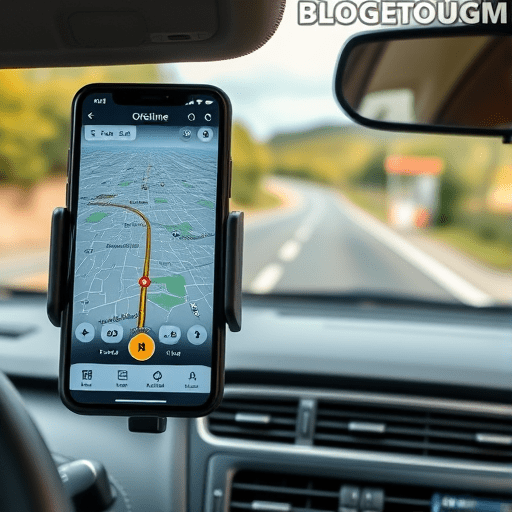
The dream of drifting through Provence, along the Amalfi Coast, or over Alpine passes usually hits one stubborn wall: language. You can read “Sortie” and guess it means exit, but what about a Czech mechanic explaining a timing belt issue, or a handwritten note in Portuguese saying your campsite is full? The good news is that in 2026, a road trip across Europe no longer requires a phrasebook, a semester of Spanish, or charades that involve flapping your arms like a windmill. With a handful of offline apps, a basic understanding of pictographic signs, and a tiny set of carefully chosen words, you can handle almost any situation — from fueling up on a self-service forecourt in rural Poland to navigating a multi-level parking garage in Barcelona. This is your practical guide to traveling Europe by car with confidence, even when you don’t speak the language.
Why the Phrasebook Is Dead (And What Replaced It)
Not long ago, the phrasebook was a road-tripper’s bible. It had charming sections like “At the Garage” and “The Bill Is Incorrect.” But it was slow, bulky, and utterly useless when you needed to understand a rapid-fire response. Today, the smartphone has eclipsed it. Yet the real shift isn’t just translation — it’s context-aware assistance. Offline maps now include fuel prices, parking availability, and even traffic signs. Translation apps can use the camera to instantly read a menu or a warning label. Voice assistants can pronounce a phrase perfectly, and you just play it aloud. That means you don’t need to speak; you need to use the right tool at the right moment.
But a blind reliance on apps is a trap. There’s no signal in a Pyrenean valley, and battery dies at the worst time. The trick is to build a layered system: offline apps for core functions, a mental library of pictographic signs that transcend language, and a small set of “survival phrases” that show respect and solve problems.
Offline Apps That Speak the Road’s Language
Before you leave, spend an evening downloading and — crucially — testing these apps. Don’t wait until you’re sitting in a rental car outside Marseille.
Offline Maps with a European Soul
Google Maps allows offline downloads, but in Europe, you need more granular data. Organic Maps and Maps.me are excellent for hiking trails and narrow rural roads. For a road trip, TomTom GO or Here WeGo often handle lane guidance and roundabout exits better than Google, and both support offline regional downloads. The hidden gem, though, is Park4Night — it’s not just for campervans. Use it to find free parking, overnight spots, and even public restrooms in a pinch. All these apps rely on downloadable map packs, so plan your route and download each country in advance.
Translation Apps: More Than Just Text
Google Translate remains the Swiss Army knife, but its offline camera mode is the MVP. Point your phone at a Croatian restaurant menu, and the live overlay gives you a rough English translation. For voice, DeepL (offline mode on mobile) produces more natural phrasing, especially for Germanic and Romance languages. The trick is to download the language packs for all the countries you’ll cross — and then practice the “play button” approach: type or speak your phrase in English, let the app translate, and then play the audio aloud.
For conversations, consider Microsoft Translator’s conversation mode, which can handle two-way dialogue with a split screen. It works offline for a limited number of languages, and it’s much better at handling road-trip negotiation than you’d think. Just remember to keep your phone charged — a power bank is not optional.
The Universal Language of Pictographic Signs
The best language bridge on a European road trip is the one already built into the infrastructure: pictograms. The International Road Signs system, standardized by the Vienna Convention, means a red-bordered circle with a slash means “no entry” whether you’re in Lisbon or Lviv. But beyond those, there are several less obvious pictographic codes that save you from panic.
Fuel, Parking, and Service Icons
At a fuel station, a pump icon with “D” or the letter “B” indicates diesel — but in France, it’s often “Gazole” and in Spain “Gasóleo.” Learn these before you cross a border. Parking garages use a universal green arrow or an illuminated “P” to signal open spaces, but watch for a red “P” with a line through it. Your car’s dashboard icons are mostly pictographic too, but if an unfamiliar orange engine-light symbol appears, don’t trust a local’s local knowledge — use your offline Google Maps to find a nearby garage, and use your camera-translate app to read the error code if you have an OBD scanner.
Tourism and Campsite Icons
Campsite signs in Europe are almost universally a pictogram of a tent or a caravan. But if you’re looking for a “camping-car parking” space, you’ll see a motorhome icon with a diagonal slash over a blue tent icon — that means no tents allowed. Likewise, a pictogram of a tap with “O” (for “open”) indicates drinkable water. These small icons are often your only way to know if a roadside rest area is safe and useful. Before you go, print or screenshot a simple pictographic legend of campsite icons from a site like Campercontact or a scraped list of EU parking symbols. Store it in your phone’s photo album for offline reference.
Key Phrases That Work Better Than an App
Despite all the technology, a handful of spoken phrases can break ice and solve problems that apps can’t. The goal is not fluency — it’s trust. When you ask a toll booth kiosk in its native tongue, even badly, people go out of their way to help.
- “Do you speak English?” — Learn it in the local language: Sprechen Sie Englisch? (German), Parlez-vous anglais ? (French), ¿Hablas inglés? (Spanish), Parla inglese? (Italian), Fala inglês? (Portuguese). You’ll often get a smile and a switch to English.
- “Where is [the toilet / the fuel / the road]?” — Use simple nouns and a questioning tone. Most Europeans understand “toilet?” and “fuel?” as universal words. Pair them with a pointed index finger and a raised eyebrow.
- “How much?” — This is the one phrase you must know in every language on your route. In markets, at toll booths, and for parking fees, you can hold up a phone with a calculator to negotiate. But saying “Quanti?” in Florence instantly changes the interaction.
- “Thank you” and “Sorry” — “Danke,” “Merci,” “Grazie,” “Gracias,” “Obrigado” (Portugal) or “Gràcies” (Catalonia). Apologies are equally crucial when you accidentally cut someone off at a roundabout. A quick “Scusi!” (Italian) or “Entschuldigung” (German) keeps the road karma positive.
To memorize these, use a flashcard app like Anki or just a note page on your phone. But don’t stress about pronunciation — the effort matters more than the accent.
Transacting Without Words: Toll Booths, Parking, and Border Checks
You’ll encounter several moments where language seems essential but actually isn’t. Toll booths are the best example. In countries like Italy, France, and Spain, you’ll either use a credit card or a contactless payment app. However, some older toll lanes are still cash-only with no attendant. The trick is to look for the pictogram of a person or the coin icon. If you get a ticket from a machine, it’s universally understood that you must take the ticket and keep it until exit. If you’re at a border crossing — within the Schengen Area, most are gone, but Switzerland and some Eastern European borders still have checkpoints — a simple “Passport” in English or the local word, plus a friendly smile, handles it. In rare cases, you might be asked a question. Say “No English” with palms open, and they’ll usually wave you through.
Parking is where language can hurt. Many European cities now use automatic payment machines that might be in German, Croatian, or Slovenian. But almost every machine has a pictogram of a parking ticket or a banknote. Pro tip: on these machines, the universal “banknote” icon means you can pay with cash, and the “credit card” icon means you can use a chip card. If the machine only takes coins and you have none, search for a “Wechselgeld” (German) or “cambio” (Italian) pictogram — usually a coin swap icon. Worst case, a nearby shop owner or waiter will happily break a bill if you point at the machine and shrug.
Planning a Tech-Readiness Routine Before You Drive
The real key to a wordless European road trip is preparation. Set aside a “digital waterline” before you depart. Here’s a short pre-trip checklist:
- Download offline maps in either Here WeGo or Google Maps for every country you’ll drive through, including the tiny ones like Luxembourg and Liechtenstein.
- Install a VPN — not for privacy, but because some travel apps behave differently across borders, and a VPN allows you to purchase eSIM data plans that work in all countries without roaming charges.
- Download the Google Translate offline packs for all target languages, and also save a link to a web-based pictogram dictionary.
- Store a screenshot of your rental car’s fuel type (e.g., “Diesel – use green handle”) in your photos.
- Write down your rental company’s emergency phone number on paper and tape it to the dashboard — even if you never need it, it removes anxiety.
This routine takes about 30 minutes, but it’s what separates a relaxing, spontaneous adventure from a roadside panic.
Embracing the Silence: Why Not Speaking Can Be a Gift
There’s an underrated advantage to traveling without a common language: it forces you to slow down. You pay closer attention to body language, to the rhythm of a village, to the little signs and icons that locals take for granted. When you can’t ask for directions, you discover that a bakery owner will walk outside and point you down the lane with a smile. When you can’t read a menu, you’ll sometimes order something you didn’t expect — and occasionally, that’s a wonderful mistake. In 2026, the autonomous road trip isn’t about autonomous cars; it’s about autonomous travelers who use a smart mix of offline tools and human empathy. So pack your phone, your eSIM, and an open mind. The road will speak to you — you just need to know how to listen.
With offline maps, a camera-translation app, and a few universal icons in your memory, you can drive from the Atlantic coast to the Hungarian plains without ever needing to conjugate a verb in a foreign language. The phrasebook stays in the glove compartment — not as a fallback, but as a relic of a past that no longer limits you.