When a beloved game gets a remaster, the biggest risk isn’t graphics, bugs, or even price—it’s the level order. A remaster that reorders levels, even with noble intentions like better difficulty curves or story flow, can sabotage the exact emotional connection players expect. To truly compare original and remake pacing is to see why a familiar sequence feels like a friend, and why changing it can feel like a betrayal. This article explains the invisible mechanics of pacing, why nostalgia relies on order, and how developers can fix player trust without cutting a single level from the remake.
Why Level Order Is a Memory Anchor
In the original release, level order wasn’t just a route through a game—it was a journey of emotional landmarks. The first enemy type teaches you to react. The first boss tests your grasp of the core loop. The mid-game level that lets you breathe before a difficulty spike is as important as the spike itself. Players rarely remember each level as a standalone island. Instead, they remember the *flow*: the relief after a hard fight, the dread before a known gauntlet, the joyous discovery of a secret area that broke the tension.
When a remaster shifts this sequence, it disrupts what psychologists call the “peak-end rule.” Players judge an experience by its most intense moments and its final moments, not by the average quality of every hour. A remaster that places the most intense combat early or extends the tension-window too long can ruin the remembered peaks. Even worse, it can make the original’s ending feel unearned. This is why so many players, when asked why a remaster feels “off,” point to a vague sense of disorientation rather than a specific mechanical flaw. The trust is gone because the map of expectations has been redrawn.
What Actually Changes When Pacing Shifts
It’s easy to assume that keeping the same levels but changing their order is an innocuous design choice. But compare original and remake pacing carefully, and you’ll notice several concrete consequences.
- Difficulty progression stops feeling like a conversation. Original games were designed around a gentle teaching curve. Early levels introduce one mechanic at a time. A level that requires the double-jump only appears after you’ve mastered the double-jump. Remasters that reorder levels to balance challenge ignore that the original developer had already balanced challenge *through* the level order itself.
- Story beats lose their rhythm. Cutscenes, dialogue, and environmental storytelling are placed in a deliberate cadence. A quiet journey through a haunted forest becomes more impactful if it follows a chaotic city chase. Swap those, and both scenes become flat. The emotional pacing collapses.
- Rewards and power-ups become arbitrary. Some games give you a new ability as a reward just before a level that needs it. Reordering levels means that the reward either feels too early (boring) or too late (frustrating). Even if you keep the same total content, the *feeling* of progression changes.
- Music and atmosphere lose their narrative arc. A soundtrack is often designed to modulate alongside difficulty and emotion. The tension track in the third level might be perfect because you’re still learning. If that same level appears sixth, the music will feel stale or mismatched against your skill level.
The Case Study: A Remake That Reordered and Lost Player Trust
Consider a classic survival horror title, where the original mansion’s layout and the order of keys created a pressure-cooker of vulnerability. In the remake, developers moved a safe room to an earlier location and shuffled the puzzle sequence to make the opening less punishing. The result? The early game became almost boring, and the mid-game spike felt cruel. Players didn’t complain about difficulty honestly—they said the mansion “didn’t feel right.” Because the remake changed the pacing of discovery, the fear of the unknown was replaced by the anxiety of confusion. The game wasn’t harder or easier overall, but the distribution of tension was so different that the nostalgic memory of the original was overwritten with frustration.
This isn’t a rare failure. The same pattern appears in remasters of 3D platformers when the iconic first world is swapped with a later world to “make a better intro.” The new world might have better art, but it doesn’t teach the movement language correctly. Players new to the game might not notice; returning players do. And the returning players are the ones who will buy the remaster on day one and write the reviews that shape public trust.
Can You Fix Pacing Without Cutting Content? Yes.
The good news is that the problem is solvable. Developers don’t have to remove levels or add filler to restore trust. They just need to respect the original emotional architecture. The core principle is simple: keep the original level order as the default, and treat any deviation as a separate, optional mode.
- Offer an “Original Order” option from the start. This is the most powerful trust-builder. Let players experience the game exactly as they remember it, with the same opening, the same mid-game shift, and the same finale. If you’ve also designed a new order for new players, label it as “Remixed” and allow switching at any time.
- Use difficulty modes to rebalance, not level order. If a level is too hard in the remake, adjust enemy counts, damage numbers, or health pickups. Don’t move the level. Pacing is a structural feature, not a tuning knob.
- Add new content with expansion logic, not replacement logic. A new area that fits between existing levels can feel like a natural bridge—but make it optional and skippable. The original path should remain intact for the fastest route through the game.
- Preserve the intended emotional beats. If a certain level was famous for its sudden horror shift, don’t let a new cinematic or a new mechanic dilute that moment. Place new gameplay features before the iconic beat, not after it, so the beat retains its power.
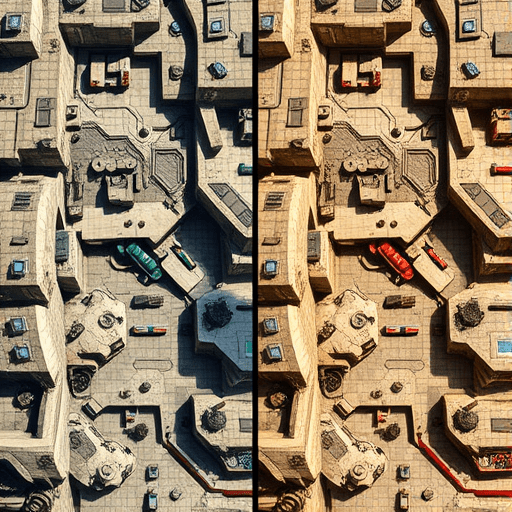
- Let players see the pacing map. Some remasters allow players to view a level list with icons that show relative difficulty, story importance, and length. This transparency helps players understand *why* an order exists. If you’ve changed the order, show the original order as a side-by-side comparison.
Player Trust Is Built on Respecting the Memory of Pace
Remasters are a dialogue between the original designers and the current audience. That audience isn’t just buying a game; they’re buying a memory of how it felt to progress in a particular rhythm. When you shift level order, you’re not editing a file—you’re rewriting their internal chronology. The fix isn’t to cut content, nor to stubbornly resist all change. It’s to compare original and remake pacing with the same care a film editor uses for a director’s cut.
One practical strategy is to treat the original level order as a sacred timeline, and to include a runtime option that reblogs the levels in the new order only for players who want a “fresh” experience. Another is to use telemetry in the remake to see which levels players actually abandon or skip. If the same level causes excessive drops regardless of order, then the problem is that level’s internal design, not its position.But the most important shift is philosophical: speak to players honestly before the game launches. Announce that the remake preserves the original level order by default, and add a separate remix mode for veterans. That transparency alone can rebuild trust that many modern remasters have eroded.
Nostalgia is fragile because it’s a sequence, not a still image. Players remember the slow climb before the high peak, the quiet valley after a boss. A remaster that preserves the geometry of that journey, even while modernizing the texture of every moment, gives players what they secretly want: a chance to feel the same pacing they once loved, not just see it from the outside. Don’t cut content, don’t stretch it thin, and don’t shuffle it. The best remaster is one that convinces players their memory was accurate all along.