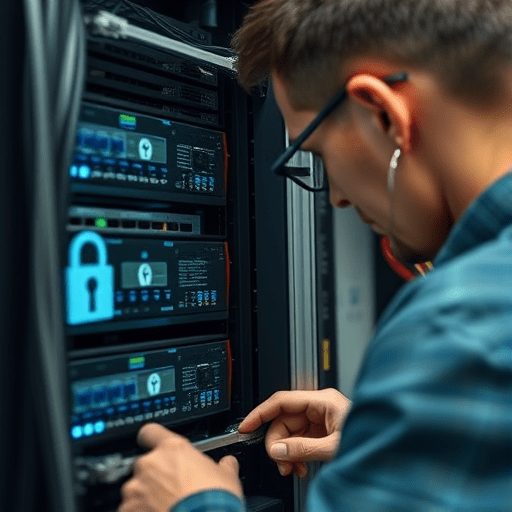
The clock on quantum advantage is ticking faster than many enterprises expect, and for organizations operating legacy hardware, the challenge of deploying quantum-safe encryption is no longer a theoretical exercise. It’s a disciplined engineering process that requires retrofitting existing equipment, updating protocols, and maintaining interoperability with the outside world. This step-by-step migration plan for legacy systems offers a pragmatic path forward, focusing on how to identify, prioritize, and implement quantum-safe encryption without ripping out the infrastructure you’ve depended on for decades.
Why Legacy Hardware Makes Quantum-Safe Migration Difficult
Legacy systems were never designed for cryptographic agility. Many were built before public-key algorithms like RSA and ECC became the default, or they rely on hardware accelerators that simply cannot execute the mathematical operations required by new quantum-resistant algorithms. The problem is compounded by firmware that has not been updated in years, proprietary protocol stacks, and compliance requirements that demand uptime above all else.
However, migration is possible. The key is to treat the process as a series of compatibility layers, not a full replacement. A well-executed migration plan can extend the life of legacy hardware while making it resilient against future quantum adversaries.
Step 1: Inventory and Classify Your Cryptographic Footprint
You cannot secure what you do not know exists. The first step of any quantum-safe migration is to build a comprehensive cryptographic inventory across all legacy systems, including embedded devices, network appliances, mainframe integrations, and even overlooked peripherals.
Identify All Cryptographic Functions
- Document every use of RSA, ECC, Diffie-Hellman, and other public-key algorithms in TLS handshakes, SSH sessions, code signing, and firmware update verification.
- Map symmetric encryption usage (AES, 3DES) and hash functions (SHA-1, SHA-2) that may also require revision for post-quantum security.
- Record protocol versions – TLS 1.2, IPsec, custom proprietary handshakes – and note where cryptographic parameters are hard-coded.
- Flag systems with unchangeable hardware modules, as these will require gateway or front-end solutions.
Classify by Risk and Business Impact
Not all legacy hardware is equally sensitive. Group assets based on data sensitivity, exposure to external networks, expected operational lifetime, and regulatory requirements. For instance, a legacy payment terminal handling transaction data is a higher priority than an internal building automation controller with no external connectivity. This classification will drive your sequencing and budget decisions.
Step 2: Define Your Post-Quantum Security Baseline
Once you know your inventory, you need to decide what “quantum-safe” means for your organization. This goes beyond simply choosing a new algorithm. NIST standardized several post-quantum algorithms in 2024, but they are not drop-in replacements. Your baseline should include key sizes, performance budgets, and transition timelines that align with your risk profile.
Adopt a Hybrid Approach
For legacy systems that cannot be immediately upgraded to pure post-quantum algorithms, a hybrid TLS or IPsec configuration offers the best of both worlds. Combine traditional ECC or RSA with a quantum-resistant algorithm such as ML-KEM (Kyber) or ML-DSA (Dilithium). This ensures that even if a quantum computer breaks the classical component, the hybrid handshake remains secure through its quantum-safe half. Many modern security libraries already support hybrid groups, and some hardware vendors have backported these capabilities to older devices.
Step 3: Choose Algorithms That Fit Your Hardware Constraints
Quantum-resistant algorithms come with different computational profiles. ML-KEM is efficient for key exchange but requires larger keys and ciphertexts than ECDHE. ML-DSA has larger signature sizes, which can be problematic for constrained memory. Falcon (FN-DSA) offers smaller signatures but is more complex and often unsupported on old CPUs.
Benchmark Performance on Actual Hardware
Do not rely on vendor literature alone. Run benchmarks on your specific legacy hardware, including CPU usage, memory footprint, and latency under load. On very old devices, a software-only implementation of ML-KEM might cause unacceptable slowdowns. In such cases, consider an edge proxy or terminate TLS at a modern gateway that re-encrypts to the legacy backend using a symmetric-only channel, effectively bypassing the need for expensive public-key operations on the old device.
Step 4: Plan Hardware and Firmware Updates
Some legacy systems may have upgrade paths that are not immediately obvious. Check the manufacturer’s support lifecycle, security advisories, and recent firmware downloads. In 2026, many major vendors have begun shipping post-quantum-capable firmware for devices that were originally deployed long before the NIST standardization process.
Microcode and Cryptographic Accelerator Compatibility
If your legacy hardware includes a cryptographic accelerator chip, verify whether it supports any of the NIST-approved algorithms. Some older hardware accelerators only handle modular exponentiation for RSA, which is useless for lattice-based cryptography. If the accelerator cannot be replaced, your migration plan will need to rely on software implementations or external hardware security modules (HSMs) acting as a cryptographic bridge.
When Hardware Replacement Is Unavoidable
For devices at end-of-life with no firmware updates, the only safe option is to place them behind a quantum-safe transition gateway. This is a dedicated appliance that handles all external cryptographic operations, translates the session to a secure internal protocol, and forwards plaintext or re-encrypted traffic to the legacy device. This approach is particularly useful for industrial control systems where the PLC or RTU cannot be modified.
Step 5: Build a Phased Migration Roadmap
Do not attempt a big-bang cutover. Use a phased approach that allows you to validate each step while maintaining operational continuity. A realistic migration plan for legacy systems spans multiple quarters, with parallel running of old and new cryptographic configurations.
Phase 1 – Monitoring and Telemetry
Before changing anything, increase logging around crypto parameters and connection failures. Deploy a dashboard that tracks handshake sizes, latency, and protocol versions. This baseline will help you detect regressions after each phase.
Phase 2 – Test Environment Replication
Stand up a lab that mirrors your production legacy environment. Include representative samples of each hardware model. Test hybrid protocols, certificate sizes, and renegotiation behavior. Pay special attention to maximum TLS record sizes and MTU constraints, as larger post-quantum certificates and handshake messages can cause fragmentation.
Phase 3 – Pilot Deployment on Low-Risk Systems
Select a small number of low-priority legacy devices and enable hybrid quantum-safe cipher suites. Monitor for increased CPU usage, connection drops, and compatibility issues with external systems. Document any exceptions and adjust your configuration parameters accordingly.
Phase 4 – Gradual Production Rollout
Roll out to the rest of the fleet group by group, beginning with internal-facing systems and then moving to externally facing services. Use a feature flag or configuration bundle that can be rolled back quickly if critical failures occur. Ensure that your support team has clear procedures for manually disabling hybrid mode on a per-device basis.
Step 6: Address Interoperability and Legacy Peers
Even if you successfully migrate your own hardware, you still need to communicate with third parties that may not yet support quantum-safe protocols. Do not assume that your business partners, customers, or remote devices are ready for the transition. In 2026, many external parties are still operating with outdated TLS implementations.
Use Graceful Downgrade Mechanisms
Configure your systems to negotiate hybrid cipher suites when supported, but still allow classical-only fallback for peers that have not migrated. This will not guarantee long-term security if the peer is attacked by a quantum computer, but it preserves functionality. For critical interactions, mandate that your partners upgrade within a specific timeline and offer technical guidance.
Step 7: Automate Certificate and Key Rotation
Quantum-safe algorithms typically require larger certificates and more frequent key rotations to mitigate the risk of quantum harvesting – the practice of collecting encrypted data now and decrypting it later. For legacy systems, manual certificate management is no longer acceptable. Leverage ACME or other automated certificate management tools to rotate keys and certificates without human intervention.
Prepare for Larger Certificate Chains
Your current public key infrastructure (PKI) may use certificate authority chains that are several kilobytes in size. With ML-DSA, the root and intermediate certificates are much larger, potentially exceeding the memory limits of some embedded devices. You may need to use a separate certificate profile or shorten your chain by deploying an intermediate CA closer to the hardware.
Step 8: Validate and Test Under Adversarial Conditions
After migration, run a comprehensive validation suite. This includes not only functional tests but also failure injection and security testing. Simulate man-in-the-middle attacks, packet loss, and memory exhaustion to ensure that the quantum-safe implementation fails securely rather than reverting to a weak default.
Ensure Rollback Capability
Every migration plan must have a rollback path. Store previous firmware and configuration images, and document the exact procedure for reverting. In the event of a critical vulnerability in a specific algorithm implementation, you will need to be able to switch to an alternate quantum-safe algorithm or re-enable the old hybrid configuration without affecting the rest of the network.
Conclusion
Retrofitting legacy hardware with quantum-safe encryption is not a simple software patching exercise; it requires thoughtful planning, realistic benchmarking, and a gradual rollout strategy that respects the operational constraints of older systems. By inventorying your crypto footprint, choosing hybrid algorithms, and building a phased migration roadmap, you can protect your infrastructure against future quantum threats while still keeping your legacy equipment running. The time to start is now, before quantum advantage becomes a reality and before the harvest of today’s encrypted data becomes tomorrow’s security disaster.