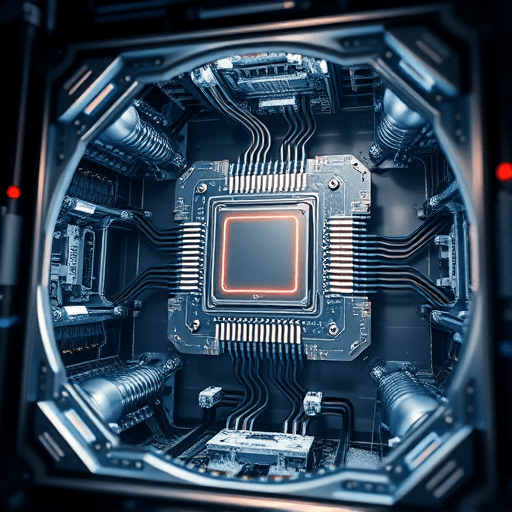
Let’s perform a necessary quantum computing reality check. In boardrooms across every tech-forward enterprise, the phrase “quantum advantage” is now thrown around with the same casual ease as “cloud migration” or “digital transformation.” However, the actual hardware remains stubbornly anchored to the messy, fragile laws of quantum mechanics. For a Vice President tasked with steering an organization’s emerging technology strategy, the gap between the science and the marketing machinery is currently a minefield. This article is not about dismissing the enormous long-term potential; it is about establishing a practical checklist for VPs to evaluate quantum vendors without falling for the prevailing hype. We are in 2026, and the era of “Noisy Intermediate-Scale Quantum” (NISQ) hardware is still your reality, even if vendor brochures suggest otherwise.
What Quantum Computers Still Can’t Do Yet: The Technical Baseline
To evaluate a vendor effectively, you must first anchor yourself in the physical limitations of the machines. The common science-fiction narrative of a quantum computer instantly solving any problem is categorically false, and today’s systems are incredibly brittle.
The “Plug-and-Play” Fallacy
Vendors often market their Quantum Processing Units (QPUs) as if they are next-generation GPUs that you can slot into an existing enterprise rack. This is untrue. QPUs are highly bespoke electro-mechanical artifacts that require vibration isolation, massive dilution refrigerators that cool them to temperatures colder than deep space, and specialized microwave control systems. They do not run continuously like a reliable server; they run in bursts between careful calibration cycles. Ask any senior IT operator about the operational overhead of managing a quantum system, and you will quickly realize that the “cloud access” model is the only viable one—and even then, feature parity with your current High-Performance Computing (HPC) stack is minuscule.
The Error Correction Mountain
The global race is no longer about qubit *count*; it is about qubit *quality*. Current machines suffer from decoherence and gate errors. While a vendor might boast about a 1,000-qubit processor, those qubits are incredibly unstable. To create a single “logical” qubit (one capable of running a complex algorithm without collapsing into nonsense), you currently need thousands of physical qubits. In 2026, not a single vendor has demonstrated a commercially viable, fully fault-tolerant logical qubit at scale. The benchmarks are simulated, or the results are heavily curated. If a vendor cannot explain their error-correction roadmap in concrete, metric-driven steps, you are likely evaluating a science project, not a business solution.
The Hype vs. Reality: Recalibrating the Quantum Vendor Evaluation Checklist
When you sit down with a quantum vendor, bring a rigorous, evidence-based mindset. Too many VPs walk away dazzled by a smoothly animated tour of a “quantum data center.” Instead, focus your due diligence on these specific, uncomfortable questions.
1. Demand a Business-Centric Use Case, Not Just a Physics Abstract
If a vendor tells you they can solve your supply chain or drug discovery problems, ask them exactly *which* mathematical formulation they are solving (e.g., Quadratic Unconstrained Binary Optimization, Ising models, or Hamiltonians) and see a direct, apples-to-apples time-to-solution comparison against a classical HPC baseline. In most current tests, classical systems are *still* winning these “benchmark duels.” If the vendor only discusses abstract “performance” specs, they are failing the reality check. They should be able to tell you precisely what it can’t do yet in your industry without a flicker of hesitation.
2. Scrutinize the Hybrid Orchestration Stack
Even the most conservative experts believe the near-term future is “hybrid.” A classical CPU must control the quantum circuit, interpret the measurements, and perform pre- and post-processing. The critical question is: does the vendor’s software stack cleanly integrate with your existing enterprise architecture? If you have to re-train your whole engineering team on a proprietary, esoteric quantum-specific language just to run a proof-of-concept, the total cost of ownership spirals. Look for vendors who are aggressively investing in supporting standard HPC schedulers like Kubernetes or Slurm. They are preparing for enterprise integration; others are just creating an isolated clunky sandbox.
3. Analyze the Financial and Talent Vitality
Quantum start-ups have a nasty habit of pivoting. In 2026, funding is tighter and the “quantum winter” is a real concern for smaller players. A VP must ask about the vendor’s cash runway, their locked-in hardware agreements (will they be forced to switch to a rival’s potentially incompatible architecture mid-project?), and the academic pedigree of their error-correction research team. A machine that performs well today but loses its engineering momentum next year is a trap. You aren’t just buying a processor; you are buying a technology partnership that must survive the next five years.
4. Prioritize Post-Quantum Security Protocol Awareness
This is the one area where “what it can’t do yet” actually poses a threat. While they *cannot* break RSA-2048 encryption yet, the cybercriminal strategy of “Harvest Now, Decrypt Later” is real. A savvy vendor will acknowledge this and partner with zero-trust security providers rather than chiding you for being paranoid. Any quantum vendor who pitches their hardware as a solution to your current vulnerabilities today is lying. Instead, they should be guiding you toward crypto-agility and post-quantum cryptography (PQC) standards, even as their hardware matures. This demonstrates a responsible, holistic view of the ecosystem rather than a desperate push to sell cycles.
The Realistic Quantum Timeline for Your Strategic Roadmap
Despite the immense hype, quantum computing is a marathon, not a sprint. For VPs, the practical implication is ditching the “wait and see” paralysis in favor of “learn and prepare.”
Short-Term (2026-2027): Focus on Readiness, Not Deployment
In the immediate term, you need to establish a “Quantum Preparedness” working group. This group does not buy hardware; it identifies which specific internal computational bottlenecks are theoretically addressable by quantum algorithms. They should also be bridging skills gaps, perhaps by using quantum-inspired algorithms on classical hardware. However, remember: simulated annealing and tensor networks are not quantum speed-ups. They are just advanced classical math. A vendor trying to sell you these as “quantum advantages” is engaging in the exact hype you are trying to avoid.
Mid-Term (2028-2030): The Era of the Specialized Co-Processor
The most likely successful deployment for quantum in the coming years is a highly specialized co-processor residing in a national laboratory or a cloud provider’s regional data center, specifically tuned for probing materials science or chemistry. VPs should view these early machines as scientific instruments, not as elements of a transactional IT infrastructure. Plan for a proof-of-concept that connects your business problem to that instrument via a secure cloud connection. The winning vendors are the ones who excel at this foundational tooling, rather than shouting about distant “Q-Day” scenarios.
Conclusion
The quantum computing reality check is straightforward: the technology is remarkably evolving, but it is not a global solution engine in 2026. As a VP, your most valuable tactic is to adopt a stoic, verification-first mindset. By demanding proof of error-corrected operations, hybrid integration capabilities, and honest discourse about the vendor’s limitations, you can navigate the noise. The vendors worth partnering with are not the ones promising to solve everything, but the ones who can list exactly what they cannot do today and provide a meticulous, peer-reviewed plan to fix that tomorrow.