If you’re building an open source portfolio, the difference between a PR that sits in review for months and one that gets merged within a week often comes down to the labels you search for. The tired good first issue route is overcrowded, and maintainers know it. To find high-value PRs in 2026, you need to identify issue labels that indicate urgency, impact, and maintainer investment. This isn’t about gaming the system—it’s about aligning your effort with projects that measure, reward, and showcase meaningful contributions. The right label can be your map to a portfolio piece that actually moves the needle.
What Makes a PR High-Value for Your Portfolio?
Not all merged PRs are equal. A one-line README fix is technically a contribution, but it does nothing to demonstrate engineering judgment. High-value PRs share three signals:
- Urgency: The maintainer wants this change now, so your work is likely to be reviewed quickly and merged.
- Impact: The issue affects a meaningful area of the codebase, such as performance, security, or usability.
- Clarity: The issue has enough context and acceptance criteria for you to produce an independent, correct implementation.
Labels are the quickest shorthand for these three signals. Instead of scanning every issue, you can filter by the tags that cluster around maintainer intent.
Priority and Severity Labels: The Fastest Route to Impact
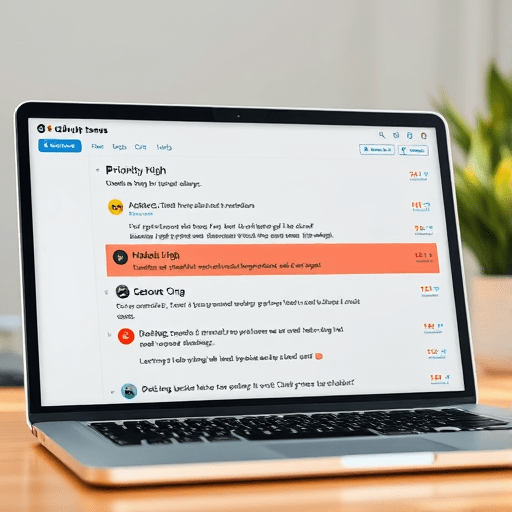
Look for labels like priority: high, P1, critical, or urgent. These labels tell you that the maintainer is actively feeling pain. That means smaller chance of abandonment, a faster review cycle, and a higher chance that the merged PR will be listed in release notes.
Be careful: extreme severity labels like blocker or security vulnerability may require deep domain knowledge or prompt a flood of contenders. A more practical starting point is priority: medium combined with good first issue on a project that’s already well managed. The priority flag gives you urgency; the beginner label gives you scope.
The Hidden Gems: Impact and Scope Labels
Many projects now use impact or size labels such as impact: moderate, size: M, effort: hours, or t-shirt: M. These are ideal for portfolio building because they help you estimate the weight of the contribution before you commit.
Don’t overlook tech debt or refactor labels. Refactoring work often improves the maintainability of a core module, which reviewers appreciate. Even if it doesn’t change user-facing behavior, a well-executed refactor demonstrates your ability to work with complex existing code—exactly what hiring managers want to see. When a PR is labeled tech debt: low-risk, it can be a golden opportunity to build trust with a maintainer without needing deep architectural knowledge.
Labels for Maintainer Interest and Mentorship
Beyond the standard help wanted and good first issue, there are more intentional labels that signal maintainer willingness to guide you:
mentored– A maintainer or senior contributor has agreed to provide guidance.first-timers-only– Explicitly reserved for new contributors to lower the barrier.onboarding– Part of a structured path into the project.documentation– Not automatically low value; docs issues that involve code examples, architecture diagrams, or API usage can be highly visible.
If a project uses a contributor-friendly tag, it’s usually a sign that the maintainers have invested in sharp issue descriptions and responsive review. Those are exactly the conditions under which your PR can shine.
Metrics-Friendly Labels: Move Beyond “Good First Issue”
For a portfolio that stands out, choose labels that lead to PRs you can quantify in an interview. For example:
performance– A PR that reduces load time or memory usage gives you a metric to quote.security– Even a small hardening fix demonstrates awareness of CVE classes and threat modeling.accessibility– Improving keyboard navigation or screen reader support is both concrete and socially relevant.test coverage– Adding meaningful tests to a critical module proves you care about reliability, not just features.
These labels often appear with help wanted or good first issue, but on mature projects they may be tagged separately. Search for label:"performance" label:"help wanted" on GitHub to find issues where your work will produce a visible before/after improvement.
Another useful pair is documentation combined with good first issue. While docs PRs can be trivial, look for ones that require writing code examples, changing diagrams, or explaining a complex algorithm. Those contributions are read by every future user of the project, giving your name high visibility.
How to Vet a Labeled Issue Before You Invest Time
Labels are a filter, not a guarantee. Before you start coding, spend 15 minutes evaluating the issue using these questions:
- Is the issue still open and unassigned? Check the timeline.
- Are there recent comments? If the last comment is from 14 months ago, the label may be stale.
- Does the issue reference a linked PR or a related discussion? That can give you context.
- Is there a clear definition of done? If not, ask for one in a comment before you begin.
- How responsive is the maintainer? Look at their recent activity on other PRs.
This vetting process is essential because even the most promising label cannot save you from a project where the maintainer disappears for weeks. To maximize your chances, filter by repositories that use conventional commits, have a CONTRIBUTING.md, and show recent merged PRs from external contributors.
A Practical 2026 Workflow for Finding High-Value PRs
Instead of staring at the GitHub Explore page, build a repeatable workflow:
- Pick a domain you want to be known for—web performance, data visualization, developer tooling, or anything else that matches your career goals.
- Find 5–10 active projects in that domain using GitHub topics, Awesome lists, or library recommendations from your current stack.
- Search issues with a combination of labels. For example:
label:"help wanted" label:"impact: medium" state:open. - Sort by recently updated to avoid stale issues.
- Read the issue history to see if a maintainer already pointed to a preferred approach.
- Pick one issue and submit a small, well-crafted PR. Once the maintainer merges your first commit, you earn credibility for a second, more substantial issue with a higher-impact label.
This approach builds a portfolio narrative: you didn’t just randomly contribute; you systematically picked issues that map to your area of expertise and proved your skill incrementally.
The Future of Labels: What’s Changing in 2026
Projects are starting to adopt new labels that reflect the changing ecosystem. Keep an eye out for AI-assisted or tooling labels, where part of the issue involves working with AI code generation tools. Maintainers are also adding sponsored labels for hunts or bounties, which indicate financial value—and usually rigorous review. Another growing trend is post-merge responsibility labels, asking contributors to monitor their merged code for a release cycle. If you see that label, it’s a sign the maintainer cares about long-term quality, and taking on that extra responsibility can make your portfolio story even stronger.
The key is to treat labels as a starting point for conversation, not a final arbiter. If you find an issue with a promising label, lower the risk by leaving a thoughtful comment that restates the problem in your own words and asks for any hidden constraints. That small interaction often separates a locked-in PR from a dismissive triage.
Conclusion
Building an open source portfolio doesn’t require blind effort—it requires knowing where to place your attention. By reading issue labels alongside maintainer activity, you can find high-value PRs that are reviewed promptly, merged cleanly, and give you concrete achievements to present at your next job interview. Prioritize labels that signal urgency, scope, and mentorship, and you’ll turn open source contribution from a chore into a strategic career asset.