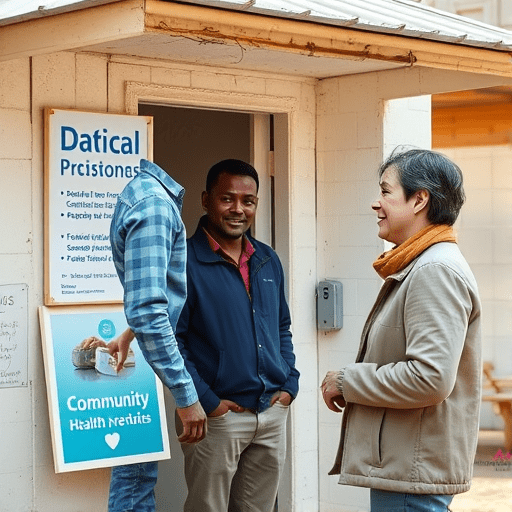
Scaling social ventures locally is one of the most stubborn puzzles in impact-driven work. You want to reach more people, but you don’t want to become a watered-down version of yourself. Micro-franchising has emerged as the most promising answer—not by cloning a central operation, but by turning local entrepreneurs into invested partners. It is not a new idea, but 2026 is the moment it finally comes into its own, thanks to lighter digital infrastructure, better impact measurement, and a generation of founders who refuse to choose between growth and mission.
Micro-franchising works because it builds on a simple insight: the people who best understand a community’s needs are already in that community. Instead of sending managers from headquarters, social ventures can package their proven delivery models into smaller, replicable business units—then license those units to local operators. This approach separates the “what” and “how” from the “who.” The venture keeps control over the quality of the service and the values behind it, while the local entrepreneur brings location-specific knowledge, relationships, and accountability.
Why Local Entrepreneurs Are the Missing Piece in Social Scale-Up
Traditional scaling paths—opening more centers, replicating programs, or partnering with large institutions—tend to hit one of two walls. Either the venture runs out of qualified managers who deeply understand the local context, or it grows so quickly that operational consistency collapses. Local entrepreneurs solve both problems. They bring their own reputation, community trust, and a clarity about what will actually work in their neighborhood.
In a micro-franchise model, the local operator is not an employee. They have skin in the game. That means they are motivated not just to show up, but to solve small, day-to-day problems without escalating them. A franchisee running a maternal-health education program in a peri-urban area might know exactly when to schedule sessions around market days. A micro-franchisee delivering clean cooking stoves might have existing relationships with women’s cooperatives that cut distribution costs instantly. These hyper-local insights are hard to codify into a central manual—but easy to enable through the right partnership.
This is especially important in 2026, as funders increasingly demand evidence that social programs actually reach underserved populations. Local entrepreneurs help prove that claim. They tend to be from those populations, or at least accountable to them, which reduces the risk of designing services that miss cultural cues. Instead of an external organisation parachuting in with generic solutions, micro-franchising creates a structure where the solution is co-owned by the community it serves.
The Mission-Drift Tightrope: How Micro-Franchising Protects Impact
The biggest fear among social venture leaders is mission drift. As you scale, financial sustainability pressures shape decisions, and vulnerable clients can end up paying more or receiving less. Micro-franchising protects against this because the central venture is not forced to dilute its standards in every location. Instead, it codifies the core impact model into a replicable package—and then supervises adherence to it.
Think of the franchise agreement as a mission shield. It spells out the non-negotiable elements: who is eligible for services, what price points are allowed, how client data is handled, and how outcomes are reported. The local operator receives training, tools, and a recognizable brand, but also accepts clear constraints. This is very different from a loose network of partners who might drift to whichever service is most profitable.
Of course, a franchise agreement alone cannot prevent mission drift if the central venture does not enforce it. That’s why successful micro-franchise systems in 2026 are moving away from punitive inspections toward continuous, supportive quality improvement. A local franchisee who is struggling financially is far more likely to cut corners and chase higher-income clients. The smart response is not to punish them, but to strengthen their financial sustainability—through better pricing, cross-subsidies, or shared services. The central venture must see itself as a steward of the mission, not a bill collector.
Start with a Transferable Operating System
If you want to scale social ventures locally, your model must be teachable. This is where many social ventures struggle. They have a great program run by a charismatic founder, but it’s all in her head. For micro-franchising to work, you need what franchise experts call a “proven system”: a set of processes, checklists, scripts, training materials, and dashboards that allow a new operator to reproduce the service efficiently. You don’t need an exhaustive manual from day one. Start by documenting the core customer journey, the key touchpoints, and the metrics that define good outcomes. Then refine it with input from your franchisees.
A good transferable operating system also needs to be adaptable. Community health workers might use home visits, while a library-based education franchisee might use group sessions. The system should specify the outcomes and the quality levels, not every trivial detail.
Use Co-Design, Not Just Training
Training a new franchisee is necessary, but it is not enough. In the micro-franchising world, co-design is the new frontier. Instead of pushing a fully finished operational model onto local entrepreneurs, leading ventures involve franchisees in shaping the model itself. They run pilots in two or three locations, gather feedback, and then update the playbook. This keeps the service relevant and gives franchisees a sense of ownership.
Co-design also catches cultural assumptions early. A women’s empowerment micro-franchise might discover that in one district, the best point of entry is a mobile phone, while in another, it’s a village savings group. If the central venture treats all locations identically, it misses these nuances. Co-design builds flexibility into the model without sacrificing consistency.
A 2026 Playbook for Building a Local-First Micro-Franchise
So, what does a practical path forward look like in 2026? It starts with three deliberate choices. First, choose the smallest business unit that can stand alone successfully. Is it a single health clinic, a mobile unit, or a one-person sales agent? Small units are easier for local entrepreneurs to finance and manage. Second, build a lightweight support structure. Instead of hiring a huge regional team, consider pairing a social venture’s staff with peer mentorship among franchisees. A franchisee network can answer questions, share shortcuts, and provide emotional support.
Third, get comfortable with technology that helps without becoming invasive. A simple mobile app can handle appointment scheduling, supply orders, and family surveys. That technology gives you visibility into local operations without needing centralized micromanagement.
Technology: Light Touch, Not Heavy Oversight
A common mistake in micro-franchising is to deploy heavy technology systems that were designed for scaling a commercial chain. Social ventures are usually operating on thin margins, and local entrepreneurs may not have reliable internet or time to enter endless data. Keep the tech stack minimal and mobile-first. Use voice notes, optional SMS check-ins, and low-bandwidth dashboards.
What should data be used for? Not surveillance. In the best 2026 examples, data flows back to franchisees as much as it flows upward. A micro-franchise running community health services might use a simple form to track patient visits, but then give each franchisee a personalized benchmark report showing how their outcomes compare to the network average. The goal is learning, not punishment.
Governance Structures That Keep Local Voices in the Room
Mission drift often creeps in at the governance level, not just in day-to-day operations. If all major decisions are made at a headquarters many miles away, local interests lose out. An emerging best practice is the creation of a franchisee council—a representative body of local operators who regularly meet with the central leadership. This council has advisory powers over pricing, marketing, and operational changes. In some models, franchisees even hold a seat on the board of directors.
Governance also matters for equity. Micro-franchising is a chance to build wealth and economic power within the communities being served. If local entrepreneurs are only ever treated as implementers, the venture replicates the same top-down inequalities it wants to solve. By offering meaningful revenue shares, co-ownership options, or pathways to multi-unit ownership, you ensure that scaling social ventures locally also means strengthening local economies.
Challenges and Realistic Expectations
Micro-franchising is not a silver bullet. It requires up-front investment in documentation and support systems, and it can be slower to launch than simply appointing local hires. Recruiting the right franchisees is also tricky. You may need to redesign your financing options because many social entrepreneurs struggle with startup capital. Some micro-franchise systems solve this by partnering with microfinance institutions, offering deferred franchise fees, or using a cooperative structure.
Another reality check: local entrepreneurs are not always easy to retain. They might leave the franchise to compete independently with their newly learned skills. Non-compete agreements and exclusive territorial rights matter. But a deeper answer is to create enough value—through brand reputation, ongoing support, and continuous input—that leaving feels like losing more than staying.
Conclusion
Micro-franchising offers a disciplined yet flexible path for social ventures that want to scale with integrity. By putting local entrepreneurs at the center, you can expand reach without becoming a bureaucratic monster, and you can protect the mission by making it the shared property of everyone in the network. The most exciting shift in 2026 is not a dramatic new technology, but a deeper respect for local agency—and that is a foundation worth scaling.