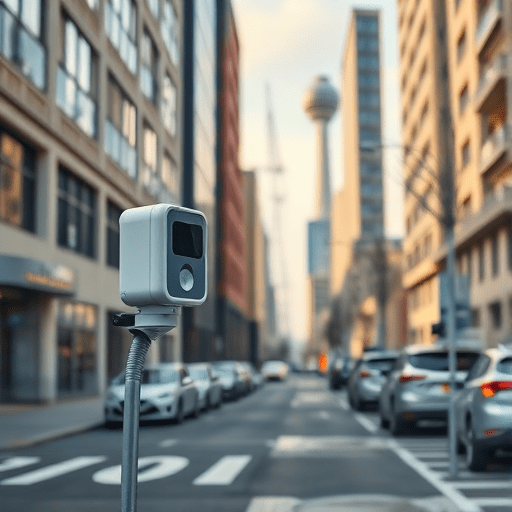
Municipal parking sensors have traditionally relied on wired or cellular back‑haul, driving up installation costs and battery drain. In 2026, a low‑power wide‑area network (LPWAN) solution transforms this landscape, delivering real‑time occupancy data while slashing power usage to minutes of battery life per cycle. This guide walks you through a step‑by‑step, low‑cost LPWAN setup that cuts sensor power use and feeds live data into traffic applications, giving cities smarter, greener parking management.
1. Why LPWAN Is the Game‑Changer for Municipal Parking
LPWAN technologies such as LoRaWAN, NB‑IoT, and Sigfox provide ultra‑low power consumption, long‑range coverage, and minimal data usage—exactly what parking sensors need. By transmitting only brief status updates (occupied or free) at low data rates, LPWAN keeps each node’s power draw to a fraction of that required by cellular modules, extending battery life from weeks to months. Moreover, LPWAN’s robust range means fewer gateways are needed, cutting both infrastructure and maintenance costs.
2. Planning the Network: From Site Survey to Device Selection
Successful deployment begins with a comprehensive site survey. Map the parking lot geometry, identify obstacles that may attenuate signals (buildings, trees), and assess existing wireless infrastructure. Use a radio propagation tool to estimate coverage gaps and decide how many gateways are necessary. Once the topology is clear, select sensors that natively support LPWAN and offer low‑power modes—many manufacturers now ship modules with sleep‑wake cycles under 10 µA.
3. Choosing the Right LPWAN Technology for 2026
LoRaWAN
LoRaWAN remains the most flexible option for city‑scale deployments. Its open‑source ecosystem and ability to run on both public and private back‑bones make it ideal for municipalities that want control over data residency.
NB‑IoT
NB‑IoT offers higher data throughput than LoRaWAN and benefits from carrier‑grade security. It’s a good fit for cities with existing cellular partnerships and require a small amount of telemetry beyond simple occupancy status.
Sigfox
Sigfox’s global coverage can reduce initial gateway costs, but its subscription model and limited payload can constrain advanced analytics. Use it only if the city has a Sigfox partnership.
Ultimately, select the technology that balances coverage, cost, and integration with existing municipal data platforms.
4. Power Optimization Strategies: Battery‑Free and Energy Harvesting
Even with LPWAN’s low power, sensor battery longevity is a critical KPI. Consider the following:
- Ultra‑Low‑Power Microcontrollers: Choose MCUs that can enter deep sleep (<1 µA) between transmissions.
- Energy‑Harvesting Modules: Incorporate small solar panels or vibration harvesters that recharge the battery during daylight or when cars roll over the sensor.
- Adaptive Sampling: Use occupancy‑aware logic that triggers transmissions only when state changes, eliminating idle traffic.
- Battery Management ICs: Deploy built‑in fuel gauges that shut down the node if voltage drops below a threshold, preventing battery damage.
When implemented together, these strategies can push battery life beyond one year with minimal maintenance.
5. Edge Analytics at the Gateway: Reducing Bandwidth and Latency
Gateways in an LPWAN network can host lightweight edge computing modules. By aggregating sensor data locally, they can filter duplicates, compute occupancy trends, and even run simple machine learning models to predict peak times. This reduces back‑haul bandwidth and speeds up response times for traffic apps that rely on real‑time data.
Edge processing also allows the gateway to perform anomaly detection—flagging stuck sensors or sudden drops in signal—before the data reaches the city’s central server, improving reliability.
6. Integration with City Traffic Management Platforms
Once data reaches the gateway, it must be fed into the city’s traffic management or parking management platform. Use standardized APIs such as REST or MQTT, and ensure that the data payload follows the City of X open data schema for parking availability. Incorporate geofencing tags so that each sensor’s location is mapped to the correct parking zone.
After integration, traffic apps can provide drivers with live availability maps, dynamic pricing updates, and even automated payment links—all powered by the low‑cost LPWAN backbone.
7. Cost Breakdown and ROI Analysis
Below is a typical cost model for a 500‑spot parking lot in 2026:
- LPWAN Gateways (2 units) – $1,200 total
- Sensor Nodes (500 units) – $45 each = $22,500
- Installation Labor (6 hours @ $50/h) – $300
- Energy Harvesting Add‑ons (solar panels) – $15/spot = $7,500
- Data Platform Integration – $2,000
- Annual Maintenance (battery replacement, firmware updates) – $1,000
Total initial investment: ~$33,500. With savings on cellular fees (up to 90%) and reduced maintenance (longer battery life), municipalities can recoup the investment in under 18 months, while also unlocking real‑time analytics that can reduce congestion and increase parking revenue.
8. Case Study: Greenfield City’s Pilot Deployment
Greenfield City launched a pilot in its downtown lot, deploying 250 LoRaWAN sensors and two gateways. Key outcomes:
- Battery Life: Average battery longevity increased from 4 weeks (cellular) to 11 months.
- Data Accuracy: Real‑time occupancy accuracy improved to 99.2% due to edge filtering.
- Cost Savings: Monthly back‑haul costs dropped by $1,200.
- Revenue Increase: Dynamic pricing based on live data boosted revenue by 7% in the first quarter.
Greenfield’s success showcases how a low‑cost LPWAN setup can provide tangible benefits to both city budgets and drivers.
9. Best Practices and Common Pitfalls
Best Practices:
- Validate coverage with real‑world signal strength tests before full deployment.
- Implement firmware over‑the‑air (FOTA) updates to patch bugs without physical access.
- Use redundant gateways in critical zones to avoid single points of failure.
- Schedule periodic diagnostics to monitor battery health and gateway performance.
Common Pitfalls:
- Over‑estimating LoRaWAN range in urban canyons—conduct proper line‑of‑sight checks.
- Ignoring energy harvesting potential in sunny climates—solar panels can dramatically extend battery life.
- Under‑utilizing edge analytics—process data locally to reduce latency and back‑haul load.
Conclusion
Deploying a low‑power wide‑area network for municipal parking sensors offers cities a scalable, energy‑efficient, and cost‑effective way to deliver live parking data. By combining strategic planning, the right LPWAN technology, energy‑harvesting power solutions, and edge analytics, municipalities can transform parking management, reduce congestion, and enhance revenue—all while keeping battery maintenance minimal and network costs low.