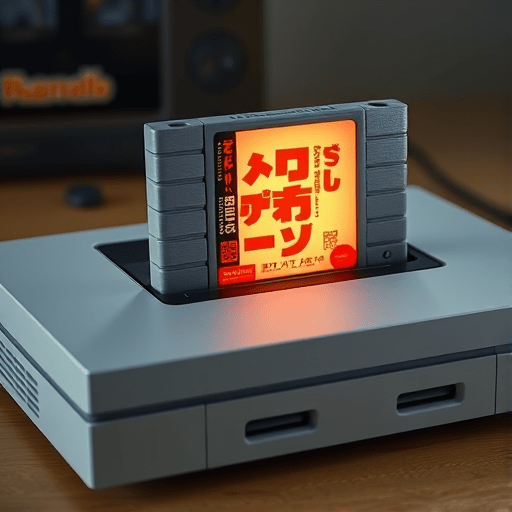
For years, the remake trend in gaming leaned heavily on the safest possible bets: beloved blockbusters, massive JRPGs, or cherished mascots that never left the Western spotlight. But a quieter, more exciting shift is underway. The next major wave isn’t about remaking the games everyone remembers — it’s about localizing lost classics for modern consoles, rescuing historically significant titles that were trapped in Japan for decades and giving them a global debut. This isn’t a footnote to the nostalgia economy; it’s becoming the defining movement in retro game preservation, powered by a unique intersection of fan scholarship, publisher risk-taking, and the hard reality that there are fewer and fewer “safe” remakes left to mine.
Why Japan-Only Gems Are Getting a Second Life
The traditional argument against bringing over Japan-only games was always marketability. Publishers assumed Western audiences wouldn’t care about a 16-bit RPG with no recognizable brand, or a quirky shooter that had never been translated. That assumption is crumbling. The success of relatively obscure remasters like Trials of Mana and Live A Live proved that when a lost classic is given a polished, modernized release — complete with thoughtful quality-of-life features — its appeal goes far beyond the hardcore collector niche. These titles sold well enough to justify entire new localization initiatives, and the momentum is only growing.
The current landscape in 2026 is particularly ripe because of the sheer volume of catalog data now available to publishers. Digital storefronts, subscription services, and retro-focused platforms make it cheap to test the waters with a single localized title. But the more important factor is cultural. A generation of gamers raised on emulation and fan translations has developed a deep appetite for the “hidden history” of Japanese game design. This audience isn’t just buying a product; they’re participating in the recovery of lost heritage. That emotional connection changes the calculus for studios that once saw these games as unsellable liabilities.
The Social and Technical Hurdles of Bringing Back Lost Classics
Localizing a lost classic for modern consoles isn’t simply a matter of hiring a translator and pressing “export.” The technical state of old Japanese-only games is often a nightmare. Source code has been lost, original hardware is scarce, and many games were programmed with undocumented, assembler-level tricks that break on modern emulators. Teams have to reverse-engineer everything from font rendering to memory management, often using old development kits or even hand-soldered carts from collector auctions. This is painstaking work — but the payoff is a form of digital archaeology that fans are increasingly willing to celebrate.
Then there’s the content issue. Japan’s gaming culture in the 90s and 2000s had different sensibilities around humor, violence, and especially sexuality. A faithful localization becomes a minefield, but the modern expectation is authenticity over sanitization. Successful localizations now include content warnings, cultural notes, and even “commentary modes” that explain what a joke meant in its original context. The result is a more honest experience, one that respects the source material while acknowledging the cultural distance. That approach has won over both old-school fans and new players who appreciate the historical framing.
Localization Is the New Remaster’s Best Friend
What’s fascinating about this trend is how it reframes the entire concept of a “remake.” Traditional remakes rebuild a game from the ground up, often changing mechanics and story to fit modern tastes. But localizing lost classics starts with a different promise: the game was already great, it was just inaccessible. So the focus shifts to preservation and enhancement rather than reinvention. This has given rise to what some studios call a “loki-master” — a port that includes fan-requested improvements to controls, save systems, and UI scaling while keeping the original art, music, and scenario virtually untouched.
This approach is particularly suited to the hardware capabilities of current consoles. The Switch 2, PlayStation 6, and mid-generation refreshes have plenty of headroom to run ancient 2D engines at flawless frame rates with modern rendering features, but the real draw is convenience. The ability to switch from the original aspect ratio to a widescreen crop, or to activate a retro CRT filter, makes the historical object feel alive as a game rather than a museum piece.
The 2026 Ecosystem: From Fan Patches to Publisher Goldmines
The relationship between fan translations and official localizations has shifted from awkward friction to a strange, mutually beneficial synergy. Fan patches, which once served as the only way to play a lost classic, are now frequently cited by publishers as proof of demand. In several high-profile cases, official localizations have even hired the very fan volunteers who originally cracked the game’s encryption or wrote the first translation scripts. This informal pipeline has become a key part of the industry’s search for “new” content to sell, and it’s uncovering gems that would have remained in dusty Japanese magazines forever.
It’s not just RPGs either. The lost classics pipeline now includes action games, strategy titles, visual novels, and even early open-world experiments that pioneered mechanics years before Western audiences caught on. Developers are scouring their own back catalogs, cross-referencing fan wish lists, and filing down the serial numbers of forgotten prototypes. The result is a rapidly expanding library of formerly “impossible” releases, with new announcements arriving at every major showcase.
For fans, the biggest change is in trust. Just a decade ago, a Japanese-only game’s future was entirely at the mercy of piracy and emulation. Now, there’s a real possibility that the next cult classic gets an official, lovingly polished release on modern hardware. That expectation has reshaped how the community talks about game preservation — less “what if,” more “when.”
All this activity is happening against a backdrop of growing institutional interest as well. Museums and university archives are partnering with developers to document the technical details of these localizations, creating a feedback loop that makes future projects even easier. The process is becoming industrialized, and that’s a good thing for the vast number of titles still waiting in the wings.
What’s Next in the Lost Classics Pipeline
Looking ahead, the obvious next targets are games that make sense for simultaneous worldwide launches. Japanese studios are increasingly planning for a global release from day one, but the momentum of the localization trend is also pushing older, weirder titles into the spotlight. I’m talking about obscure entries in long-running series like the Brigandine strategy games, the cult Terranigma pseudo-sequel, and Japan-exclusive side stories that only hardcore lore heads ever knew existed. In 2026, the line between “exception” and “expectation” is blurring fast.
There’s also the question of preservation through virtual reality and modern immersive platforms. A handful of experimental re-localizations are already testing versions where the original tile maps are rendered in 3D at runtime, offering a gentle depth that doesn’t spoil the classic look. It’s a tasteful evolution, and one that keeps the core design intact while giving players a reason to revisit a game they might have only just encountered.
Ultimately, the most valuable contribution of this trend is that it changes the measure of gaming history. The next time someone asks “what should we remaster?”, the answer will no longer be limited to the same dozen bestsellers. Instead, the field has expanded to include the wild experiments, the failed sequels, the quirky collaborations, and the regional oddities that made Japanese gaming so creatively explosive.
Conclusion
Localizing lost classics for modern consoles represents a deliberate shift from nostalgia mining to historical recovery. It’s a trend that honors the original designers’ intentions while embracing new audiences, and it’s been powered by a perfect storm of technical advances, fan passion, and industry pragmatism. As more forgotten gems cross the Pacific and allow Western players to experience them in their intended form, the definition of “classic” grows richer, stranger, and more inclusive. The remake trend didn’t run out of ideas — it simply found a better archive to dig through, and everyone wins as a result.