# Inferred Health Data: The Consent Frontier That Health Apps Can’t Keep Ignoring
Every time you tap, swipe, or sleep with a wearable on your wrist, the app on the other side of that sensor is doing more than counting steps. It is building conclusions about your body, your mood, and your future health. This is the world of inferred health data — insights drawn from raw signals that a user never explicitly reported, diagnosed, or agreed to share. In 2026, the gap between what a user consents to and what a system quietly derives has become the most pressing consent frontier in digital health.
What Actually Counts as Inferred Health Data?
Health data is no longer just what you type into a form. It is what software produces from raw signals after the fact. The distinction matters because consent is usually obtained for the raw signal, while the inference itself is rarely named.
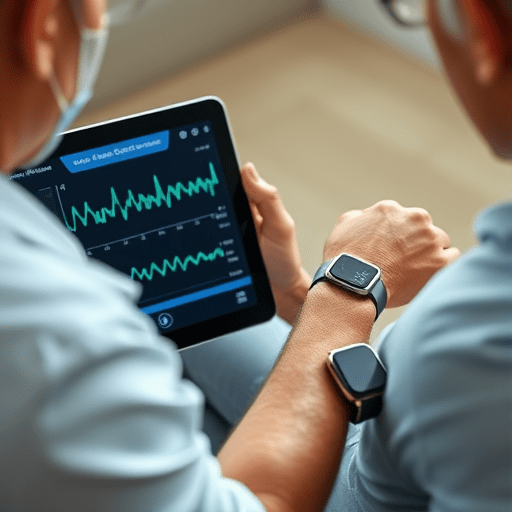
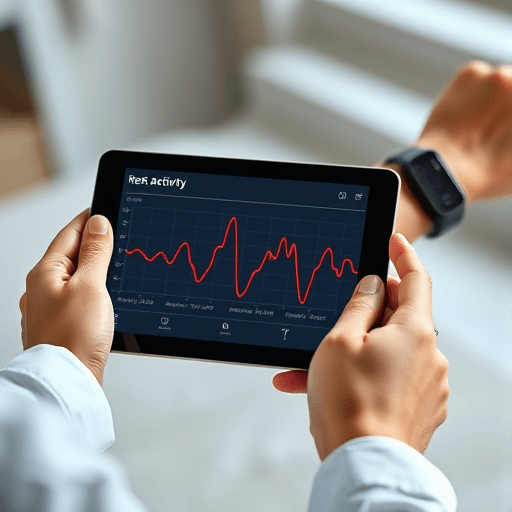
- A smartwatch measures heart rate variability and infers your stress level — a physiological conclusion, not a simple biometric readout.
- A mental health app analyzes voice tone and cadence to infer signs of depression or anxiety.
- Phone accelerometers and GPS logs are combined to detect manic episodes in people with bipolar disorder.
- A “sleep tracker” collects microphone audio and infers breathing disruptions consistent with sleep apnea.
- Even typing rhythm and backspace frequency can be used to infer fatigue, intoxication, or cognitive load.
The value of this inference layer is enormous. It can catch atrial fibrillation that would otherwise go unnoticed, predict hypoglycemic episodes hours in advance, and identify early markers of cognitive decline. But value does not imply consent. The same pipeline that produces a lifesaving warning can, with a slightly different configuration, produce a denial of health insurance. The consent form says: “We collect your heart rate to monitor your fitness.” It does not say: “We will infer your stress level, your cardiovascular risk, and early signs of burnout — then share those conclusions with third parties.” That mismatch is the consent gap.
Why the Current Consent Architecture Fails
The standard consent model was designed for a simpler era. Users were told what data an app collected, for what purpose, and with whom it was shared. Inference upends all three assumptions.
Consent for One Purpose Becomes Fuel for Another
A user who agrees to share step count for a wellness challenge has not agreed to have that gait data analyzed for early signs of Parkinson’s disease — yet the raw data is identical. The inference is where sensitivity emerges, and it is completely invisible to the user. When that inference is later used for a secondary purpose, like an insurance risk score, the user has no record of agreeing to it. Inference is the easiest form of data repurposing because it requires no extra collection — only extra processing.
The Inference Is Probabilistic, but the Consequences Are Real
Inferred health data is probabilistic, not diagnostic. A sleep app may flag “moderate sleep apnea risk” based on acoustic patterns actually produced by a fan on the nightstand. Yet that inference can be packaged, anonymized, and sold to research partners, insurers, or ad networks. The user never sees the conclusion, has no ability to correct it, and has no way to ask where it went. Just as a credit report can damage a person’s finances without their knowledge, an inferred health profile can distort their medical future.
Opt-Out Is a Tollbooth
When users are asked to opt in to data collection, they can weigh the risk. But when the real risk is in the inference layer, they are deciding blind. Some apps already tie wellness program discounts to health risk scores derived from sensor data. Opting out of the inference can mean losing access to a feature, a lower insurance premium, or a workplace wellness perk. That is not informed consent — it is a tollbooth dressed up as a choice.
Regulators Are Finally Noticing
The law has begun to catch up with the sensor economy. In the European Union, the GDPR has always treated health data as a special category, but most inferred data did not clearly fit the definition. That ambiguity let apps argue that a heart rate signal was “fitness data” even after it had been processed into a cardiovascular risk profile. The EU AI Act, with its high-risk classification for medical AI systems, now captures many inference pipelines. Combined with the European Health Data Space regulation, which governs secondary use of health data, the legal foundation is shifting.
In the United States, the Washington My Health My Data Act has set an important precedent: it explicitly defines inferred health data as health data when derived from non-health information. That means a mood-tracking app that infers depression risk must obtain the same level of consent as a clinic collecting a patient history. California and other states are considering similar provisions.
For app developers, the message is blunt: consent can no longer be buried in a single terms-of-service click. Regulators are beginning to require that each distinct inference be tied to a distinct, freely given consent. The apps that prepare now — by building consent for inference into the product itself — will not have to scramble when enforcement arrives.
Designing Consent That Keeps Pace with Inference
Closing the consent gap is not only a legal problem — it is a design problem. Here is what workable consent for inferred health data could look like in practice.
Layered Consent
Users should see separate toggles for raw data collection, for inference, and for sharing derived conclusions. An app might collect heart rate for fitness tracking by default, but it must ask separately before running a stress-inference model on that data. This is granular consent applied specifically to the inference layer.
Dynamic Consent at the Moment of Inference
When an app produces a meaningful inference — a potential irregular heartbeat, a rising depression score — that moment should trigger a user-facing disclosure: “We detected something from your data. We can show you the result, delete the inference, or stop this analysis entirely.” Consent becomes an ongoing conversation rather than a one-time contract. Some health apps already do this for high-risk alerts; the model should be extended to every meaningful inference.
On-Device Inference as a Privacy Default
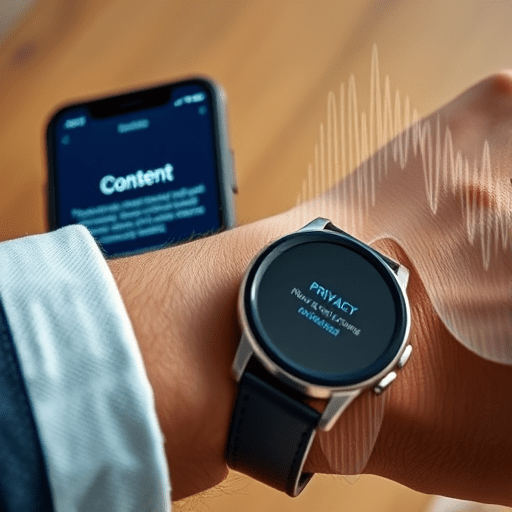
The most powerful fix is architectural. By running inference models on the phone or watch rather than in the cloud, raw data never leaves the user’s device. The user still sees the inference, but the app vendor — and any data broker — does not. The technical community has shown this is feasible; the barrier is business model inertia, not engineering difficulty. On-device inference also simplifies compliance, because there are no personal data transfers to regulate.
An Inference Dashboard
Every health app should offer a plain-language “inference label”: a list of conclusions currently held about the user, the data used to derive them, model confidence, and the ability to delete any single inference. If an app can tell you how many steps you took yesterday, it can tell you what it thinks about your health — and show its reasoning. This is the practical meaning of the right to explanation.
Conclusion
The consent frontier of this decade is no longer about whether companies may collect data. It is about whether they may think about it. Inferred health data sits at the precise point where technology has run ahead of ethics, law, and user comprehension. The apps that treat inference as a first-class citizen in their privacy design will earn trust. The regulators that take the inference layer seriously will set the standard. And users, once they learn what their devices believe about them, will expect nothing less than the right to challenge that belief.