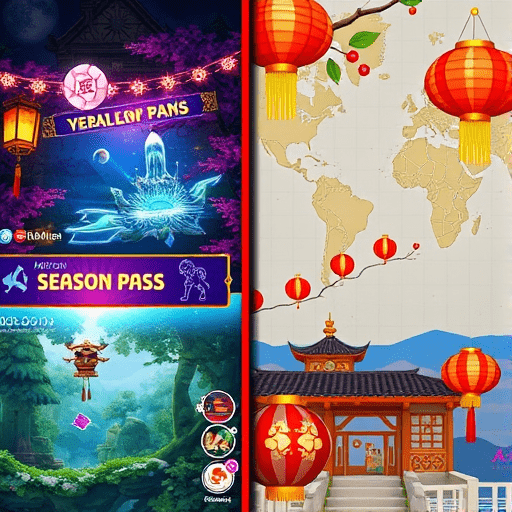
In the 2026 mobile gaming landscape, the one-size-fits-all live-service calendar is failing. Global events like a generic “Summer Splash” or “Winter Wonderland” generate predictable engagement in mature markets, but they often leave players in emerging regions feeling like afterthoughts. The answer is a shift toward hyper-local events — live-ops tailored to specific cities, festivals, and cultural rhythms. For studios looking to grow retention in under-monetized markets, this isn’t just a nice-to-have; it’s the next competitive frontier. By designing region-specific festivals and local season passes, developers can turn dormant users into daily players, without relying on aggressive monetization prompts.
Why Global Events Fail to Resonate Locally
Most live-service games treat the world as a single, homogeneous audience. A battle pass that works in the United States anecdotally falls flat in Indonesia or Brazil. The reasons are obvious once you think about them: players in these markets have different holidays, payment habits, and social triggers. A Halloween event in October means nothing to players in parts of the Southern Hemisphere, and a “National BBQ Day” theme feels absurd in a country where that’s not a cultural touchstone.
The cost of this disconnect is more than just missed engagement. In under-monetized markets, players already hesitate to spend money on virtual items. When they see an event that has nothing to do with their lives, they disengage entirely. Retention suffers because the game feels foreign. Hyper-local events solve this by meeting players where they already are — culturally and emotionally.
The Anatomy of a Hyper-Local Festival Event
Designing a successful regional festival event requires more than swapping a texture packet and changing a name. It demands a deep understanding of local traditions, daily rhythms, and even food. Let’s break down what a 2026-grade hyper-local event looks like from concept to launch.
Mapping Cultural Calendars to Game Mechanics
Start by building a cultural calendar for each target market. This goes beyond national holidays. Pay attention to regional harvests, religious observances, and even popular local holidays like Loy Krathong in Thailand, Diwali in India, or Carnaval in Brazil. For each date, define which game mechanics align with the real-world activity. During Loy Krathong, for example, a game with water-based themes can offer a “floating lantern” quest. During Diwali, a match-3 game could put decorative lamps in its board-clearing animations.
The key is to map the festival’s emotional core to a core gameplay loop. A street-food festival might translate to a cooking mini-game. A lantern festival could become a light-based puzzle. The goal is not to replicate the festival but to let players experience a small, meaningful piece of it inside your world.
Localized Rewards and Progression
Rewards must be regionally relevant too. Instead of offering a global gold skin that means little to a player in the Philippines, design rewards that reference local pride — a tricycle-themed vehicle, a sari-sari store decoration, or a jeepney-inspired outfit. These items carry social capital. They are conversation starters in local gaming communities and often become status symbols precisely because they are not available to players in other regions.
This approach also helps under-monetized markets feel valued. Players who never spend money may still show up for a limited-time “Mango Festival” cosmetic because it reminds them of home. That emotional pull is a powerful retention driver, and it requires no discount or virtual currency purchase.
Local Season Passes: The Retention Engine
Season passes are the most effective live-service mechanic for driving long-term engagement, but they are usually priced and rewarded globally. In 2026, the smartest studios are experimenting with local season passes — smaller, cheaper, and thematically aligned passes for specific regions. These are not simply translations of a global pass. They are structured around local play patterns and spending behavior.
Pricing and Pacing for Under-Monetized Economies
In many under-monetized markets, a $9.99 monthly pass is equivalent to a full day’s wages. That price anchors the pass as an elite luxury. A local pass might cost $1.99 or even less, but with a shorter duration — seven days instead of thirty. This lowers the barrier to first purchase, which is critical in markets where players have never paid for a mobile game. Once a player completes their first paid pass, the psychological barrier to future purchases drops significantly.
Pacing also matters. Local players often play in shorter, more frequent sessions due to work shifts or shared device usage. A local season pass should reward daily logins and small tasks rather than long grinding sessions. For instance, a pass titled “Commuter Bonus” could reward players for completing three quick matches during typical rush-hour times. This makes the pass feel designed for the player’s actual life, not for a California software engineer’s ideal day.
Thematic Seasons Based on Local Seasons
Local season passes can also follow regional weather and agricultural cycles. In Southeast Asia, the monsoon season is a reliable frame for a “Rainy Season Pass” with puddle-jumping challenges and umbrella cosmetics. In the Gulf region, a “Ramadan Pass” can align with nightly play sessions after iftar. These passes become anticipated annual events, much like a favorite holiday movie. Players know they only come once a year, and missing out feels costly in a socially positive way.
This type of design also reduces content fatigue. Instead of producing one global pass every month, studios can produce two or three overlapping regional passes. This creates a live-ops calendar that is always relevant to someone, driving consistent revenue from diverse time zones.
Data-Driven Localization Without Creepiness
To make hyper-local events work, you need data. But there is a fine line between personalization and invasion. In 2026, privacy regulations are stricter than ever, and players in emerging markets are increasingly aware of data misuse. The best approach is to use aggregated, opt-in data like coarse location and in-game behavior patterns. Do not track personal details like ethnicity or religion. Instead, infer cultural occasions from the game’s own telemetry. If a player logs in every day at sunset during Ramadan, you can offer a “Sunset Bonus” without ever asking about their faith.
Another layer is community validation. Before launching a hyper-local event, run a small test with player councils from the region. These players can flag cultural inaccuracies — like using the wrong floral motif for a festival — before the event goes global. Getting one cultural detail wrong can trigger a backlash far larger than the event’s benefit. So invest in local community managers who can act as cultural interpreters between your design team and the player base.
Monetization That Feels Like Participation
In under-monetized markets, the goal of hyper-local events is not to maximize immediate revenue but to build long-term willingness to pay. That means monetization must feel like an extension of the festival, not an interruption. Instead of a pop-up bundle, offer a “Mela Ticket” that grants entry to a limited-time local tournament. Instead of a global loot box, sell a “Holiday Hamper” that contains a mix of useful resources and a guaranteed regional cosmetic.
Price anchoring is subtle but essential. For a Diwali event, offer three tiers of a pass: free, “Lantern” (low-cost), and “Palace” (premium). The free tier ensures everyone can participate. The Lantern tier is priced so that a player who has ever bought a coffee in the region can afford it. The Palace tier is aspirational but not necessary. This tiering mirrors real-world festival markets, where everyone buys something small, and a few splurge.
Measuring Success Beyond Retention
Standard retention metrics, like D1, D7, and D30, are useful but insufficient. For hyper-local events, add two specific metrics: cultural relevance score and local pass attachment rate. The first is measured by player sentiment in local language reviews and social media mentions. The second is simply the percentage of active users in a region who purchase or engage with a local pass. If attachment rate is above 20% within the first week, the event is resonating. If it is below 5%, listen to local communities and adjust.
Also track the “halo effect” on the global game. Sometimes a hyper-local event for one market creates surprising enthusiasm in others. For example, a Japanese cherry blossom event often boosts retention in Korea and Taiwan, even though it’s not their national holiday. That cross-border halo expands the event’s value without any extra development cost.
Overcoming the Excuse of “Not Enough Resources”
A common pushback against hyper-local events is that they are too expensive to produce for small markets. In 2026, that excuse no longer holds. Modern live-ops tools allow for parameter-driven events, meaning basic systems like quests, shops, and timers can be reused with different data sets. The only real development cost is the unique cosmetic or narrative content.
To reduce that cost, build a library of reusable cultural assets — patterns, colors, motifs, and icons for dozens of regions. Then assemble them like modular kits. A “Songkran Event” and a “Holi Event” can share the same water-throwing mechanic but use completely different palettes and music. The production cost is often less than 30% of a full global event, while the retention lift in the target market can be double that of a generic event.
Conclusion
Hyper-local events represent a pivot from broadcasting the same experience to everyone, to designing resonant moments for real communities. By honoring regional festivals with thoughtful mechanics and pricing, local season passes turn under-monetized players into dedicated participants. In 2026, the studios that win mobile gaming’s next billion users will not be the ones with the biggest marketing budgets, but the ones with the deepest cultural curiosity and the willingness to build live-ops that feel like a hometown celebration.