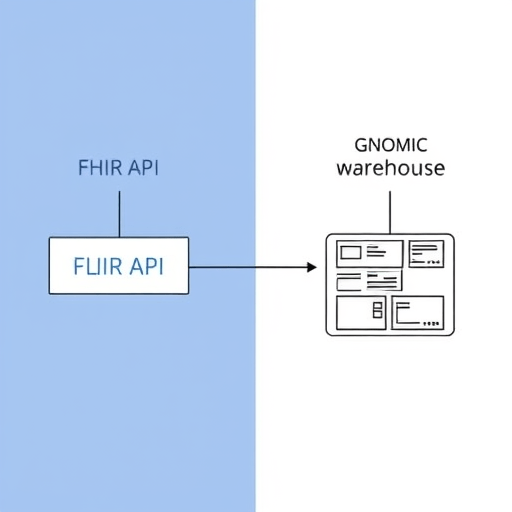
The clinical promise of genomic medicine depends on getting variant data out of the lab and into the hands of clinicians and researchers. Yet the infrastructure that powers most electronic health records (EHRs) was never designed to handle a 3-billion-base-pair reference genome or the nuanced semantics of a single-nucleotide variant. Two standards have emerged as the most serious contenders for bridging this gap: HL7 FHIR and the OMOP Common Data Model. But comparing them as if they were interchangeable misses the point. In 2026, the real question isn\u2019t which standard is “better” — it\u2019s which combination of FHIR and OMOP capabilities your organization needs, and how to evaluate that with a clear-eyed interoperability checklist.
Two Standards, Two Different Genomic Workflows
Before diving into the checklist, it helps to understand the fundamental distinction. FHIR is a healthcare exchange standard. It defines resources for representing clinical data — including genomics — and APIs for moving that data between systems. OMOP is an observational research model. It standardizes how data is stored in a relational schema so that queries across institutions yield comparable results. In genomic medicine, FHIR excels at making a specific variant available at the point of care; OMOP excels at enabling large-scale studies that ask questions like “which patients with this variant also have this phenotype?”
The 2026 landscape adds further nuance. FHIR has matured with the Genomics Reporting Implementation Guide and operations like $va and $vcf, which allow EHRs to request variant annotations or push VCF files. OMOP has seen increasing uptake in national genomic initiatives, with the OMOP Genomic Vocabulary and extensions that map local variant representations to standard concepts. Still, neither covers the full spectrum of genomics-enabled clinical workflows. That\u2019s why the checklist below focuses on practical requirements rather than abstract advantages.
Why a One-Size-Fits-All Answer Is a Trap
It\u2019s tempting to ask, “Should we standardize on FHIR or OMOP?” The more useful question is: “What data flows need to be supported?” If your cardiology clinic needs to alert a patient about a BRCA2 pathogenic variant before an MRI, FHIR\u2019s real-time interaction model is indispensable. If your research network wants to analyze de-identified genomic and clinical data across 10 hospitals, OMOP\u2019s harmonized schema is far more practical. A genomics-enabled EHR in 2026 will almost certainly require both — plus a deliberate strategy for how they connect. That strategy cannot be reverse-engineered from platform marketing; it must be built on a concrete interoperability checklist.
The 2026 Interoperability Checklist for Genomics-Enabled EHRs
Use the following criteria to assess vendor proposals, design integration roadmaps, and avoid costly interoperability dead ends. Each item includes the critical question to ask, why it matters, and how FHIR and OMOP differ in their response.
1. Variant Representation and Nomenclature
Can the system interpret and exchange variants using HGVS notation, rsIDs, and VCF coordinates without loss of meaning? FHIR\u2019s Observation and DiagnosticReport resources support structured variant details and can embed GA4GH conventions. OMOP relies on the OMOP Genomic extension and standard concept IDs to map variants, but precision depends on the vocabulary release. Ask whether your vendor can round-trip a variant from VCF to clinical annotation and back to the analytics layer without manual curation.
2. Clinical Decision Support Integration
Genomic data only improves care when it triggers action. Does the standard support real-time CDS hooks? FHIR provides a clean path via CDS Hooks and the ClinicalImpression resource, enabling rules like “flag TP53 variants for oncology review.” OMOP is not designed for low-latency CDS. It is a warehouse, not a messaging bus. If your checklist includes point-of-care alerts, FHIR is mandatory. If your checklist only needs retrospective phenotype-variant association analyses, OMOP suffices.
3. Phenotype and Patient-Level Linkage
Genomic results are meaningless without phenotypic context. FHIR encodes phenotypes in Observation, Condition, and Procedure resources, with codes from SNOMED CT and LOINC. OMOP standardizes phenotypes as condition and measurement concepts and is designed for consistent cohort definitions. For a genomics-enabled EHR, the critical question is how phenotype data flowing through FHIR APIs will be transformed into OMOP concepts for research. Does the vendor provide an ETL layer, or are you expected to build and maintain a mapping pipeline?
4. Scalability for Whole-Genome Sequencing
A single whole-genome VCF file can contain millions of variants. Can the chosen infrastructure handle that volume in a clinical timeframe? FHIR is chatty; representing millions of variants as FHIR resources creates network and storage overhead. Pragmatic implementations often separate variant storage using FHIR\u2019s DocumentReference to point to a VCF file, with a handful of clinically actionable variants as first-class resources. OMOP, with its bulk-loading capability, handles millions of variant records in a relational database, but query performance requires careful indexing. Ask vendors to benchmark both transaction throughput and cohort-query latency with realistic genomic data volumes.
5. Privacy and Consent Management
Genomic data is among the most sensitive information in the health record. How does each standard enforce patient consent? FHIR supports privacy and security tags at the resource level, and its Consent resource can express granular restrictions (e.g., “allow research for hereditary cancer only”). OMOP has no native consent model — consent is typically managed in a separate layer and only de-identified data is loaded. In a hybrid architecture, consent decisions captured in FHIR must be honored before data passes to an OMOP repository. Your checklist should include explicit consent provenance flow from EHR to research database.
6. Real-Time Exchange vs. Bulk Analytics
This is the heart of the matter. FHIR is optimized for point-to-point exchange: a clinician asks for the current variant interpretation for a patient and receives it in milliseconds. OMOP is optimized for analytics: a researcher submits a cohort query across millions of records. A genomics-enabled EHR must be honest about which workloads are primary. If your institution participates in a national genomics research consortium, an OMOP export is likely the shortest path to submission. If your institution prioritizes clinical decision support and patient access, FHIR is the operational backbone. The checklist should profile your required use cases and score each standard accordingly.
7. Support for GA4GH and Related Standards
The genomics community has its own standards — Phenopackets, VRS, and Beacon APIs. A mature interoperability strategy in 2026 will not force genomic data into a healthcare straightjacket. FHIR has demonstrated flexibility by mapping to GA4GH conventions, and OMOP has aligned its vocabulary with standard genomic identifiers. Ask vendors how they handle GA4GH Phenopacket imports and VRS allele representation. If their answer is “not yet,” your roadmap should include custom adapters.
Putting the Checklist to Work
Start by scoring each of the seven criteria as “must have,” “should have,” or “nice to have.” Map them to your institution\u2019s clinical and research workflows. Then, in procurement or engineering discussions, require vendors to demonstrate concrete support for the must-have items — not just in slideware, but via test FHIR endpoints or OMOP ETL scripts. A practical approach is to run a small pilot with 50 sequenced patients and evaluate how easily their variants, phenotypes, and annotations flow from a test EHR into an OMOP analytics instance. That pilot will reveal more than any standards comparison document.
Remember that interoperability is not a binary property. The best genomics-enabled EHR in 2026 will not be a “FHIR system” or an “OMOP system.” It will be a system that understands where real-time exchange is needed and where analytical harmonization is needed — and that has built explicit, testable bridges between the two. The checklist above is designed to force that clarity.
Conclusion
Choosing between HL7 FHIR and OMOP for genomic medicine is a false choice when they serve complementary roles. FHIR enables clinicians to act on genomic findings at the moment of care, while OMOP enables researchers to learn from aggregated genomic data across populations. The practical interoperability checklist for genomics-enabled EHRs in this era is not about picking a winner — it is about defining your data flows, testing both standards against the seven criteria above, and ensuring that the bridge between clinical and research worlds is solid enough to carry the next decade of genomic discovery.