In an era of tightening regulations and growing player skepticism, ethical loot box alternatives that boost LTV without backlash have moved from a niche experiment to a competitive necessity. Three small studios, each working on different genres and platforms, decided to ditch randomized monetization in favor of transparent crafting systems. Within a year, all three reported retention improvements near the 40 percent mark, alongside a dramatic drop in refund requests and review-bomb campaigns. Their stories reveal what sustainable, player-friendly monetization actually looks like when executed with intent.
Why the Industry Is Walking Away From Randomized Packs
Loot boxes started as a fun novelty. By 2026, they have become a liability. Belgium, the Netherlands, and several U.S. states classify paid random rewards as gambling. Apple and Google now require probability disclosures in dozens of regions. Younger players, raised on battle passes and cosmetic shops, openly criticize pay-to-randomize models on social media. The studios profiled here recognized that the long-term cost of defending an unpopular monetization system outweighed any short-term revenue bump.
Instead, they leaned into a simple principle: players should know exactly what they are working toward, and how long it will take to get there. This shift reframed the question from “how do we hide value behind RNG?” to “how do we make the journey of earning value feel rewarding in itself?”
Studio One: Replacing Card Packs With Deterministic Crafting
The first studio, a four-person team behind a digital card battler, had built their early access around $1.99 booster packs containing five random cards. Sales were decent, but churn after week two was brutal. Players opened dozens of packs, still lacked the archetype they wanted, and quit.
The Reframe
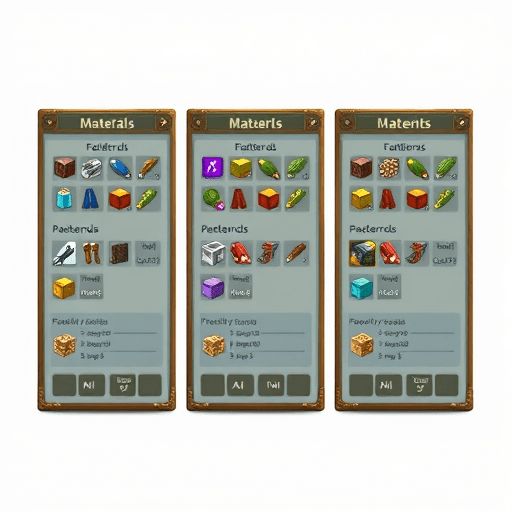
They replaced packs with a transparent crafting system. Every duplicate card a player earned through gameplay converted into a currency called Spark. Cards were organized into a public collection, and every card had a fixed Spark cost. A legendary was 4000 Spark. A common was 40. No exceptions, no hidden rarity gates.
The team also added a “wildcard” mechanic: any three random cards from a chosen faction could be exchanged for one specific card of the next higher rarity. This preserved the excitement of opening a pack while giving players agency.
The Results
Within five months, average session length grew by 22 percent. More importantly, day-90 retention climbed from 18 percent to 26 percent. The studio calculated this as roughly a 40 percent uplift in lifetime value per acquired user. Negative Steam reviews referencing monetization dropped from 14 percent of all reviews to under 3 percent.
Studio Two: Seasonal Battle Pass Powered by Player-Crafted Items
The second studio ran a cooperative survival game with a small but loyal player base. Their monetization relied on seasonal crates containing randomized cosmetics. Revenue was seasonal and plateauing. Then a wave of refund requests followed a community post accusing them of “gambling on Halloween skins.”
The Reframe
They rebuilt the economy around a crafting-heavy battle pass. The pass itself was free, with both a free track and a premium track. Every node on the premium track awarded materials rather than finished items. Materials were grouped by category: fabric, metal, pigment, and arcane essence. Finished cosmetics required specific combinations.
Crucially, the studio published a recipe book inside the game. Any player could look up how to craft the “Wraithbone Helm” and see that it required 30 pigment, 15 arcane essence, and 5 metal. Players who disliked crafting could buy a “skip token” that completed one recipe for a small fee, but the majority simply enjoyed the crafting minigame.
The Results
Battle pass conversion went from 9 percent to 17 percent, and players who bought into the pass showed 38 percent higher day-60 retention than non-purchasers. Crafting was so popular that the team added a standalone “Artisan Mode” allowing players to design and share cosmetic variants, which became a top community feature.
Studio Three: Cosmetic Shop Anchored by a Visible Roadmap
The third studio made a narrative RPG with deep character customization. Their loot boxes contained randomized outfits, and despite a probability disclosure page, players regularly complained on Discord about losing 50-pull streaks on duplicates.
The Reframe
The studio rebuilt monetization around three pillars: a direct purchase shop, a crafting system, and a publicly editable roadmap. The shop displayed every cosmetic item with a fixed price and a preview. The crafting system let players break down unwanted cosmetics into “Thread,” then reassemble Thread into any other cosmetic in the catalog.
The roadmap was the secret weapon. Every month, the studio posted a transparent list of planned cosmetics, their rarity, and the approximate Thread cost. Players could plan their purchases, save Thread, and even vote on which designs made it into the next patch.
The Results
Average revenue per user rose 12 percent within two quarters, but the bigger win was retention: 90-day active users jumped 44 percent. The studio’s community manager reported that refund requests nearly vanished, and player-driven content suggestions tripled the studio’s design bandwidth.
The Shared Design Principles Behind 40 Percent Retention Gains
All three studios landed on the same core ideas, despite working in different genres. Their shared principles offer a playbook for ethical loot box alternatives that boost LTV without backlash.
- Deterministic outcomes over probabilistic ones. Players who can predict the result of their investment stay engaged longer. The sense of mastery, not luck, drives the next purchase.
- Crafting as a gameplay loop, not a chore. Each studio treated crafting as a feature worth polishing. Recipes, materials, and progression paths all became part of the core experience.
- Public roadmaps and visible economies. Transparency became a competitive moat. When players know what is coming and how to earn it, they plan ahead and spend with confidence.
- Optional shortcuts, not mandatory gambling. Each studio retained a way to skip the grind for a fee, but framed it as a convenience, not the core value proposition.
What Other Studios Can Learn
Randomized monetization still works in narrow contexts, such as cosmetics-only randomness in single-player modes where players cannot trade or sell. But for live-service games aiming at long retention, the math no longer favors luck-based systems. The cost of regulatory compliance, platform fees, chargebacks, and brand damage now consistently exceeds the incremental revenue from pure RNG mechanics.
Indie studios in particular have an advantage. They can ship a crafting overhaul in a single quarterly patch, without the legal review committees and investor calls that slow down larger publishers. The three teams profiled here all made the switch within one development cycle, often in under four months.
Conclusion
The shift from loot boxes to transparent crafting is not a moral compromise. It is a smarter business model. The three studios profiled here each retained more players, attracted fewer complaints, and built stronger communities by treating their players as collaborators rather than sources of randomized extraction. As the live-service landscape continues to mature in 2026 and beyond, the studios that publish their economies, expose their math, and let players decide what to build will be the ones still standing.