In 2026, the cloud landscape is dominated by transient, purpose‑built environments that spin up, run, and tear down in minutes. The zero‑trust security model, which treats every request as untrusted until proven otherwise, dovetails naturally with this paradigm. This article explores how three leading IaC tools—Terraform, Ansible, and Pulumi—can be leveraged to create immutable, on‑demand infrastructure while embedding zero‑trust principles from the ground up.
-
The Zero‑Trust Paradigm in 2026
Zero‑trust has evolved beyond perimeter defense into a holistic approach that governs identity, device posture, and network segmentation at every layer. By assuming that internal and external networks are equally hostile, teams can enforce strict least‑privilege access controls, continuous verification, and micro‑segmentation. Implementing zero‑trust in an on‑demand environment requires automated policy enforcement, which IaC tools can provide through declarative configurations and runtime checks. This foundation ensures that even the shortest‑lived workloads are secure from the moment they are instantiated. -
Terraform: Declarative, Immutable Foundations
Terraform remains the gold standard for building immutable infrastructure due to its declarative syntax and robust state management. Its provider ecosystem covers nearly every cloud, enabling teams to describe desired end states without scripting the provisioning steps. Terraform’s plan‑apply cycle guarantees that changes are intentional and auditable, while its state locking and drift detection prevent unauthorized modifications. When combined with modules that enforce zero‑trust policies—such as VPC isolation, IAM role constraints, and encryption at rest—Terraform can spin up secure, immutable environments in seconds. -
Ansible: Procedural Orchestration for Rapid Iteration
Ansible excels at procedural orchestration, making it ideal for environments that require rapid, repeatable configuration changes after the initial provisioning. Its agentless architecture and YAML playbooks allow operators to apply fine‑grained security hardening, patch management, and runtime configuration without restarting the instance. Ansible can also integrate with Terraform by pulling state files and applying post‑provisioning tasks, creating a hybrid workflow that balances immutability with flexibility. For zero‑trust, Ansible can enforce continuous compliance checks, such as verifying that only approved binaries run or that network policies are correctly applied. -
Pulumi: Code‑First Infrastructure with Modern Languages
Pulumi brings the power of modern programming languages—TypeScript, Python, Go, and C#—to infrastructure definition, enabling developers to leverage familiar tooling, libraries, and type safety. This code‑first approach allows for sophisticated logic, such as dynamic resource provisioning based on runtime data, while still producing declarative outputs that can be versioned and reviewed. Pulumi’s native support for secrets management, policy as code, and integration with CI/CD pipelines makes it a compelling choice for zero‑trust deployments that demand both agility and rigorous security controls. Its ability to treat infrastructure as first‑class objects also simplifies complex multi‑cloud scenarios. -
Comparative Analysis: State Management & Drift Detection
State management is a critical differentiator among the three tools. Terraform’s centralized state file, when stored in a remote backend with locking, provides a single source of truth that is easy to audit. Ansible, lacking a native state file, relies on idempotent playbooks and external inventory, which can lead to drift if not carefully managed. Pulumi, on the other hand, stores state in its cloud or a user‑managed backend, offering both the immutability of Terraform and the flexibility of code. Drift detection in Terraform is baked into the plan step, whereas Pulumi offers real‑time drift alerts via its policy engine, and Ansible requires external tools or custom modules to detect configuration drift. -
Security Integration: Secrets, RBAC, and Network Segmentation
All three tools support secrets management, but their approaches differ. Terraform can integrate with HashiCorp Vault, AWS Secrets Manager, or Azure Key Vault, injecting secrets into resources at deploy time. Ansible’s vault system encrypts variables, while also supporting external secret stores; however, secrets are often embedded in playbooks, which can be a risk if not handled carefully. Pulumi’s policy as code framework allows for runtime validation of secret usage, ensuring that no unencrypted secrets slip into the infrastructure. For RBAC, Terraform’s provider-specific IAM roles enforce least privilege, Ansible can use role‑based access within its inventory, and Pulumi’s policy engine can enforce organization‑wide role constraints. Network segmentation is typically achieved through VPC or subnet isolation, security groups, and firewall rules—all declaratively defined in each tool. -
Operational Overheads: CI/CD Pipelines, Observability, and Cost
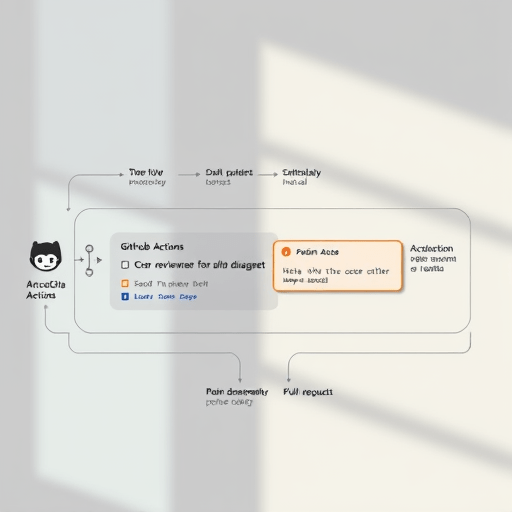
Integrating IaC into CI/CD pipelines is essential for zero‑trust on‑demand environments. Terraform’s CLI can be invoked within GitHub Actions or GitLab CI, with the plan step providing a review gate. Ansible playbooks can be executed via Jenkins or GitHub Actions, and its idempotent nature reduces the risk of repeated configuration errors. Pulumi’s SDKs allow for direct integration with CI/CD, and its cloud service offers built‑in observability dashboards that track resource changes and policy violations. Observability is critical: Terraform’s state file can be audited, Ansible can emit logs to centralized systems, and Pulumi’s telemetry provides real‑time insights into resource health. Cost considerations revolve around the number of provisioning steps, state storage, and runtime overhead; Terraform and Pulumi typically incur minimal runtime costs, while Ansible may add agent or connection overhead if not optimized. -
Future‑Proofing: Cloud‑Native Features and AI‑Driven Automation
The next wave of IaC innovation focuses on tighter integration with cloud‑native services and AI‑driven automation. Terraform’s provider ecosystem is expanding to include AI‑based cost optimization and security scanning plugins. Ansible’s integration with Ansible Tower (AWX) now supports AI‑guided playbook recommendations and anomaly detection. Pulumi’s open‑source SDKs are being extended with AI‑assisted code completion and automated policy generation, reducing the cognitive load on operators. Embracing these trends ensures that zero‑trust, on‑demand environments remain resilient, cost‑effective, and compliant as cloud offerings evolve.
In conclusion, the choice between Terraform, Ansible, and Pulumi hinges on the specific needs of your organization—whether you prioritize declarative immutability, procedural flexibility, or code‑first agility. By embedding zero‑trust principles into each stage of the IaC pipeline, teams can deliver secure, on‑demand environments that scale effortlessly while maintaining strict compliance. The future of cloud infrastructure will be defined by tools that combine automation, observability, and AI, and the three IaC frameworks discussed here are already leading the charge.