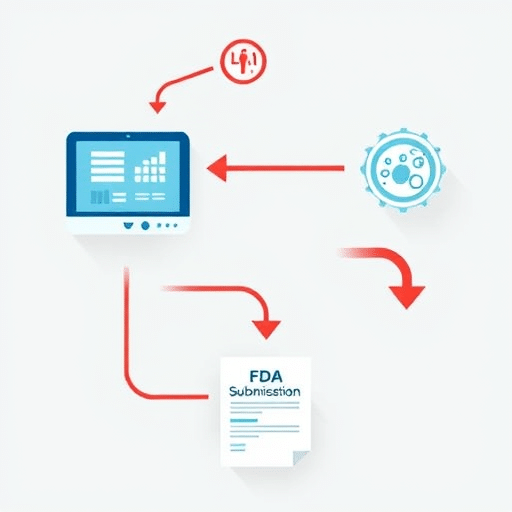
In 2026, a pre-revenue digital therapeutics startup often finds itself in a bind: payers, clinicians, and investors want evidence before adoption, but randomized controlled trials take years and cost far more than a seed round can support. The way forward is a DTx evidence on a budget approach — powered by a real-world data playbook for startups. This playbook focuses on pragmatic tools for pre-revenue companies that treat evidence generation as an engineering and product problem, not a burden reserved for biotech-scale research teams. With modest infrastructure, open-source software, and a tight observational design, your startup can produce decision-ready real-world evidence (RWE) that supports early market access and sets the stage for longer-term validation.
Why Real-World Data Is the Pre-Revenue Evidence Engine
Traditional evidence generation for digital therapeutics has often borrowed from the pharmaceutical playbook: large controlled trials, expensive patient recruitment, and long follow-up periods. But digital therapeutics are software, and software produces data every time a user opens the application. That data — engagement logs, symptom scores, adherence patterns, in-app outcomes — is real-world data (RWD). It captures how patients actually use the product in their daily lives, outside the artificial walls of a trial protocol.
For pre-revenue startups, RWD is not a replacement for clinical trials, but it is a rapid, low-cost evidence engine. It can answer key questions before a formal trial is feasible: Is the product engaging enough? Are early signals trending in the right direction? Which patient subgroups seem to benefit most? These outputs help refine the product and give clinical advisors something concrete to react to — all without a single clinic visit or a full-time biostatistician.
Pragmatic Data Infrastructure: Start With Existing Logs and PROs
The first shift in mindset is realizing that you already collect real-world data. Every tap, screen view, questionnaire response, and notification interaction is a potential evidence variable. The challenge is turning that raw digital exhaust into structured, analyzable data.
For a pre-revenue company, the ideal infrastructure is minimal and open-source. You do not need a proprietary clinical data platform on day one. You need:
- Event logging: Use your existing product analytics tool or self-host an open-source alternative such as PostHog or Matomo to capture user actions with timestamps.
- Patient-reported outcomes (PROs): Integrate validated questionnaires — such as PROMIS short forms or standard PHQ-9/GAD-7 instruments — into your product flow. This makes outcome capture a natural part of the user journey.
- Data storage: Keep raw event exports in PostgreSQL or DuckDB. These low-cost databases are more than sufficient for early-stage analytics and can scale when needed.
- Transformation and quality checks: Use dbt for transformations and Great Expectations for automated data quality validation. These tools impose discipline without enterprise licensing fees.
- Visualization: Metabase or Apache Superset can generate interactive dashboards for internal review and external advisors.
This may sound like a data team’s shopping list, but most of these tools run on a standard laptop or a small cloud instance. For a startup, the engineering time required to stand them up is the real cost — and that is a sensible investment because the same pipeline will serve future clinical trials and payer submissions.
The Fit-for-Purpose Real-World Data Collection Plan
Before collecting anything, define your evidence question with laser precision. A fit-for-purpose RWD plan leaves no ambiguity about what you are measuring and why. Investors and payers will respect a narrow, honest claim more than a broad, untested one.
Define the Minimal Evidence Claim
Write one sentence that your current dataset can plausibly support. For example: “After six weeks, users who engage with the app at least three times per week report a 30% reduction in symptom severity on the PHQ-9.” That is a testable, clinically relevant claim that does not require a control group to be meaningful as a feasibility signal.
Select Outcomes Before You Collect
Pre-specify your primary and secondary outcomes. For real-world data, these might include engagement metrics, medication adherence, or patient-reported symptom scores. Do not wait until after data collection to decide which endpoint looks best — selective reporting destroys credibility.
Bake Instrumentation Into the Product Roadmap
Ensure that all relevant user actions are logged by default. You cannot retroactively generate data from a feature that was not instrumented. Make measurement a requirement in your product definition and include it in release checklists. This is the most effective way to collect evidence without adding dedicated research staff.
Low-Budget RWD Tools That Look Serious to Investors and Payers
One of the most frequent objections startup founders hear is: “How can your evidence be validated with a homegrown data pipeline?” The answer is transparency and reproducibility. Using open-source, recognized research tools gives your analysis a level of credibility that a custom dashboard cannot provide.
- R and RStudio: Still the standard among clinical biostatisticians. Publish your analysis scripts in a public repository to show reviewers exactly how results were derived.
- Python with Pandas and StatsModels: A flexible alternative for data cleaning, cohort selection, and hypothesis testing. Jupyter notebooks make it easy to document every step.
- REDCap or OpenClinica: If you need to manage a small observational registry or collect participant consent electronically, these research-grade tools are often available through academic partnerships or low-cost community editions.
- FHIR APIs: For startups aiming to connect with health systems, exposing a standards-based FHIR endpoint for structured data exchange shows that you understand interoperability — and it reduces the burden on clinical partners.
The key is not the specific brand of tool, but the quality of the documentation around it. A payer will not do a code review, but your scientific advisors will. If they can reproduce your numbers from a single R script, the evidence is far more convincing.
Moving From Descriptive Analytics to Credible Real-World Evidence
Real-world data can do more than produce bar charts. With thoughtful analysis, your startup can generate evidence with a quasi-experimental flavor. Pre-post comparisons within a single cohort, with baseline and post-intervention measurements, are a practical starting point. For a pre-revenue company, this can be a powerful signal if the sample size is large enough and the outcome measure is validated.
More advanced techniques — such as propensity score matching against historical controls or interrupted time-series analysis — are feasible with open-source R packages and a modest sample size. However, these methods are only as good as the decisions that precede them. Write your analysis plan in advance, justify your inclusion criteria, and report missing data honestly. In the world of real-world evidence, humility is an asset.
Avoiding the Classic RWD Traps in a Budget Playbook
There are several ways to waste a precious evidence budget. The most common pitfalls are easy to miss when you are moving fast.
- Selection bias: Users who stay in an app may be different from those who drop out. Your early outcomes will be optimistic if you only analyze engaged users. Report the full funnel and compare baseline characteristics of completers and non-completers.
- Privacy compliance: Real-world data often includes health information. Even if you believe you are outside HIPAA or GDPR scope, assume you are inside it. Use pseudonymization, limit access, and conduct a privacy impact assessment before launching a data collection campaign.
- Overinterpretation: Correlation is not causation. A B2B partner may want a bold claim, but one non-replicable result can cost you years of credibility.
- Data quality gaps: Inconsistent event definitions between app versions can make your data unusable. Maintain a data dictionary and enforce naming conventions from the beginning.
An Eight-Week Real-World Evidence Sprint for Startups
To quickly operationalize this playbook, consider a concentrated evidence sprint. The goal is not a completed feasibility study in eight weeks; it is a defensible plan, a working data pipeline, and an initial cohort description.
- Week 1: Write the one-sentence evidence claim and choose the primary outcome measure.
- Week 2: Confirm event logging and PRO capture are active in the current product version.
- Week 3: Build the data pipeline from event logs into a PostgreSQL schema with quality checks.
- Week 4: Define the cohort, inclusion criteria, and analysis plan. Document all decisions.
- Week 5: Run a pilot analysis with early users to test the pipeline and fix data issues.
- Week 6: Produce a descriptive report with baseline characteristics and early engagement trends.
- Week 7: Share results with clinical advisors and incorporate their interpretation.
- Week 8: Revise the evidence claim and decide whether a larger observational cohort or a single-arm feasibility study is needed next.
This sprint approach keeps the evidence generation process continuous and flexible. It also creates a regular rhythm of scientific thinking inside the company, which is essential for any DTx startup that hopes to navigate regulatory or payer requirements.
Conclusion
For a pre-revenue digital therapeutics startup, waiting until you have enough funding for a randomized controlled trial is not a strategy. Real-world data, gathered pragmatically and analyzed honestly, can bridge the gap between product development and formal validation. By building a lean infra-structure, pre-specifying outcomes, and staying humble about what the data can prove, your company can generate meaningful DTx evidence on a budget — one that grows with your product and earns the trust of the stakeholders who matter.