If you swim regularly and cycle to cross-train or race triathlons, you might have noticed a stubborn ache in your knees or the arches of your feet after longer rides. The culprit isn’t your saddle height or your shoes—it’s the way your foot meets the pedal. Swimmers with flat feet often overpronate, and on a bike that excess motion translates directly into knee and foot strain. The fix, increasingly recommended by bike fitters and sports podiatrists in 2026, is simple and effective: shim cleats for arch support. These small wedges sit between your cycling shoe and cleat to re-angle your foot, restore a more neutral pedal stroke, and keep your knees tracking correctly. For any swimmer who’s naturally flat-footed, cleat shims are the quiet upgrade that can make the difference between painful rides and seamless training.
The Overlooked Link Between Pool and Pedals
It’s easy to assume that swimming and cycling use completely independent movement patterns. One is non-impact and water-based; the other is repetitive and ground-based. But there’s a hidden connection: both sports demand stable hips and aligned lower limbs. Swimmers with flat feet often develop hypermobile foot mechanics, which in the water are harmless or even helpful for generating ankle flexibility. On the bike, however, that same flexibility becomes a liability.
When you sit on a saddle and push through a pedal, your foot is the only connection to the drivetrain. If your arch collapses inward, your knee rotates medially with every revolution. Over a few hundred thousand pedal strokes, that subtle misalignment creates inflammation in the patellar tendon, the IT band, and the plantar fascia. The more time you spend in the water, the more mobile your ankles become—and the more pronounced the issue on the bike. This is why swimmers, more than purely road-based cyclists, tend to feel mysterious knee pain that doesn’t show up on standard bike fits.
How Flat Feet Change Your Pedal Stroke
Flat feet change more than just the bottom of your foot. Biomechanically, overpronation causes a cascade of compensations. As your arch flattens, the tibia internally rotates, which pulls the kneecap out of its natural groove. In the pedal stroke, this often appears as a collapsed heel that drifts outward or a knee that bows inward toward the top tube. You might not notice it on a 20-minute spin, but during a two-hour ride or a brick session after swimming, the repetitive stress accumulates.
The problem is compounded by stiffness. Most cycling shoes have carbon or nylon soles that offer zero torsional flexibility. So instead of the foot absorbing the motion, the force transfers up into the knee and hip. For a swimmer with flat feet, this is particularly frustrating because you might have no pain in the pool but significant discomfort after a bike ride. That’s not a strength issue—it’s an alignment issue. And alignment is exactly what cleat shims address.
Cleat Shims 101: What They Are and How They Work
A cleat shim is a wedge or plate that sits between the sole of your cycling shoe and the cleat itself. It rotates or tilts the foot relative to the pedal platform. For flat feet, a medial shim—thicker on the inside of the foot—lifts the arch side of the sole. This effectively creates a small post under the inside of the foot, mimicking the support an orthotic would give inside the shoe, but at the pedal interface.
Why not just rely on an insole? Because insoles and cycling shoes can only do so much. If you place a rigid footbed inside a stiff shoe, the sole still rests flat on the pedal. A shim changes the interaction between the sole and the cleat, correcting the foot’s angle relative to the crank arm. That’s why bike fitters often pair a supportive insole with a cleat shim for flat-footed riders. The two work together: the insole supports the soft tissue; the shim corrects the skeletal alignment.
What Shims Are Made From
Most cleat shims are made of hard plastic, carbon-reinforced nylon, or lightweight aluminum. Some come in a two-piece design with a serrated edge for adjustability, while others are simple single wedges with a tapered profile. For flat-footed swimmers, we generally recommend a shim with a moderate taper—enough to tilt the foot a few degrees without compromising cleat security. Some newer 2026 models also use a thin layer of rubber on the bottom to prevent micro-slipping, but you’ll want to keep the overall stack height low so your cleat doesn’t end up too far from the pedal.
How Much Tilt Do You Need?
There is no universal answer, but most cyclists with flat feet benefit from a shim of 0.5 to 1.5 degrees on the medial side. Start lower. Too much tilt can move the pressure point to the outer edge of your foot and cause a different set of problems. Think of it as a dial: you’re trying to find the angle where your knee tracks vertically over your second toe through the entire pedal stroke.
Choosing the Right Shim: A Practical Guide for Swimmers
When you start shopping for cleat shims, the options can be overwhelming. Here’s a straightforward framework for choosing the right set for your flat feet and your cycling goals.
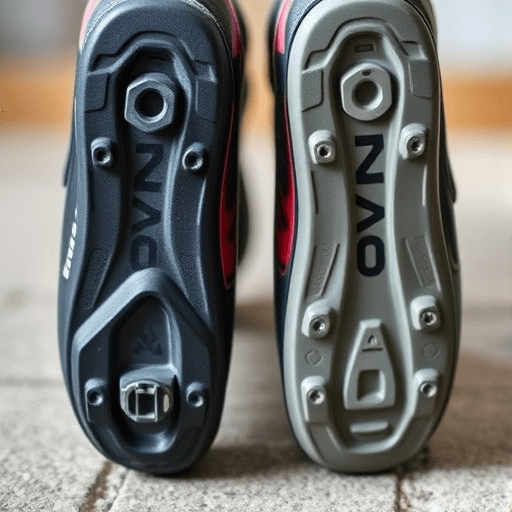
- Consider cleat type first. Most road pedals use three-bolt cleats (Look, Shimano SPD-SL). Mountain bike and hybrid pedals use two-bolt cleats. Shim systems for three-bolt cleats are common; two-bolt shims are available but often built into pedal-specific platforms. Make sure you buy a shim that matches your cleat bolt pattern.
- Decide between single and dual wedge. A single wedge shim is angled only on the medial side. A dual wedge can include a slight lateral lift as well, which can be useful if your foot has a forefoot varus. For most flat-footed swimmers, a simple medial shim is sufficient. If you’re not sure, start with a single wedge.
- Adjust the stack height. Shims add thickness between the shoe and cleat. This raises your foot slightly relative to the pedal spindle. If you’re concerned about pedal strike in corners—most relevant if you do crits or tight turns—look for low-profile shims that offer only the needed tilt without excessive stack.
- Look for a shim with a built-in float indicator. Some 2026 shim models include a small groove or marker that helps you align the cleat within the shim. That’s useful when you’re trying to preserve lateral float, which is important for knee health.
Step-by-Step: Shimming Your Cleats Without Guessing
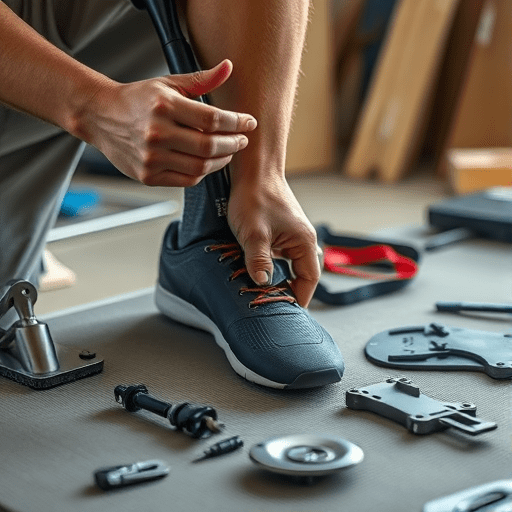
Installing cleat shims is a 15-minute job, but it needs precision. Here’s a tested process that bike fitters use with swimmers who have flat feet.
- Start with a clean, dry shoe sole. Remove the old cleat and any existing shim. Clean the sole with alcohol to ensure the cleat and shim sit flush.
- Identify your neutral foot angle. Stand comfortably and note how your arch flattens. You can also look at the wear pattern on your old cycling shoes. If the inside edge of the sole is worn more, you need a medial shim.
- Place the shim on the sole. Position it so the thicker part is on the inside (toward the bike frame when pedaling). Some shims have arrows indicating which direction faces the pedal.
- Align the cleat on top of the shim. Don’t change your cleat’s fore-aft position yet. Use a marker to trace the outline of the cleat on the shim, then install the bolts. Tighten to the manufacturer’s torque specification—usually 4–6 Nm—so the cleat doesn’t move.
- Test on a trainer or flat road. Pedal for five minutes and focus on your knee tracking. Do a few one-legged drills to feel for hotspots. Make small adjustments by increasing or decreasing shim thickness until the knee stays vertical over the second and third toes.
- Re-torque after your first ride. Shims can compress or settle slightly. After the first hour of riding, recheck bolt tension.
Complementary Adjustments: Cleat Position, Float, and Footbeds
A cleat shim is not a magic bullet in isolation. If you also have your cleat set too far forward or too far back, you may still feel calf or knee strain. For flat-footed swimmers, the cleat fore-aft position is often slightly too far forward because they’re used to a more “ball of foot” pressure from swimming’s ankle extension. Moving the cleat back by 2–3 mm can reduce stress on the metatarsals and Achilles.
Float is another piece. Shimano road cleats come with a yellow version that offers 6 degrees of float, and a blue version that locks you in with zero float. Flat-footed swimmers should always choose the float option. With a shim already correcting the foot angle, the additional float lets your knee find its natural path without hitting a hard boundary. Combining a medial cleat shim with high-float cleats can be the difference between chronic knee tracking issues and a smooth, pain-free spin.
Also consider a thin orthotic inside the shoe. A molded arch support helps distribute pressure across the midfoot and reduces excess pronation at the source. The shim then handles the residual tilt at the pedal. This dual approach is common in top-level triathlon coaching, especially for athletes who transition from a swim block to a bike leg and immediately stress their flat feet.
Prevention is Better Than Pain: Long-Term Strategies
Cleat shims are a reactive fix, but they also function as a preventive tool. If you’re a swimmer with flat feet who plans to increase bike volume—say, for an ironman or a century ride—shim now, not after a knee injury forces you to stop. The current sports medicine literature increasingly points to the foot-pedal interface as a critical control point for lower limb kinematics. Ignoring it is like swimming with a bad pull buoy: you can still get by, but you’re creating inefficiency and inviting trouble.
Another long-term strategy is to strengthen your foot muscles. While shims support the arch during cycling, you can also do towel curls and calf raises to improve your intrinsic foot stability. Combined, these approaches mean that you’re not relying solely on the shim—you’re also making your feet more resilient. That’s the 2026 approach: smart gear plus functional strength, not one or the other.
Finally, remember to reassess your shim setup after a few months. As your foot strengthens or your flexibility changes, you might need a thinner shim. This is normal and a sign that your biomechanics are improving. A cyclist who regularly checks their foot alignment and adapts their cleat setup will almost always outlast one who rigidly sticks to the same position for years.
Conclusion
For swimmers with flat feet, the source of knee and foot strain on the bike is rarely a strength deficit or a faulty saddle. It’s the way your foot collapses on the pedal. Cleat shims offer a precise, inexpensive way to restore arch support and alignment exactly where it matters—between the shoe and the pedal. By adding a medial wedge, preserving float, and pairing it with supportive insoles, you can keep your knees tracking clean and your rides pain-free. Whether you’re training for a triathlon or just riding to supplement your swim program, shimming your cleats is a small change with outsized benefits.