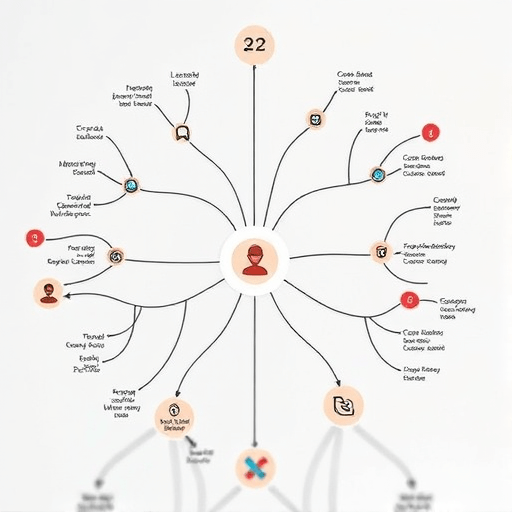
Moral ambiguity in branching dialogue trees comes from more than offering a “kind” and “cruel” response. Players recognize artificial morality when every decision immediately produces a visible virtue score, and designers lose opportunities for surprise when the supposedly ethical option has no hidden cost. A stronger approach treats dialogue as a system of competing values, imperfect information, and consequences that cannot always be fully evaluated at the moment of choice.
This framework helps narrative teams build branching conversations in which reasonable people can disagree, compassionate acts can carry strategic consequences, and seemingly selfish decisions can reveal unexpected empathy. It is especially useful in 2026, as players increasingly expect meaningful reactivity without wanting every narrative system reduced to a moral alignment chart.
Why Binary Morality Weakening Player Choice
Traditional branching dialogue often maps cleanly onto a reward system. One response earns approval, another earns defiance, and a third is marked as neutral. Although this structure is easy to implement, it encourages players to optimize a meter rather than inhabit a character.
Binary morality also creates predictable storytelling. If honesty is always rewarded, deceit is always punished, and violence is always treated as cruel, players stop examining context. They infer the designer’s preferred answer and select it. Moral ambiguity requires more than gray language added to a fundamentally binary outcome; the situation itself must resist a single correct interpretation.
The goal is not to make every option equally defensible. Instead, each choice should reflect a recognizable value while exposing an uncomfortable trade-off. A promise may protect someone’s dignity while damaging another person’s safety. A lie may prevent panic but normalize deception. Compassion may require surrendering control, while discipline may preserve a group at the cost of individual freedom.
Build the Scene Around Competing Ethical Claims
Start by identifying at least two values that can both be defended. “Justice versus mercy” is familiar, but more specific conflicts create richer dialogue. Consider loyalty versus truth, safety versus autonomy, tradition versus progress, collective welfare versus personal consent, or short-term stability versus long-term accountability.
Write the scene as a conflict between those claims rather than between obvious heroes and villains. Each side should have a legitimate concern, a distorted assumption, or a private fear. The opposing character should not exist only to make the player feel morally superior.
A useful design test is to ask what the kindest character in the story would argue for and what the most pragmatic character would fear. If both positions sound plausible, the scene has room for moral complexity. The dialogue can then test which risk the player is willing to accept.
Use Values Instead of a Single Morality Score
Instead of recording one universal goodness rating, track several values that matter within the fiction. Depending on the game, these might include mercy, discipline, honesty, loyalty, independence, courage, or pragmatism. A decision can raise one value while lowering another, but the interface should not imply that these values are objectively good or evil.
For example, choosing to publish a military secret might increase honesty while reducing community trust. Protecting an informant might demonstrate loyalty while exposing a different ally to danger. These shifts are not rewards and penalties; they are narrative signals that the character’s priorities are becoming visible.
Value systems also support more nuanced characterization. A player who consistently values community safety may behave very differently from one who values personal autonomy, even if both characters rescue the same person. The result is not moral alignment but behavioral continuity.
Make Information Selectively Available
Moral ambiguity depends on what the player knows, believes, and misunderstands. Before offering consequential responses, establish facts, assumptions, and missing information. Characters may lie with convincing evidence, disclose partial truths, or interpret the same event through different cultural assumptions.
Dialogue trees should account for knowledge states, not just prior selections. A line that sounded like a warning in one conversation may later become a confession once its context changes. A character’s testimony can be sincere but inaccurate, while an unreliable narrator can still reveal a valuable emotional truth.
Avoid hiding essential information merely to make a later twist surprising. Fair ambiguity gives players enough material to justify multiple interpretations. The story may eventually reveal that an antagonist was protecting a loved one, but the audience should have noticed signs of tenderness, fear, or sacrifice beforehand. Moral complexity is strongest when reinterpretation feels earned rather than imposed.
Design Consequences That Emerge from Context
A compelling response should not trigger a consequence simply because it belongs to a labeled personality type. It should push against the situation’s existing pressures. If a town is short of medicine, an act of mercy may improve morale but worsen shortages. If a political alliance is already unstable, an honest confession may gain personal credibility while triggering a public crisis.
Track consequences at several levels:
- Immediate: What changes in the current conversation?
- Relational: How do specific characters remember the choice?
- Systemic: Which group, institution, or community is affected?
- Long-term: How does the decision reshape a later problem?
The strongest branches often close one route while opening a different kind of opportunity. A player may lose a powerful ally but gain credibility with a community. Alternatively, a compromise may preserve unity while leaving a private injustice unresolved. Meaningful consequences should change the direction of play, not merely display a different ending badge.
Let Tone and Subtext Complicate Intent
Dialogue choice systems frequently rely on short summaries that cannot represent tone. “I understand” might be spoken with patience, suspicion, condescension, or grief. If the preview is vague, the player chooses an attitude rather than a sentence, which can increase role-playing freedom.
Characters can also misunderstand one another. The player may intend a threatening remark as sarcasm, while an unfamiliar character takes it literally. These moments should arise from differences in history, culture, status, or emotional pressure rather than arbitrary confusion.
Pay attention to interruptions, pauses, and refused answers. A character may change the subject when pressed, answer a different question, or remain silent because the topic threatens their status. Subtext allows branching dialogue to create meaning without explaining every interpretation to the player.
A Practical Scene-Planning Method
Before writing lines, define the scene’s ethical tension in one sentence: “A community leader must choose whether to conceal evidence of misconduct to prevent unrest.” Then identify the competing values, relevant knowledge, and possible outcomes.
A practical sequence is:
- State what the player character wants before the conversation begins.
- Identify what each major participant fears losing.
- Define the value represented by each major response.
- Write at least one honest objection to every response.
- Track relational, systemic, and long-term consequences separately.
- Reveal at least one consequence that was not obvious at the decision point.
For the community-leader scenario, one branch might conceal evidence to preserve public order. Another might publish the evidence to restore institutional trust. A third could acknowledge the evidence without naming the perpetrator, sacrificing immediate accountability to prevent retaliation. None is perfect, and each communicates a different theory of leadership.
Playtest for Reasons, Not Just Outcomes
Outcome testing reveals whether a branch is visible, but reason testing reveals whether it is meaningful. Ask playtesters not only what they chose but why they chose it. If every participant selects the response that appears least harmful, the choice may be obvious. If nobody can explain their decision, the ethical tension may be too vague.
Also observe whether players recognize the consequences of their choice. A memorable branch does not require a dramatic explosion after every serious conversation. A changed greeting, a character’s refusal to make eye contact, or a missing request for help can carry more emotional weight than a large numerical shift.
Test opposite play styles as well. A highly empathetic player, a skeptical player, and a goal-driven strategist may interpret the same scene differently. The dialogue should make room for those interpretations without mocking any of them.
Avoid Manufactured Neutrality
Ambiguity is not an excuse to avoid responsibility. If a story presents abuse as simply “another perspective,” or treats every injustice as a disagreement between equally powerful claims, it may create false equivalence. A narrative framework can acknowledge that all choices have costs while still recognizing harm, power, and vulnerability.
The designer’s own values will inevitably shape what the game rewards, punishes, or emphasizes. The important task is to make that influence visible during development. Teams should ask who benefits from the status quo, who bears the risk, and whether the story permits marginalized characters to define their own experience. Moral ambiguity is most persuasive when unequal consequences are not flattened into equivalent inconveniences.
Keep the Branching Structure Manageable
Complex morality can produce enormous dialogue trees if every response receives a unique continuation. Writers can control scope by grouping consequences rather than lines. Multiple statements can lead to one of several shared states, while each shared state preserves the player’s specific reason for reaching it.
Use modular variables for knowledge, trust, fear, commitment, and public reputation. These variables can drive short acknowledgments and scene changes without requiring hundreds of bespoke paths. A strong writing document also records the intention behind every branch, not only its mechanical effect, so later changes do not erase the original ethical question.
The best branching dialogue trees do not ask players to choose between good and evil. They ask which risk they will accept, which loyalty they will place above another, and what kind of person they are willing to become when certainty is impossible.