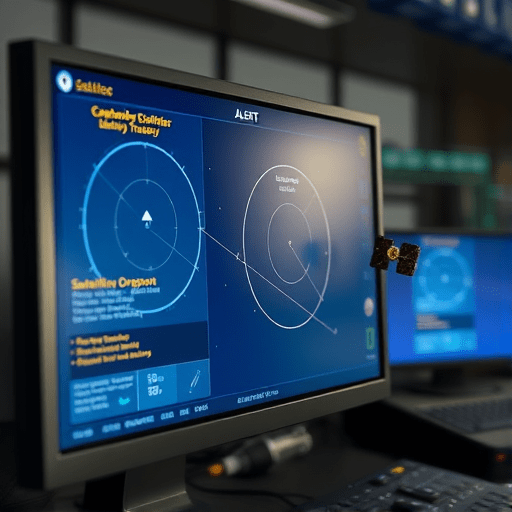
Astroscale’s orbital debris removal cost analysis reveals that on-orbit servicing programs can dramatically reduce the collision-avoidance expenses that satellite operators face today. For decades, the industry has treated debris as an unavoidable operational hazard, budgeting for evasive maneuvers, extra propellant, and the risk of losing a multi-million-dollar asset to a piece of space junk. But a closer look at the economics—combined with the maturity of Astroscale’s technology in the current era—shows a new path. Instead of merely paying to dodge the problem, operators can now invest in active removal and servicing, transforming a recurring cost into a strategic, long-term saving.
The Hidden Price Tag of Collision Avoidance
To understand why Astroscale’s services matter, it’s first necessary to quantify what collision avoidance actually costs a satellite operator. These expenses are not always visible on a single invoice, but they accumulate quickly and affect the entire business model. The most obvious cost is fuel. Every evasive maneuver consumes propellant that was originally budgeted for station-keeping and orbital adjustments. When a maneuver is executed to avoid a debris object, that fuel is gone forever, shortening the satellite’s operational life by months or even years.
But the financial impact goes much deeper. Operators must also contend with:
- Mission planning overhead: Analysts, software tools, and operational centers are required to monitor conjunction alerts and decide whether to maneuver—a process that consumes hours of expert labor.
- Downtime and service interruptions: During a collision avoidance maneuver, the satellite is often offline, disrupting communications, Earth observation, or data relay services. For commercial operators, this means lost revenue and potential contractual penalties.
- Insurance premiums: Poor collision risk records or frequent evasive maneuvers signal a higher threat profile, leading underwriters to raise premiums or exclude debris-related damage from coverage.
- End-of-life disposal: Even after a satellite’s mission ends, operators must perform a final maneuver to check it to a graveyard orbit. This requires significant leftover fuel, which could have been used for revenue-generating operations.
When these factors are combined, the true cost of avoiding debris can exceed millions of dollars per satellite over its lifetime. This is the burden that Astroscale’s on-orbit servicing model aims to lift.
From Avoidance to Active Removal: A Paradigm Shift
Traditional debris mitigation relies on preventive measures like keeping a low profile, following 25-year deorbit rules, and hoping that no one else’s junk crosses your path. Astroscale flips that idea on its head. Instead of just avoiding debris, the company actively removes it, extending the same service to satellite operators as a proactive defense. With missions like ELSA-M (End-of-Life Services by Astroscale-Multiple) and ADRAS-J (Active Debris Removal by Astroscale-JAXA), the firm has demonstrated the ability to dock with, deorbit, and even inspect defunct satellites, all without human intervention.
This capability is not just a technical achievement; it is an economic game-changer. When a satellite approaches the end of its operational life, Astroscale’s servicer can dock with it, take over attitude control, and perform the deorbit burn using its own propulsion system. This eliminates the fuel reserve that operators would otherwise need to keep for disposal. That fuel can now be used for station-keeping or additional mission time, directly boosting revenue. In parallel, the servicer can remove high-risk objects from operational orbits, reducing the background debris population and lowering the probability of future collision alerts.
Cost Savings Across the Satellite Lifecycle
Astroscale’s orbital debris removal cost analysis is best understood by looking at the entire satellite lifecycle, from launch to final disposal. The savings are not limited to the operation phase; they begin before the satellite is even placed in orbit and continue long after its switch is flipped off.
Pre-launch and insurance planning
Satellite operators who sign up for on-orbit servicing or actively support removal programs can present a lower risk profile to insurers. Because a known, capable servicer will be available to deorbit the satellite at the end of life, underwriters are more likely to offer favorable rates. In some cases, the presence of an active removal contract can reduce collision-related premiums by a significant percentage, as the insurer’s exposure to debris-caused losses drops.
During operations: fewer maneuvers, more productivity
When Astroscale actively removes large debris objects from a satellite’s orbital neighborhood, the number of collision warnings drops. This has a direct effect on the operator’s operational budget. Fewer warnings mean fewer false alarms, reduced time spent on conjunction analysis, and less fuel burned for evasive actions. The operational team can focus on optimizing payload performance instead of constantly worrying about the next close approach. For high-throughput satellites in congested low Earth orbit (LEO), this can translate into a 20–30% decrease in annual collision-avoidance expenses, according to internal industry models that factor in Astroscale’s service cadence.
End-of-life: disposing responsibility without the fuel penalty
The most straightforward saving comes from letting Astroscale handle disposal. A typical geostationary satellite must reserve roughly 30–40 m/s of delta-v for its final graveyard burn. That fuel, if unused for maneuvers, can extend the satellite’s mission by an additional 3–6 months, depending on the propulsion system. In the LEO constellation business, where replenishment cycles are rapid, the ability to use all available propellant for revenue-generating operations improves the unit economics of every satellite. Those savings can be redirected to the cost of an on-orbit servicing contract, creating a net-positive financial equation.
Beyond Fuel: The Risk Premium Discount
The obvious savings from reduced fuel usage are only part of the story. Astroscale’s orbital debris removal approach also reduces the “risk premium” that satellite operators carry on their balance sheets. Collision avoidance expenses include the potential loss of the satellite itself. For an asset worth $500 million—with expected data revenue of $1 million per day—even a small probability of a collision can justify a large annual insurance premium. When active debris removal is available and credible, that probability drops. The market begins to price in the existence of a cleanup service, much like a fire department lowers a building’s insurance cost or a tow service reduces the risk of being stranded.
Moreover, operators who adopt Astroscale’s services can better position themselves for emerging regulatory requirements. As global regulators move toward mandatory disposal and stricter debris mitigation rules, having a servicer contract already in place ensures compliance without the last-minute scramble to find a professional removal partner. This reduces the risk of regulatory fines and expedites license approval for new satellites.
A Practical Cost Model for Operators
To see how the savings play out in practice, consider a simplified cost model based on a medium-sized LEO satellite with a 7-year design life. Traditionally, the operator sets aside 10% of total propellant for collision avoidance and end-of-life disposal. That reserved propellant could otherwise generate at least two months of extended operations. Meanwhile, the operator spends about $200,000 annually on conjunction screening, maneuver planning, and insurance surcharges attributable to collision risk. Over the satellite’s life, that adds up to over $1.4 million in direct expenses, not counting the opportunity cost of the unused fuel.
Now imagine that the operator signs an Astroscale servicing contract for end-of-life removal. The contract cost is offset by the fact that the operator can use the previously reserved fuel for normal operations, potentially generating an additional month of revenue. In addition, the collision risk in the chosen orbit decreases because Astroscale removes a known defunct satellite from a nearby shell. The annual collision-avoidance budget drops by 15–20%, and the insurance premium decutyly declines due to the lower risk profile. Even with a service fee, the total lifetime cost of ownership for the satellite decreases, and the operator gains peace of mind that the space environment is improving rather than degrading.
The Bottom Line on Orbital Debris Economics
Astroscale’s orbital debris removal cost analysis demonstrates that on-orbit servicing is not merely a responsible environmental choice—it is a financially rational one. The days of passively budgeting for collision avoidance are coming to an end. Satellite operators who embrace active removal services will see reduced propellant consumption, lower operational overhead, diminished insurance burdens, and extended mission lifetimes. In this new era, debris removal is no longer a noble expense; it is a direct contributor to the bottom line. The question is no longer whether operators can afford to invest in on-orbit servicing, but whether they can afford not to.
Conclusion
The cost analysis of Astroscale’s orbital debris removal services paints a clear picture: satellite operators who rely solely on evasive maneuvers are bleeding money through hidden expenses. Active removal programs shift the paradigm by eliminating the need for excessive fuel reserves, cutting collision-avoidance workloads, and reducing risk premiums across insurance and operational categories. As the orbital environment becomes more crowded, the savings offered by Astroscale’s approach will only grow, making on-orbit servicing an essential element of any serious satellite operator’s budget.