For Paralympic athletes chasing the dream of competitive para-surfing, the ocean has long presented both a calling and a barrier. Traditional surfboards demand a level of balance, core engagement, and rapid reaction that simply does not match the physical reality of many surfers with limb differences, spinal cord injuries, or neuromuscular conditions. Adaptive surfboard hydrofoils are rewriting that equation. By lifting the board above the water on a submerged wing, hydrofoils radically reduce the wobble, drag, and physical load placed on the rider, opening the door to wave-riding for athletes who were once told the sport was out of reach. The latest generation of custom-engineered adaptive hydrofoils is doing more than improving performance — it is reshaping who gets to call themselves a surfer.
Why Hydrofoils Are a Game-Changer for Limited Mobility Riders
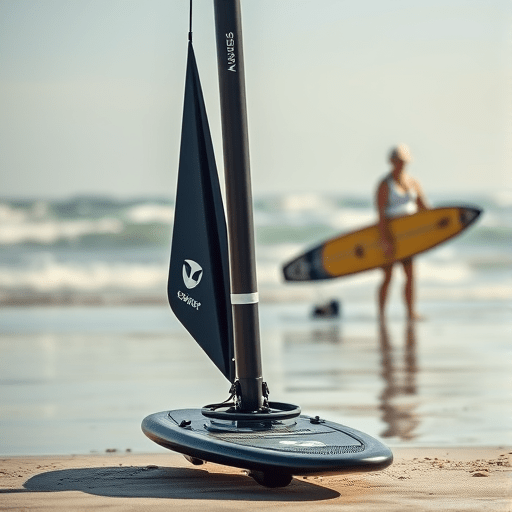
The hydrodynamic principle behind a hydrofoil is straightforward: as a foil wing moves through water at speed, it generates lift, raising the entire rig above the surface. Once airborne, the board glides with almost no contact area, eliminating the twitchy instability that defines planing on a conventional surfboard. For a para-surfer, this translates into three immediate advantages:
- Drastically reduced balance demand. Because the foil finds its own equilibrium in the water column, riders no longer have to make constant micro-corrections with their feet and ankles. This is transformative for athletes with below-knee amputations or partial paralysis.
- Lower physical fatigue. Shoreline paddle-outs in prone position still drain the upper body, but once a wave is caught, the hydrofoil carries much of the rider’s weight, conserving energy for longer sessions.
- Smoother takeoffs. Many adaptive surfers struggle to generate the pop and weight shift needed to launch on a standard board. Hydrofoils require only modest pumping to get up and flying.
The Engineering Behind Custom Adaptive Foils
Off-the-shelf hydrofoil setups are designed for able-bodied riders with full leg function, hip drive, and ankle articulation. Adaptive foils are a different animal entirely. Engineers working with prosthetists, physiotherapists, and competitive para-surfers are now designing modular systems tailored to individual mobility profiles.
Mounting Systems and Footplates
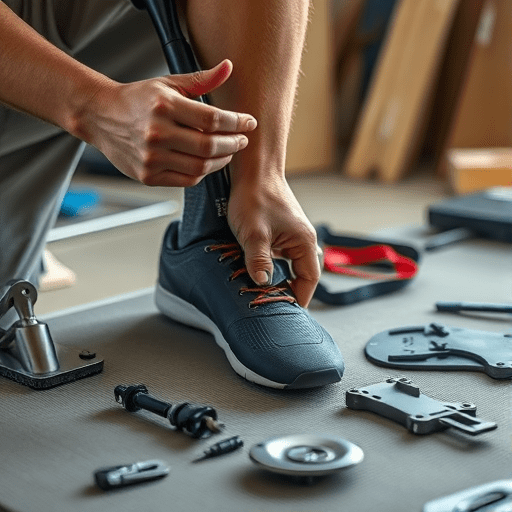
The most critical interface is the foot connection. For riders with bilateral limb loss, custom-molded carbon footplates with releasable binding systems allow secure foot attachment while still permitting emergency egress in heavy surf. Some 2025 prototypes integrate magnetic quick-release couplings inspired by alpine ski bindings, giving riders confidence that they can detach if a wave pushes them beyond their control envelope.
Mast Length and Foil Wing Geometry
Mast height has a profound effect on a rider’s center of gravity. Shorter masts (around 45 centimeters) keep the board closer to the water, ideal for riders who need to remount quickly from a prone position or who experience dizziness at height. Longer masts (70 to 90 cm) give more clearance over chop and are preferred by athletes with strong upper-body posture control. Foil wing shape is equally individualized: high-aspect wings slice cleanly through small, mushy waves, while lower-aspect, higher-lift wings suit heavier riders or those who pump with a modified seated stance.
Materials and Fabrication
Carbon fiber remains the dominant material, prized for its stiffness-to-weight ratio, but layup schedules are being tuned for adaptive loads. Reinforced front wings can withstand the asymmetric forces that occur when a rider compensating for an absent limb leans heavily to one side. Several fabricators now offer 3D-printed titanium mast bases, allowing precise angle adjustments down to half-degree increments — critical for athletes whose posture cannot easily be altered at the beach.
Key Disability Profiles Benefiting from Hydrofoil Designs
Hydrofoil technology is not a one-size-fits-all solution, but it has shown outsized benefits across several categories of para-surfers recognized by organizations such as the International Surfing Association and World Para Surfing.
Lower-Limb Amputees
For above-knee and below-knee amputees, hydrofoils neutralize the asymmetry that makes regular surfing punishing. A well-fitted foil setup distributes lateral forces through the rider’s torso rather than demanding absent ankle articulation. Many adaptive riders who switched to foils in 2024 reported a doubling of their average wave count per session within a single month.
Spinal Cord Injury and Paraplegic Riders
Prone paddle-out remains the dominant mode for many riders with thoracic-level injuries. Hydrofoils complement this beautifully: once a wave is caught and the board rises, the rider’s spine is supported and the surfer can shift from prone to a stabilized kneeling or seated position using custom outriggers or chest straps. Several competitive para-surfers in this category are now training almost exclusively on hydrofoil setups.
Neuromuscular Conditions
Athletes with conditions such as cerebral palsy, spina bifida, or muscular dystrophy benefit from the way a hydrofoil dampens oscillation. Boards that would normally chatter across chop become stable platforms, allowing the rider to focus on line choice rather than survival.
The Competitive Pipeline Toward Paralympic Inclusion
Para-surfing is currently contested at the World Para Surfing Championships and has been part of the ISA’s adaptive lineup for years, but the path to the Paralympic Games is its own journey. As of late 2025, the International Paralympic Committee continues to evaluate surfing for inclusion in future Games, and adaptive hydrofoil-specific classes are emerging in national federations from Australia, Brazil, France, and the United States.
Standardized classification is the next big hurdle. Because hydrofoils change the physical demands of the sport so dramatically, classifiers are still debating how to fairly compare an upper-limb-dominant rider on a high-lift wing against a below-knee amputee pumping a high-aspect foil in onshore chop. The 2025 season saw several experimental events run dual divisions — one for prone paddle-in and one for hydrofoil-assist — to gather data on athlete performance.
Safety Innovations and Training Protocols
Falling off a foiling board is not the same as falling off a regular surfboard. Riders can be carried long distances by a drifting foil rig, and the submerged mast presents a genuine impact risk. Leading adaptive surf programs are now mandating:
- Quick-release foots traps for riders using bindings.
- High-visibility board colors and reflective mast tape to keep the rig locatable.
- Personal watercraft or jetski spotters during open-water training sessions.
- Skill sequencing that begins with tow-in foiling on flat water before progressing to wave riding.
These protocols are particularly important for athletes with reduced sensation, who may not detect a leash entanglement as quickly.
What the Future Holds for Adaptive Foil Design
The next wave of adaptive foil innovation is already visible in workshops and university labs. Sensor-equipped masts that log real-time lift and drag data are being used to refine wing profiles for specific disability categories. Battery-assisted foils — small electric impellers that help riders pump up onto plane — have moved from concept to early consumer reality, opening foiling to athletes with very limited upper-body endurance. Even more intriguing is the rise of community-driven open-source foil design collectives, where adaptive riders share CAD files and tweak geometry to match their own bodies.
Perhaps the most meaningful shift, though, is cultural. Beaches lined with adaptive foil riders are no longer anomalies at adaptive surf contests; they are the norm. Coaches, judges, and fellow competitors increasingly recognize that a para-surfer on a well-matched hydrofoil is, in every meaningful sense, fully a surfer.
Adaptive surfboard hydrofoils are more than a clever piece of hydrodynamic engineering. They are an equalizer — a tool that lets the ocean belong to anyone willing to paddle out, regardless of how their body moves through the world. As classification evolves, materials improve, and more athletes enter the lineup with custom rigs built around their strengths, para-surfing’s path toward Paralympic recognition looks increasingly inevitable. The wave is there. The foils are ready. The riders are paddling out.