Budget airlines make their money from add-ons, and the carry-on bag is the biggest one of all. If you have ever paid $40 for a 35-liter backpack at the check-in counter, you know the pain. But there is another way. The simplest trick is to avoid bag fees with a travel vest’s hidden pockets — a clever, increasingly refined strategy that lets you keep your personal item under the seat and your wallet shut. This pocket-by-pocket packing guide explains exactly what to pack in a travel vest, how to distribute the load, and how to get through airport security without a second look.
What Makes a Travel Vest Actually Work for Budget Airlines
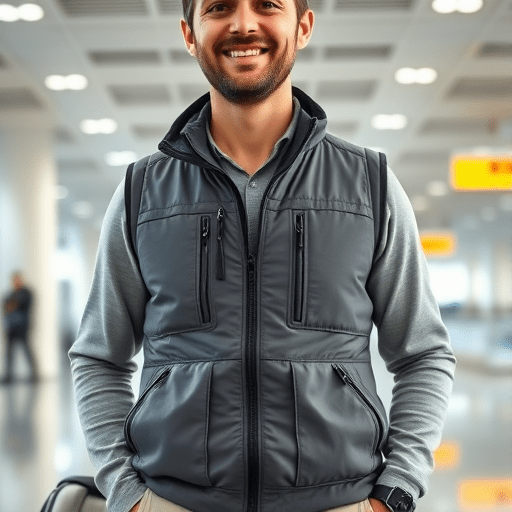
Not every vest is a good travel vest. The old fishing style with sixteen snap pockets screams “anything valuable inside.” Today’s best travel vests are streamlined, often made with stretch-woven nylon or a blend of lightweight polyester. They have curved seams, hidden zippers, and internal compartments that sit flat against your body.
Look for these features when choosing one:
- Hidden interior pockets with taped seams and YKK zippers.
- RFID-blocking sleeves for your passport and credit cards.
- A rear or lower-back pocket that can hold a layer of clothing.
- Moisture-wicking fabric that does not overheat in a cabin.
- A slim silhouette — no bulging panels or tactical velcro.
Also consider a vest with a two-way zipper. That makes it easier to access lower pockets without opening the whole vest, which helps during security checks.
The Pocket-by-Pocket Packing Strategy for Hidden Pockets
Once you have the right vest, it all comes down to a system. You want to place items based on weight, frequency of access, and security screening. Here is the pocket-by-pocket layout that works for a week-long trip on a no-frills airline.
1. Chest Pockets
Use the left chest pocket for your passport, boarding pass, and a spare USB thumb drive. The right chest pocket is the perfect spot for cash, a pen, and a folded pack of tissue. These are the items you need quickly while boarding or filling out arrival forms. If you are visiting a place that requires an immigration form, having a pen at hand is never a mistake.
2. Inner Waist Pockets
The inner waist pockets are close to your body and are the best place for small but bulky necessities: a 100ml travel bottle with face wash, a mini deodorant, and any prescription medicine in its original packaging. Keep them in a single clear zippered pouch so you can remove them as a bundle if a security officer asks to see your liquids.
3. Rear and Shoulder Pockets
This is the home for tech: a 10,000 mAh power bank, a folding wall charger, and a short USB-C cable. The rear pocket distributes the weight across your back, so you will not look like a hunchback. In the interior shoulder pocket, stash wireless earbuds, travel wipes, and a cable organizer.
4. Side Cargo Pockets
Packed side pockets can ruin the clean look of a travel vest, so use them for soft items. A collapsible water bottle, a few granola bars, and a packet of electrolyte powder fit well. If you want to keep your ears comfortable on a budget airline, a pair of foam earplugs is another good side-pocket candidate.
5. The Rear Expandable Pocket
Many travel vests include a lightweight expandable pocket on the lower back. Save this for a rain jacket or a packable nylon tote bag. These items are bulky but not heavy, and they are only brought out when you really need them. The pocket offers an easy solution for those unexpected airport gate checks.
Security and Comfort: Wear the Vest Through Check-In
Wearing a travel vest does not have to turn you into a pat-down magnet. The key is to keep it organized. Place your liquid bag, if you have one, in an outer zippered pocket so it is visible and accessible. Keep all metal objects out of your pockets — change, keys, loose screws, or the little blade on a Swiss Army knife. If you are selected for a secondary check, politely answer any questions and tell the officer that the vest has hidden pockets. It also helps to wear a thin layer above the vest, like an open shirt, so the vest is not the first thing a scanner sees.
Remember that some budget airlines, especially in Europe, are taking a closer look at personal items because of overhead bin space. In 2026, many carriers have tightened their enforcement, using rigid bag sizers and asking passengers to place their personal bag inside. But because a vest is worn clothing, it is not a “bag” in their system. That is exactly the loophole this strategy uses — and it is perfectly legal on almost all airlines.
What Not to Put in a Travel Vest
It is just as important to know what should not go into a travel vest. Here is a short list:
- Full-size shampoo bottles or other containers larger than 100ml.
- Heavy laptops or tablets over 1.5 kilograms — the strain on your neck and shoulders is not worth it.
- Sharp objects that might be considered weapons.
- Anything with an aroma that is strong enough to reach the person behind you in the boarding queue.
- Excessively heavy items like a set of dumbbells (you laugh, but people have tried).
If you are carrying something that weighs more than 2 kilograms, it is better placed in your backpack rather than in the vest. A travel vest should contain many small items, not one giant brick.
The Weight-Distribution Rule: Look Balanced, Not Bumpy
The quickest way to look like someone is stuffing expensive electronics into a vest is to make it lumpy. The art of the hidden-pocket lifestyle is balance. Keep heavier items near your waist and back, where your core supports them, and save the upper chest pockets for feather-light, flat things. Never put a power bank in a chest pocket, not only because it will be obvious but also because the weight will pull the vest forward.
A good approach is to wear the vest around the house before you leave. Try bending over, sitting in a chair, and reaching for overhead bins. If you feel a hard object digging into your ribs, move it to a better spot. The vest should feel less like a storage rack and more like an extra layer of clothing.
Beyond the Vest: What This Means for Future Trips
This approach is not limited to vests. Many modern travel garments now include hidden pockets — jackets, hoodies, and even travel leggings with zippered compartments. The idea is to treat your clothing as an extension of your luggage. For travelers who refuse to pay an extra fee for “priority boarding” and a 7-kilogram carry-on, the travel vest is the quiet champion of the low-cost airline ecosystem.
When you fly again, think about the clothing you wear on the plane as a flexible storage zone. The pocket-by-pocket strategy can save you 20 to 50 euros each way on a short-haul flight, which is often enough to pay for a nice dinner at your destination.
Wearing a travel vest with hidden pockets is not about hiding anything illegal or gaming the system. It is about keeping your belongings organized, accessible, and safe while staying one step ahead of unnecessary fees. A thoughtful pocket-by-pocket packing strategy, a well-fitting vest, and a calm presence at security are all you need.