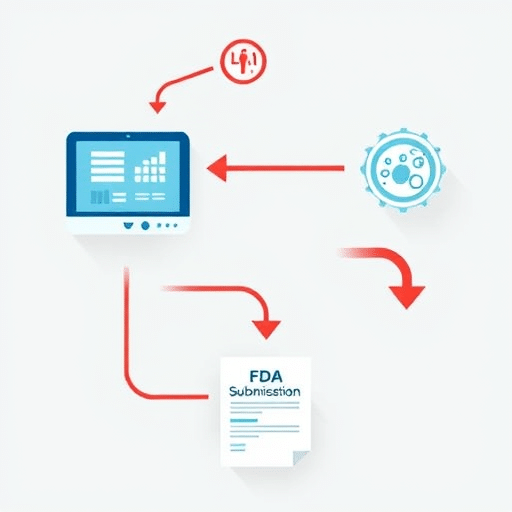
The EU Health Technology Assessment Regulation has changed how digital health technologies gain market access. For software as a medical device (SaMD), the Joint Clinical Assessment (JCA) is no longer a distant regulatory nuance; it is a decisive step in the reimbursement journey. This article serves as your EU HTA Regulation 2025 readiness checklist for digital health, focused on the five evidence requirements your SaMD needs before the JCA. In 2026, these requirements are not theoretical. They are being tested in real assessment procedures across Europe, and the quality of your evidence dossier will shape national decisions far beyond the first HTA report.
What JCA Means for SaMD Developers
Under the EU HTA Regulation (EU) 2021/2282, the JCA evaluates the relative clinical and safety effects of a health technology against comparators chosen by EU Member State HTA bodies. The assessment is jointly conducted by national HTA authorities, but it is not a reimbursement decision. National health systems still decide pricing and coverage. In practice, however, their local assessments increasingly rely on the JCA report. For SaMD developers, this means your clinical evidence must satisfy a broader set of expectations than it would under the Medical Device Regulation alone.
Digital health products now enter the JCA system through oncology, advanced therapy, and orphan drug pathways first, but software used alongside these products can also be captured. As the scope expands, SaMD manufacturers cannot afford to treat JCA as a post-market activity. Evidence planning has to begin during design.
Evidence Requirement 1: A Clinical Benefit Framework Tied to Intended Purpose
The first evidence requirement is a clear clinical benefit framework. JCA assessors are not looking for feature lists. They want to know how your software changes patient health, what population it targets, and which unmet need it addresses. You must move from a technical statement such as “our app supports medication management” to a clinical claim such as “in adults with type 2 diabetes, the digital intervention improves HbA1c relative to standard diabetes self-management.”
This foundation determines every other piece of evidence in your JCA dossier. If the intended purpose is vague, the clinical evaluation will be weak. Start by defining the target condition, the severity of illness, the intended setting, the type of user, and the exact clinical claim you intend to support. Use a structured framework such as PICO (population, intervention, comparator, outcomes) to describe each element. You should also map your SaMD’s functions to the clinical benefits they produce, making it clear which parts of the software drive the therapeutic effect.
Evidence Requirement 2: Comparator Selection and Standard-of-Care Evidence
JCA assessors need to know how your SaMD performs against the current standard of care in the relevant EU Member State. This is one of the most difficult requirements for digital health because the comparator is often not another device but a non-digital pathway: usual care, a paper-based programme, watchful waiting, or an in-person intervention.
Your evidence plan must justify the comparator choice. If your clinical study uses a waitlist control or a sham control, you need to explain why that is more appropriate than head-to-head comparison with standard care. Some SaMD developers use trial designs that include treatment arm, control arm, and an external real-world data arm. These can be acceptable, but only if the external cohort is adequately matched and the analytic methods are transparent.
Where possible, build a comparison arm that reflects actual clinical practice in Europe. Avoid relying solely on data from countries where the care pathway is materially different. The JCA can question whether your comparator is clinically relevant, and that uncertainty will affect the strength of your final assessment.
Evidence Requirement 3: Validated Patient-Relevant Endpoints
Patient-relevant endpoints sit at the heart of JCA. Surrogate biomarkers matter, but they are not enough. EU HTA assessors increasingly expect endpoints that capture how a patient feels, functions, or survives. For digital health, this usually means patient-reported outcomes (PROs), functional performance measures, or digitally captured measurements such as step count, sleep quality, or medication adherence.
Whatever endpoint you choose, it must be validated for your intended population and purpose. An app measuring pain intensity cannot use a generic questionnaire without psychometric justification. JCA assessors will ask questions like:
- Is the endpoint relevant to patients in this condition?
- Does the measurement instrument have reliable validity and responsiveness?
- What is the minimal clinically important difference (MCID)?
- How was the endpoint defined to avoid digital measurement bias?
You should also pre-register endpoints and analysis methods in a public trial registry. This reduces the risk of post-hoc endpoint switching and makes the evidence more credible to HTA reviewers. If you are using a digital-derived endpoint, provide cross-validation data against the established clinical instrument.
Evidence Requirement 4: EU-Relevant Data and Interoperability
JCA evidence cannot be limited to trials conducted in the United States, Asia, or a single European country. The assessment is a joint European process, and EU assessors pay attention to whether the data reflect the diversity of European populations, health systems, and treatment pathways. This does not mean you must run a trial in every Member State, but you should demonstrate that your results are transferable across jurisdictions.
One practical way to strengthen this requirement is to integrate your SaMD with existing EU health data standards. Interoperability using HL7 FHIR, OMOP common data model, or other established formats helps HTA bodies validate your evidence against real-world data from national registries and electronic health records. A SaMD that can connect to interoperable health data infrastructure is easier to evaluate, monitor, and adapt to national contexts.
Also plan to include real-world data from at least one EU healthcare system. This could be a pragmatic study, a registry-based analysis, or a prospective observational cohort. The key is to show that your digital health product performs effectively in routine clinical practice, not just in an ideal controlled trial setting.
Evidence Requirement 5: A Complete, Updated Evidence Dossier
The fifth evidence requirement is the compilation of a complete and current evidence dossier. JCA submissions are time-sensitive. The dossier must include a transparent systematic literature review, all relevant clinical studies, a technical description of the software, a risk management summary, and a safety profile that covers both intended use and foreseeable misuse.
Many SaMD developers fail because they submit fragmented evidence: a white paper from a pilot study, an engineering validation report, and a marketing-oriented outcome study. HTA assessors expect a single, coherent evidence package with clearly labeled references, study summaries, and analytic decisions. If a study was terminated early or failed to meet its primary endpoint, disclose it and explain the implication. Omission can erode trust and prolong the assessment.
Because digital health products are updated frequently, your evidence dossier should also describe the version of software used in each clinical study. JCA assessors need to know whether your clinical evidence reflects the product that is actually being marketed. A major software update after the main trial could make the dossier incomplete. Establishing a rigorous change management process is therefore essential.
Adding a Practical Readiness Checklist
As a final step, use this evidence readiness checklist before you enter the JCA pathway:
- Intended purpose and clinical benefit claim are defined using PICO.
- Comparator is justified with reference to EU standard of care.
- Primary and secondary endpoints are patient-relevant and validated.
- MCID is pre-defined and clinically anchored.
- Trial registration and statistical analysis plan are public.
- EU real-world data are included or planned.
- Software interoperability aligns with EU health data standards.
- Evidence dossier includes a systematic literature review and safety analysis.
- Software version control is mapped to clinical evidence versions.
- All data sources are compliant with GDPR and EU data legislation.
This checklist is not a bureaucratic formality. In the new EU HTA environment, it is your way to ensure that JCA assessors have a fair, complete, and scientifically credible view of what your SaMD can do for patients.
Conclusion
EU HTA Regulation 2025 has made the JCA a central reality for digital health manufacturers in Europe. The five evidence requirements — a clear clinical benefit framework, justified comparators, validated patient-relevant endpoints, EU-relevant interoperable data, and a complete evidence dossier — shape whether your SaMD receives a positive assessment. Building this evidence early is not just about regulatory compliance; it is about ensuring that patients, clinicians, and health systems can trust that your digital intervention genuinely improves health outcomes.