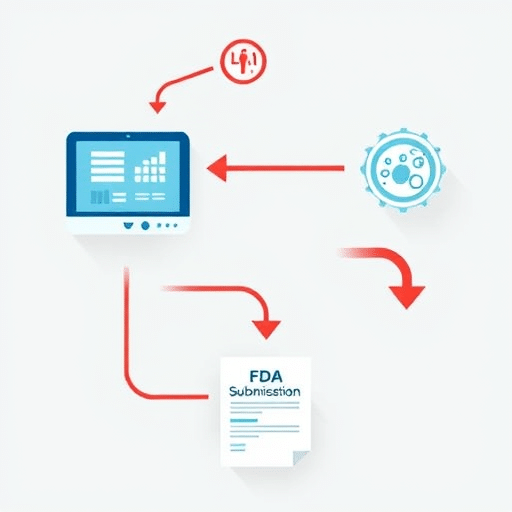
The promise of consumer wearables in clinical remote monitoring is no longer hypothetical. Yet the gap between a consumer-grade step count and a clinically actionable respiratory rate remains wide — and widening. If your program plans to audit consumer wearable data before clinical use, you need more than a spec sheet. This article offers a pragmatic, step-by-step validation checklist designed for clinical teams, informaticists, and remote monitoring program managers who need to separate signal from noise in 2026’s crowded device landscape.
Why Standard Device Specs No Longer Suffice for Clinical Data
Consumer wearable manufacturers have become exceptionally good at marketing sensor accuracy. But accuracy in a controlled lab setting does not translate automatically to clinical utility in a diverse patient population. The 2026 wearable market is defined by advanced optical sensors, AI-enabled algorithms, and continuous firmware updates — all of which create new variables for remote monitoring programs. A device may measure heart rate well during resting conditions, but fail during atrial fibrillation episodes or in patients with darker skin tones. A step counter may be accurate for walking, but useless for gait analysis in post-stroke rehabilitation. The audit process must therefore begin with a clear clinical question and end with a documented, reproducible validation protocol.
Step 1: Define the Clinical Data Element and Intended Use
Before evaluating any sensor, you must specify exactly what clinical decision will be influenced by the wearable data. Is the goal to detect early signs of heart failure decompensation via weight and activity trends? Or to monitor post-operative mobility to determine readiness for discharge? The intended use defines the required accuracy, granularity, and data collection frequency. For example, a clinical protocol that tracks nocturnal respiratory rate for COPD exacerbation requires a different set of validation checks than one measuring daily step counts for a cardiac rehab program. Document the clinical workflow, the timing of data reviews, and the threshold values that will trigger alerts. This becomes the foundation for every subsequent audit step.
Step 2: Map Sensor-to-Measurement Traceability
Consumer wearables are black boxes in many ways. The user sees a number on a screen, but the path from raw sensor signal to that number is often obscured by proprietary algorithms. To audit wearable data for clinical use, you need to reconstruct that path. Ask the manufacturer for a technical description of the sensor type, sampling rate, signal processing pipeline, and the algorithm version that generates the reported metric. Request documentation on how the algorithm was trained and validated, including the demographic composition of the training dataset. This level of traceability is essential for understanding why a device might produce biased readings in certain populations. If the manufacturer cannot provide this documentation, consider the device high-risk for clinical use.
Step 3: Validate Against a Reference Standard — Not Just the Manufacturer’s Claim
Independent validation is non-negotiable. For each physiological metric your program intends to use, design a small validation study that compares wearable output against an appropriate reference standard. This may be a clinical-grade device, a laboratory measure, or a structured clinical assessment. For instance, if you plan to use a wearable’s heart rate variability (HRV) measurements, compare the device against a 12-lead ECG-derived HRV in a sample of patients that reflects your target population. Include both healthy controls and patients with the relevant condition. Perform the comparison during activities of daily living, not just at rest. The validation study should have a prespecified acceptance criterion, such as a mean absolute error within a clinically acceptable range. Document the results in a formal report that is reviewed by the clinical governance team.
Also note that 2026 has seen a significant shift toward “living” validation — recognizing that device algorithms change frequently. A validation performed in January may not be valid in June after a firmware update. Build a repeatable validation protocol that can be rerun quickly whenever the algorithm or hardware changes.
Step 4: Assess Data Completeness and Missing-Data Patterns
Consumer wearables are notorious for gaps in data. Users forget to charge them, remove them for showers, or simply stop wearing them after a few weeks. For remote monitoring programs, incomplete data can be more dangerous than no data at all. If a patient fails to wear the device for three days, the monitoring dashboard may interpret the absence of activity as a clinically significant decline. To audit wearable data before clinical use, you must quantify and understand missing-data patterns. Run a pilot study to measure daily wear time, charging behavior, and the frequency and duration of gaps. Determine whether the device’s data-storage capacity buffers data during non-transmission periods, and whether missing data are clearly marked rather than silently ignored. Develop a protocol for how your clinical team will handle missing data, including backup methods or escalation triggers for suspicious gaps.
Step 5: Evaluate Measurement Latency and Transmission Reliability
Consumer wearables often rely on smartphone apps and cloud services to transmit data to the clinician. This introduces multiple points of failure: the device-to-phone connection, the phone-to-cloud upload, and the cloud-to-EHR integration. If a patient’s blood oxygen level is measured at 2 p.m. but does not reach the clinical dashboard until 10 p.m., an acute event could be missed. During your audit, measure the end-to-end latency for data delivery under real-world conditions, including poor cellular connectivity and when the phone is in low-power mode. Also test how the system handles failed transmissions — does it retry automatically, or does it silently drop the data? Document these behaviors and set clear expectations for your monitoring team.
Interoperability is another core concern. A wearable that cannot export data in a structured, standards-based format (such as HL7 FHIR) will create a manual data-entry burden and increase the risk of errors. Ensure that the device’s data platform supports secure APIs and that the data elements are mappable to your EHR’s preferred terminology.
Step 6: Run a Small-Scale Clinical Simulation Before Deployment
Lab validation and missing-data analysis are necessary, but they do not tell you how the wearable will perform inside your existing clinical workflow. Before rolling out a device across a full patient cohort, run a small-scale simulation with a handful of patients and a subset of your clinical team. Ask nurses to review the wearable data as part of their usual monitoring tasks. Measure how much time it takes to interpret the data, how often alerts are false positives or false negatives, and whether the data actually influences clinical decisions. This simulation is also a critical opportunity to test patient onboarding materials, device support processes, and the escalation pathway. Capture qualitative feedback from both patients and clinicians. If the simulation reveals that the data are too noisy, too delayed, or too burdensome to interpret, the device should not proceed to full deployment.
Step 7: Build an Ongoing Audit Loop for Algorithm Updates
Consumer wearables are not static medical devices. They update regularly, often without explicit user consent, and these updates can alter the way raw sensor data are converted into clinical metrics. A device that passed your initial validation may suddenly produce different readings after an overnight firmware update. Establish a formal process for monitoring device and app version changes across your enrolled patients. Subscribe to the manufacturer’s developer release notes, and require that any algorithm-affecting update trigger a re-validation of at least the affected metrics. Maintain a log of device firmware versions per patient and per time period. This level of oversight is critical for program integrity and for demonstrating that your monitoring program is clinically defensible from an audit and legal perspective.
The Practical Checklist for Your Remote Monitoring Program
To make the audit process actionable, consolidate each step into a concise checklist that can be used by your clinical informatics team:
- Clinical intent: Document the exact clinical decision the data will inform and the required accuracy threshold.
- Sensor traceability: Obtain a full technical description of the sensor, sampling rate, algorithm version, and training datasets.
- Reference validation: Conduct independent validation against a clinical-grade reference standard in your target population.
- Missing data analysis: Quantify wear time, charging gaps, and historical missing-data patterns in a pilot cohort.
- Latency testing: Measure end-to-end data transmission time and behavior during network failures.
- Interoperability check: Confirm the data can be exported in a structured format and mapped to your EHR.
- Clinical simulation: Run a small-scale pilot with real clinicians and patients to evaluate workflow integration.
- Version control: Monitor firmware and app updates, and define triggers for re-validation.
This checklist is not a one-time activity. It is a continuous audit and validation cycle that should be integrated into the operational rhythm of your remote monitoring program. The goal is not to eliminate all risk — that is impossible with any medical data — but to make the risks visible, quantifiable, and manageable in a clinical context.
Conclusion
Auditing consumer wearable data before clinical use is a complex but essential responsibility for any remote monitoring program. By systematically tracing sensor signals, validating against reference standards, understanding missing-data patterns, and creating a feedback loop for algorithm updates, clinical teams can harness the ubiquity of consumer wearables without compromising patient safety or data integrity. In 2026, the programs that thrive will not be those that adopt the flashiest devices, but those that apply the most rigorous and transparent validation frameworks.