Emergency departments are naturally event-driven. A patient arrives with chest pain, a monitor alarms, a lab result crosses a critical threshold, and a care team assembles. The technical systems supporting those clinicians, however, have historically been anything but event-driven. With FHIR R5 subscription channels for instant ER alerts, healthcare developers can replace the rigid polling loop with webhook-powered real-time data sync. The result is a faster, safer, and more scalable integration architecture for emergency response.
Why Real-Time Data Sync Needs Webhooks
In many ED environments today, an integration engine polls a FHIR server for new and updated resources at regular intervals. It asks for a list of Observation resources, compares them with the previous batch, and then decides whether any changes warrant an alert. This pattern is reliable for some workflows, but it is not real-time. A patient may wait for the next polling cycle, duplicate observations can trigger repeated notifications, and the server absorbs high query load just to check for changes that may not exist. Webhooks flip that model. Instead of asking the server, “Did anything change?” the server tells the subscriber, “This changed, and here is the relevant data.”
Anatomy of an R5 Subscription: Topic, Channel, and Payload
An R5 subscription is not a single global webhook. It is composed of a SubscriptionTopic resource that describes the clinical event, a Subscription resource that defines the delivery channel, and a payload specification that controls what the endpoint receives. For instant ER alerts, the rest-hook channel is normally the right choice. When the FHIR server detects a matching clinical event, it performs an HTTP POST to a subscriber-provided webhook endpoint. The subscription can remain active for long stretches or be scoped to an individual patient encounter, depending on the use case.
SubscriptionTopic
The SubscriptionTopic is where the clinical meaning lives. It identifies the resource types of interest, such as Observation, Encounter, Condition, or ServiceRequest. It can also include filters to ensure the subscription fires only when something meaningful happens. In an ED lab alert scenario, the topic might select Observation resources with a code in the critical value panel and an interpretation status of critical.
Subscription and Channel Configuration
The Subscription resource links that topic to a concrete endpoint. The channel type of rest-hook tells the FHIR server to send a webhook to the URL in the endpoint field. It can carry custom headers so the receiver sees an authorization bearer token or a subscription-specific key. This is where the contract between the EHR and the emergency alerting platform becomes explicit and auditable.
Building a Webhook Alert Pipeline with the Rest-Hook Channel
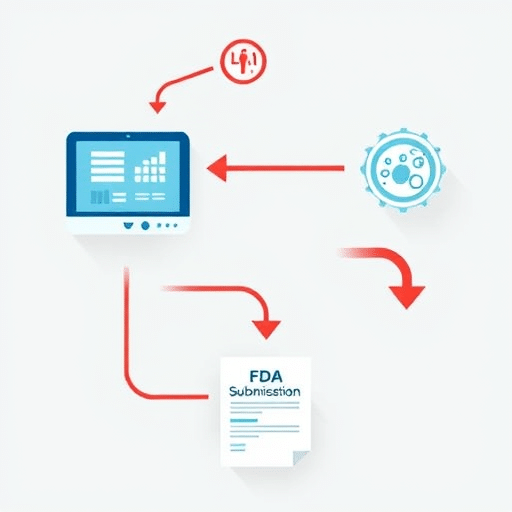
An actionable webhook-based alert pipeline for the emergency department typically includes the EHR’s FHIR server, a subscription manager, a patient context service, and the clinical notification system. When a provider orders a laboratory test, the lab system later posts the result back to the EHR. As the FHIR server stores the Observation, its subscription engine evaluates the active SubscriptionTopic. If the result is critical, the engine assembles a notification bundle and sends it to the emergency department webhook endpoint.
The endpoint does not need to be a consumer-facing service. It can be an internal middleware API that translates the FHIR bundle into a secure text message, a pager notification, or an audible alert at the nursing station. The webhook preserves the original clinical data for downstream systems and lets the care team receive a concise, context-rich message.
Filtering Clinical Noise Before the Webhook Fires
Emergency alerting systems fail when they alert too often. A webhook that fires for every updated vital sign, such as a single heart rate reading that changes from 88 to 91, will quickly lose the trust of clinicians. The purpose of FHIR R5 subscription channels for instant ER alerts is not to create more notifications, but to create better ones. Filtering should live as close to the source as possible.
- Resource type and event type: Only subscribe to Observation updates when the result status is final or amended, not preliminary.
- Code and value constraints: Use standard LOINC codes for the specific laboratory panels relevant to emergency critical values.
- Interpretation: Require an interpretation code of critical high or critical low before the webhook fires.
- Encounter context: Restrict the subscription to active emergency department encounters rather than every hospital patient.
- Location or care team: Route by ED location or attending clinician to avoid duplicate silos of alerting.
R5 subscription topics support these types of declarations, though the exact filter syntax depends on the server and the underlying implementation guides. Teams should model topics with the same rigor they apply to FHIR profiles.
Security, Retries, and Observability for Healthcare Webhooks
Pushing clinical data over HTTP creates new security concerns. The webhook endpoint must know that the FHIR server is who it claims to be, and the FHIR server must know that the endpoint is authorized to receive protected health information. Mutual TLS, signed tokens, and IP allowlisting should all be considered. For most emergency alerting workloads, a bearer token in an authorization header is a minimum baseline, but stronger validation is advisable.
Transport encryption alone is not enough. The subscription manager should log every delivery event, including the HTTP response code, the time to acknowledgment, and the notification bundle that was sent. These logs are essential for reconciliation and for investigating root causes when an alert is missed.
Webhooks are only effective if the endpoint is available. In a busy emergency department, downstream systems may be under heavy load during a mass-casualty event, exactly when alerts are most critical. R5 subscription channels need retries, timeouts, and dead-letter queues. If the endpoint returns a 503 or does not respond within an acceptable window, the subscription manager should retry with backoff.
Subscribers must also handle duplicate deliveries gracefully. Network interruptions can cause the same notification to be sent more than once. Using the notification’s unique event identifier, or a combination of patient identifier and observation timestamp, allows middleware to deduplicate. Idempotent processing is foundational to safe real-time data sync.
Making Emergency Alert Topics Portable Across Health Systems
Hospitals and health systems often have heterogeneous EHRs. A regional emergency alerting network might need to integrate with Cerner, Epic, and open-source FHIR servers at the same time. The SubscriptionTopic resource, if published as a formal implementation guide, becomes the contract that makes this easier. Care teams can define one clinical event, such as a critical troponin result, and all participating systems can implement the same topic.
Implementation guidance still matters. Terminology systems must be aligned; a critical interpretation may be represented differently across labs. Successful webhook projects spend as much time normalizing terminology as they do configuring endpoints.
Designing for Emergency-Grade Data Sync
Real-time data sync is not a one-time engineering effort. Teams should watch subscription status, counts of events that matched the topic, webhook delivery failures, retry rates, and average latency from resource update to endpoint response. In an ER setting, the difference between 200 milliseconds and 2 seconds may not matter, but the difference between 2 seconds and 2 minutes can.
An alert should include enough context to be actionable without loading an entire medical record. A minimal payload can contain the patient identifier, the observation code and value, the interpretation, the encounter identifier, and relevant time stamps. Larger payloads are useful for richer integrations, but webhook middleware should maintain a clear boundary between raw FHIR delivery and the final clinical notification.
Conclusion
FHIR R5 subscription channels for instant ER alerts are moving emergency department integration from a polling world into an event-driven one. By pairing the SubscriptionTopic’s clinical precision with webhook delivery, health systems can achieve real-time data sync without relying on high-frequency FHIR queries. The architecture is still maturing, but the direction is clear: the future of ED alerts is not a database query. It is an immediate, secure, and well-filtered push.