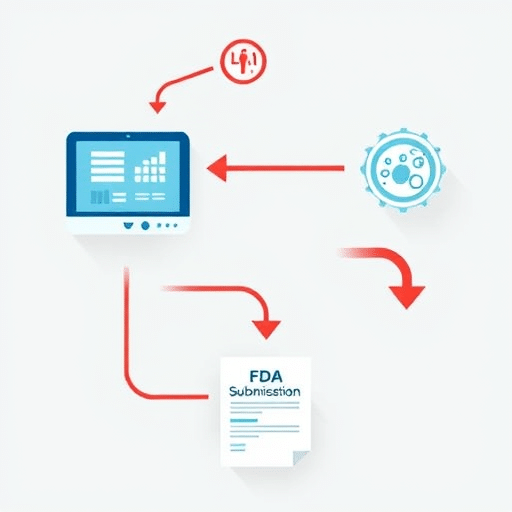
In 2026, telemedicine continues to expand its reach, but reimbursement errors remain a stubborn bottleneck. The culprit often sits in plain sight: telemedicine coding input UX — the way clinicians select and validate codes at the point of care. A smart code picker design can minimize denials by reducing human error, enforcing payer rules, and surfacing the right code before submission. The result is not just fewer rejected claims, but more time for clinicians to focus on patients instead of wrestling with dropdown menus.
Most denials are not born from clinical inaccuracy; they come from subtle mismatches in modifiers, place of service, and telehealth-specific requirements. When the coding interface fails to provide just-in-time guidance, those tiny errors compound. Rethinking how code pickers work is one of the highest-leverage improvements a telemedicine platform can make.
The Hidden Cost of Clunky Code Pickers
A standard code picker often forces clinicians to remember obscure CPT and ICD-10 snippets while simultaneously navigating a scrollable list hundreds of entries long. In a remote care setting, where patients wait on the other side of the screen, this cognitive load leads to shortcuts. Clinicians may pick the first plausible code, ignore modifier prompts, or rely on outdated defaults.
According to revenue cycle analysts, up to 15% of telemedicine claims are denied on first submission, and a large portion of those denials trace back to coding selection errors. Each denied claim costs an average of $25 in manual rework, not counting the delay in payment. Over a year, the financial drag is real. A smarter input experience is not a luxury; it is a direct lever on both revenue and clinician burnout.
What Makes a Code Picker “Smart”
A smart code picker is not merely a search box with autocomplete. It is an intelligent layer that understands the telehealth context, the patient’s record, and the payer’s latest policies. Key capabilities include:
- Contextual awareness: The picker knows the current visit is telemedicine, so it filters out in-person-only codes and highlights telehealth-eligible alternatives.
- Natural language search: Instead of memorizing codes, a provider can type a phrase like “follow-up for anxiety via video” and receive a curated set of suggestions.
- Payer-specific logic: The tool can silently check local coverage determinations and prepopulate modifiers such as GT, 95, or 93 based on the originating site and medium.
- Fuzzy matching: Misspellings or abbreviations resolve to valid codes, reducing the chance of selecting a lookalike with a different reimbursement rate.
These features work together as a safety net. When the picker offers only five relevant choices instead of five thousand, the probability of a wrong pick drops dramatically.
Context-Aware Coding: Letting the Visit Data Do the Thinking
One of the most powerful shifts in telemedicine coding input UX is moving from a purely manual entry model to a context-driven recommendation engine. Instead of asking the clinician to start typing from scratch, the smart picker analyzes the encounter data already present in the EHR or telemedicine platform — diagnosis text from the clinical note, the reason for visit, the duration of the session, and the synchronous versus asynchronous nature of the care.
For example, if a note contains “new patient, video visit for acute headache, 25 minutes of medical decision making,” the picker can suggest an appropriate new-patient E/M code along with the correct modifier. It also flags whether the session met the required threshold for time-based coding. In asynchronous telemedicine, the picker can suggest store-and-forward codes when the platform supports them.
This approach is not about taking control away from the clinician. It is about making the process a collaborative one. The clinician sees the suggestions, reviews the logic in plain language, and can override if needed — but the default path is already aligned with payer expectations.
Real-Time Validation and Modifier Handling
One of the most common causes of telehealth denials is incorrect modifier usage. For instance, adding a 95 modifier when the service was not real-time, or omitting GT when the payer still requires it. A smart code picker can validate these details in real time as the code is selected, not at the batch submission stage when errors are much harder to fix.
Real-time validation should cover three domains:
Code-payer compatibility
Payer policies change frequently. A code that was reimbursable last quarter might now require prior authorization or have special requirements for telemedicine delivery. The picker checks the destination payer’s current policy file and warns the clinician before they commit.
Modifier logic
Users are prompted with the correct modifier based on the service type, medium (video vs. phone), and location of the originating site. If the chosen modifier contradicts the encounter data, the picker displays a clear, non-technical explanation.
Code-to-diagnosis linkage
Medically necessary diagnoses must match the procedure code. The picker can compare the selected ICD-10 with the CPT description and flag suspicious combinations, such as an evaluation and management code matched to a purely preventive diagnosis.
These validations happen in under a second, so they do not slow down the workflow. Instead, they feel like a gentle nudge in the right direction.
Design Principles for Reducing Cognitive Load
Beyond the underlying intelligence, the visual and interaction design of the code picker is just as important. The best rules engine in the world is useless if the interface overwhelms providers. The following principles have emerged from usability testing in telemedicine platforms:
- Limit choices to a curated shortlist. Show 3–5 top suggestions rather than a long list of codes. Users can always expand the list, but the default view should reduce scanning effort.
- Use plain language descriptions alongside codes. Displaying “CPT 99214 – Office or other outpatient visit, level 4” is helpful, but adding “Established patient, moderate complexity, 30-39 min” makes it immediately understandable.
- Provide inline explanations for warnings. A pop-up that says “Modifier 95 requires synchronous communication” is better than a cryptic validation error code.
- Remember patterns within the session. If a clinician frequently uses a certain combination of code and modifier for a specific diagnosis, the picker can learn that and place those at the top of the next suggestion list.
- Offer keyboard shortcuts for power users. While the picker is smart, efficient providers still want to type a few characters and hit enter. The interface should not force mouse-only interactions.
These principles are not just about aesthetics. They directly affect claim acceptance rates. A study of telemedicine platforms showed that redesigning the code picker with these guidelines reduced coding errors by 31% within two months.
Integrating the Picker with Real-Time Claim Feedback
The smartest code picker design does not exist in a vacuum. To truly minimize denials, it needs to learn from the revenue cycle. When a claim is denied, the platform should feed the denial reason back into the picker’s logic. For example, if a specific payer consistently rejects modifier 95 for telephone visits, the picker will stop suggesting that combination for that payer, instead offering modifier 93 or a different code altogether.
This creates a closed loop that improves over time. The coding input UX becomes a self-optimizing system, not a static dropdown. Clinicians also benefit from seeing a brief “why this was denied” message when they attempt to use a known problematic combination. Such feedback closes the gap between front-end ease and back-end reimbursement.
Heading Toward Cleaner Claims in 2026
Telemedicine reimbursement will only become more complex as hybrid care models and remote patient monitoring broaden the scope of services. The days of blaming denial rates on payer ambiguity alone are over. A substantial share of preventable denials starts with a suboptimal smart code picker design and the telemedicine coding input UX that surrounds it. By embedding context-aware suggestions, real-time validation, and continuous learning into the coding interface, healthcare organizations can cut their denial rates, speed up revenue cycles, and free clinicians from the dreaded “find the code” hunt. The next win for your bottom line might not be a new billing rule — it is the quiet redesign of a digital form.