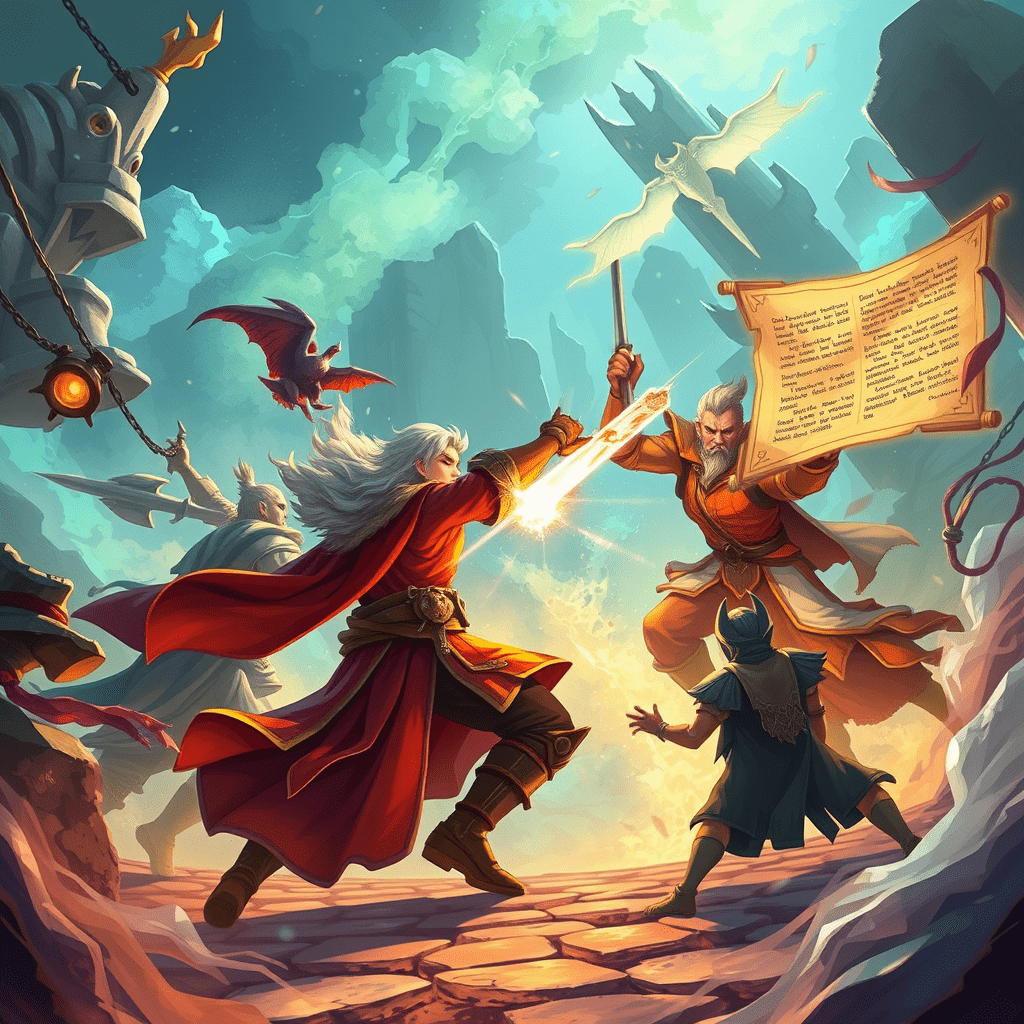
AI-Generated Storylines in Turn-Based RPGs: Redefining Player Agency
In the ever‑evolving world of turn‑based role‑playing games, AI-generated storylines are emerging as a groundbreaking tool to create dynamic narratives that respond to player decisions in real time. By blending procedural generation with classic RPG tropes, designers can craft branching plots that feel fresh each playthrough while preserving meaningful agency for the player. This article explores the mechanics behind procedural narrative engines, the delicate dance between algorithmic twists and player choice, and how these innovations are reshaping replayability in strategy games.
The Rise of Procedural Narrative Engines
Procedural generation has long been associated with level design, loot tables, and random encounters. However, the past decade has seen an increasing focus on procedural storytelling. These engines use rule‑based systems, machine learning, or hybrid models to generate plot points, character arcs, and dialogue on the fly. The goal is twofold:
- Scalability: Create expansive worlds without hand‑crafting every detail.
- Adaptivity: Respond to the player’s choices, making each session feel uniquely tailored.
Game studios such as Obsidian Entertainment and Stoic Studio have pioneered frameworks that integrate narrative logic with event‑driven systems, enabling designers to define high‑level narrative goals while letting the AI fill in the narrative gaps.
Balancing Algorithmic Twists and Player Choice
At the heart of AI‑generated storylines lies a delicate balance. Too much algorithmic control can make the narrative feel impersonal; too little can erode the illusion of choice. The key is to establish a narrative scaffolding—a set of structural anchors that the AI uses to weave in twists without overriding the player’s core decisions.
1. Decision Anchors
Anchors are pre‑determined milestones such as “Alliance with the Crimson Guild” or “Defeat the Fallen King.” These points are placed by designers to guarantee that certain story beats occur. The AI then generates the surrounding context—side quests, character interactions, and subplots—based on the player’s path to the anchor.
2. Constraint‑Based Generation
Constraints limit the AI’s creative space, ensuring coherence. For instance, if a player chooses to side with the rebels, the engine restricts AI‑generated events that would require the protagonist to be loyal to the monarchy. Constraints maintain logical consistency while still offering variety.
3. Surprise Windows
AI can inject surprise events at predetermined intervals—say, a sudden betrayal or a mysterious artifact. These surprise windows are designed to feel organic by drawing on the player’s past actions, dialogue choices, and inventory state.
4. Dynamic Character Development
NPC personalities evolve in response to the player’s interactions. A merchant who repeatedly trades with the protagonist becomes a trusted ally, while a previously neutral guard may turn hostile if the player engages in violent acts. This dynamic response deepens the sense that choices matter.
Design Principles Behind Player Agency
Ensuring that AI‑generated narratives feel player‑driven requires intentional design choices. Here are some foundational principles:
- Transparency: Players should understand the causal links between their actions and narrative outcomes. Hints or in‑game lore can illuminate how decisions influence the AI’s story generation.
- Feedback Loops: Immediate narrative feedback—such as a companion’s comment after a choice—reinforces agency.
- Branching Depth: The narrative should allow multiple distinct endings or major plot shifts, not just minor cosmetic changes.
- Optional Paths: Offer optional side quests that can drastically alter the main plot, encouraging exploration.
- Replay Incentives: Different narrative threads should unlock new content or abilities, giving players a tangible reason to replay.
Case Studies: Games Doing It Right
Several titles illustrate the potential of AI‑generated storylines in turn‑based RPGs.
1. Wasteland 3 (in collaboration with Obsidian Entertainment)
While not fully AI‑driven, Wasteland 3 uses a robust branching narrative engine that incorporates player choices into major plot arcs. The game’s modular quest design allows the AI to recombine quests based on the player’s faction alignment and prior interactions.
2. Divinity: Original Sin 2
Its narrative engine tracks every player choice, dialogue, and action. The AI then generates consequences—such as the appearance of a mysterious ally or the collapse of a political structure—making each playthrough distinct.
3. Vanguard: Chronicles of the Last Kingdom (Upcoming)
Set to release in 2026, Vanguard promises a fully procedural narrative system that uses reinforcement learning to generate plot twists. Early demos show the AI adapting to the player’s strategic style, offering unique diplomatic or combat options each run.
Challenges & Ethical Considerations
Procedural narrative generation is not without pitfalls.
1. Narrative Coherence
AI can produce disjointed or contradictory events if constraints are insufficient. Designers must rigorously test and iterate to maintain a coherent story world.
2. Content Bias
Machine learning models trained on biased datasets may inadvertently reinforce stereotypes or produce insensitive content. Continuous monitoring and human curation are essential.
3. Player Trust
If a player feels that the AI is manipulating them or that choices are merely cosmetic, the sense of agency diminishes. Transparency and balanced feedback are crucial to preserve trust.
4. Resource Allocation
Procedural systems can demand significant computational resources, potentially impacting performance on lower‑end hardware.
Future Directions
As AI technology matures, we can anticipate several exciting developments:
- Emotion‑Aware Narratives: Integrating player biometrics or sentiment analysis to adjust narrative tone in real time.
- Collaborative Storytelling: Players and AI co‑author narratives, with the engine offering prompts that the player can accept or modify.
- Cross‑Genre Synergy: Combining turn‑based mechanics with real‑time narrative decisions to blur the line between strategy and interactive drama.
- Open‑Source Narrative Frameworks: Democratizing procedural storytelling by providing modular engines that indie studios can adapt.
Conclusion
AI‑generated storylines are redefining what it means to have agency in turn‑based RPGs. By blending algorithmic plot twists with thoughtful player choices, designers can create worlds that feel alive, unpredictable, and deeply personal. As the technology advances, we can look forward to increasingly immersive, replayable experiences that honor both the player’s decisions and the creative possibilities of artificial intelligence.
Ready to explore a game where your every decision shapes the narrative tapestry? Dive into the next generation of turn‑based RPGs and experience storytelling that evolves with you.