The numbers stopped making sense somewhere around 2023. A solo developer in Helsinki ships a roguelike deck-builder in four months, launches it on itch.io for five dollars, and clears six figures before the quarter ends. Meanwhile, a 60-person team two time zones over spends three years and fourteen million dollars on a soulslike, then delays it twice. By 2026, this is not an outlier story, it is the pattern. The era of the bloated pipeline is collapsing under its own weight, and microstudio teams shipping hit games with lean two-person workflows are quietly rewriting what a successful launch looks like.
What changed is not talent or budget. It changed how small teams structure their tools, where they launch, and what they consider finished. A new generation of microstudios treats game development less like film production and more like shipping a mobile app every six months. The result is a wave of itch.io-first launches that outperform productions ten times their size, often within the first weekend.
The Pipeline Problem Nobody Wants to Admit
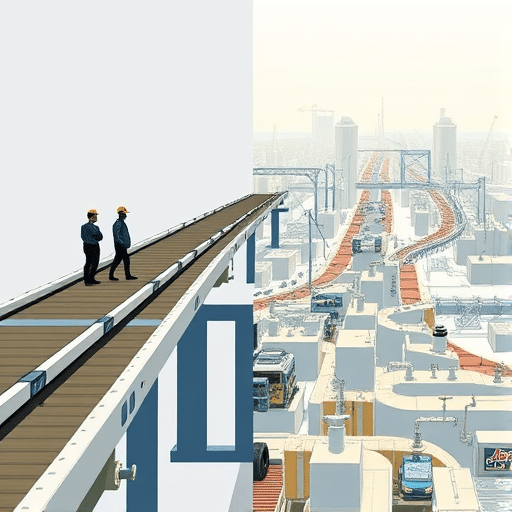
Large studios did not become slow on purpose. They became slow because every system accreted another system. A proprietary engine wraps a middleware layer that wraps a third-party plugin, and somewhere in that stack sits a tech artist whose entire job is making sure the build does not break when lighting changes. Tools grow faster than games.
The hidden cost is decision latency. In a 50-person studio, changing the player’s jump height involves a designer filing a ticket, a producer triaging it, a programmer estimating it, and a QA pass to confirm nothing else broke. In a two-person studio, one person changes the value, the other plays it for ten minutes, and the build ships within the hour. This is not romantic underdog mythology. It is a measurable throughput advantage that compounds over a project.
Microstudios have stopped pretending they are small versions of big studios. They have accepted that their advantage is speed of iteration, and they organize every workflow around protecting that advantage.
The Microtools Stack: Five Tools, Zero Bloat
The leanest studios in 2026 run on a toolchain that would fit on a single laptop desktop. Where AAA teams juggle Perforce, custom Jenkins farms, and Slack channels organized by department, microstudios lean on a tight cluster of microtools designed for one job each.
- One engine, one version. Almost universally Unity LTS or Godot 4, never bleeding edge. No engine migrations mid-project.
- One source control, branched lightly. GitHub or Plastic, with a main branch and maybe a feature branch. No long-running release branches maintained by a build team.
- One communication tool, used asynchronously. Usually a single Discord server, often with bots replacing what a producer would normally coordinate.
- One spreadsheet for scope. A living document the size of a grocery list, not a Gantt chart the size of a screenplay.
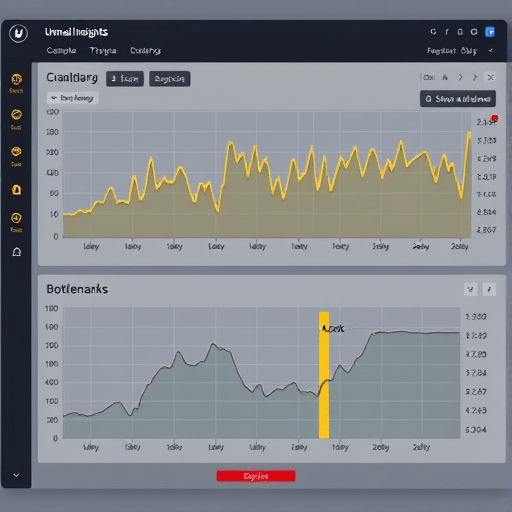
- One analytics dashboard. Often just a custom Godot script or a free tier of a service like Iskigami or simple back-end logs.
The discipline is not in the tools themselves. It is in refusing to add a sixth. Every new tool is a context switch, a login, a version to track. A two-person team cannot afford that overhead, so they delete tools aggressively. When a 50-person studio adds a new vendor, it absorbs the cost across many people. When a microstudio adds one, both founders feel it immediately.
Why itch.io-First Wins
Steam is no longer the obvious starting line for small teams, and by 2026 most microstudio founders treat it as a second release rather than a first. The reasoning is straightforward. itch.io charges no revenue share, has no approval queue, no mandatory store page assets, and lets a developer publish a half-finished demo on a Tuesday afternoon and update it twelve times before Sunday.
This matters because the first launch is no longer a marketing event. It is a playtest. Microstudio teams treat their initial itch.io page as a research instrument. They watch wishlists, read every comment, follow Discord links, and patch the game in public. By the time a Steam page goes live, the game has often been rebuilt twice and the studio has a mailing list of people who already paid.
The case studies reinforce this. One notable 2025 example, the puzzle platformer Hollow Threads by a Berlin-based duo, launched on itch.io for seven dollars, sold 14,000 copies in three weeks, and used that traction to land a front-page Steam feature six months later. The same game, launched cold on Steam, would have been buried under the weekly new releases pile.
What “Finished” Means to a Microstudio
Large studios have internal definitions of done that include localization passes, accessibility audits, certification submissions, and a marketing freeze. Microstudio teams have a simpler rule: done is when the next ten hours of work would not be felt by a new player.
This is not a compromise on quality. It is a different theory of value. A 50-person studio ships a vertical slice, then spends two years filling out the rest of the world. A two-person studio ships the entire vertical slice plus a meaningful slice of horizontal content, then commits to live-updating it for a year. Players in 2026 increasingly prefer the second model. They tolerate rough edges if the developer is visibly listening.
The microstudio advantage in 2026 is that shipping is no longer a finale. It is a starting gun. Updates ship every two weeks, often unannounced, and Discord becomes the de facto patch notes. Players treat these studios like live-service indies, except the service is owned by two people who answer every message themselves.
The Hidden Cost: Burnout and How the Smart Ones Avoid It
Two-person studios can move fast precisely because both founders are working at full intensity. That intensity is also the single biggest failure mode. The studios that outlast the others in 2026 have learned to bake rhythm into their workflow rather than treating rest as a luxury.
The pattern repeats: six weeks of shipping, two weeks of slower iteration where one founder experiments and the other handles community, then back to a push. Solo-dev burnout is well documented, but duo burnout is sneakier because both people are also each other’s accountability partner. When the accountability partner burns out, there is no safety net.
The studios beating the pipeline game are not grinding harder. They are protecting the small surface area that makes their speed possible. No office expansion, no contractor layer, no investor update cycle. Just two people, one shared document, and a habit of shipping in public.
What Big Studios Can Learn, and Probably Won’t
It is tempting to frame this as a David-versus-Goliath story, but the more accurate read is that the industry has split into two healthy production models that serve different games. A massive open-world MMO cannot be made by two people and probably should not be. A tight, mechanically focused single-player game almost certainly should be.
The interesting trend is that mid-size studios are starting to copy microstudio workflows internally. Internal pods of two or three people, given six-month scopes and itch.io-style internal playtesting, are now outproducing the larger departments in some of these companies. Whether the bigger structures can actually sustain that mode is the open question of the next few years.
For now, the headline is simple. Two-person studios are shipping hit games in 2026 because they have rejected the assumption that more people means better games. They use a tight microtools stack, launch early on itch.io, treat updates as the product, and protect their ability to move fast above all else. The 50-person pipeline is not dead, but for the first time in a long time, it is no longer the only way to win.