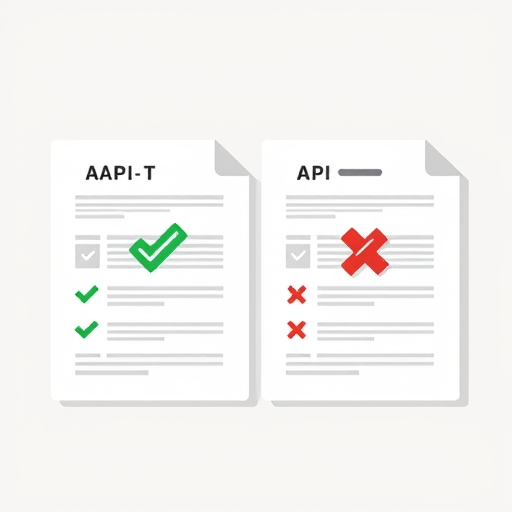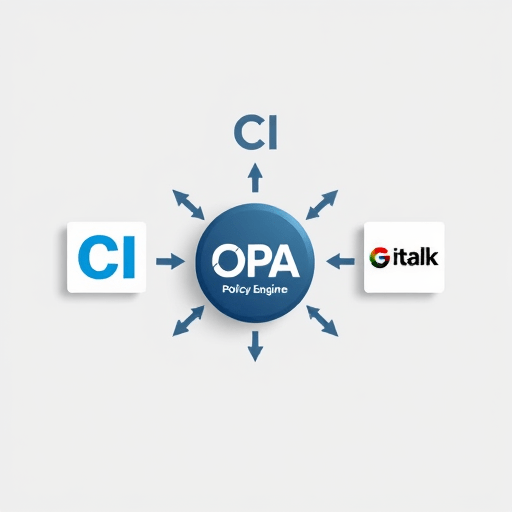
Cross-platform pipeline drift has become one of the most expensive hidden problems in modern software delivery. As organizations scale, individual teams quietly adopt different conventions inside GitHub Actions, GitLab CI, and Jenkins, and the result is a fragmented delivery surface that no one fully owns. The challenge is not choosing the best CI vendor; it is enforcing consistency across all of them without locking the business into one ecosystem. That is where an OPA policy audit framework becomes a practical, vendor-neutral safety net.
Why Pipeline Drift Happens Faster Than Anyone Expects
Drift is rarely the result of negligence. It emerges from autonomy, speed, and tool familiarity. A platform team standardizes on one runner image, while a product team needs a newer Node version and quietly swaps it in. A security team tightens secret handling in GitHub Actions, but the legacy Jenkins jobs keep their old patterns. Over months, the same organization ends up running three different definitions of “secure,” “tested,” and “deployable.”
In 2026, the pressure has intensified. Engineering organizations are larger, more distributed, and more polyglot than ever. AI-assisted coding tools generate pull requests at a pace that outstrips governance reviews. The result is that drift is no longer a slow leak; it is a structural risk.
The Three Common Drift Categories
- Structural drift: pipeline files use inconsistent names, triggers, or job structures across platforms.
- Security drift: secret handling, permissions, and runner isolation rules diverge between providers.
- Compliance drift: required stages such as SAST, license scanning, or artifact signing exist in some pipelines but not others.
Building an OPA-Based Audit Framework
Open Policy Agent provides a vendor-neutral language, Rego, that can evaluate any structured input. Because GitHub Actions YAML, GitLab CI YAML, and Jenkins Jenkinsfiles are all structured documents, they can be normalized into a common schema and then evaluated against the same policy bundle. This is the foundation of a cross-platform CI policy engine.
A practical audit framework typically follows four steps:
- Collect pipeline definitions from every repository and every provider.
- Normalize them into a unified intermediate model.
- Evaluate the model against a shared OPA policy bundle.
- Report drift in dashboards that map violations back to teams and repositories.
Step 1: Collecting Pipeline Definitions Across Vendors
Collection is the unglamorous but critical layer. For GitHub Actions, you can query the `.github/workflows` directory across the organization. For GitLab CI, the `.gitlab-ci.yml` files must be gathered from every project. For Jenkins, the Jenkinsfile plus any shared library definitions need to be exported through the Jenkins API or a configuration-as-code export. The goal is a single inventory that lists every pipeline file, its owner, and its last modified date.
Step 2: Normalizing Into a Common Schema
Once collected, each file is parsed into a vendor-neutral representation. A normalized pipeline object might include fields such as runner, trigger_events, secret_references, required_stages, and artifact_targets. This step is where most teams underestimate the effort. The translation rules must be maintained carefully because each vendor has its own quirks, and silent translation errors will produce false confidence in the audit results.
Step 3: Writing Rego Policies That Travel Across Platforms
The power of OPA is that the same Rego file can evaluate inputs from any vendor, as long as the schema is consistent. A policy that enforces “every production deploy job must reference a signed artifact” works the same way regardless of whether the underlying pipeline is GitHub Actions, GitLab CI, or Jenkins. This is the structural advantage of policy-as-code: the rules live in one place, and the enforcement is portable.
Some useful policies for an initial framework include:
- Mandatory stages such as lint, test, and security scan before any deploy job.
- Branching restrictions: production deploy jobs must run only on tagged releases or protected branches.
- Secret hygiene: no inline credentials, no unredacted environment variables passed to runners.
- Runner standardization: only approved runner images or self-hosted agents are permitted.
Step 4: Reporting Drift With Context, Not Just Counts
A dashboard that simply lists violations is not actionable. The report layer should answer three questions for each finding: which team owns the pipeline, what is the business risk if the violation remains, and what is the smallest change that resolves it. This framing turns the audit from a compliance chore into a coaching tool.
Detecting Drift in Real Time, Not Just Quarterly
Most organizations begin with scheduled audits, but drift accumulates fastest between audits. A stronger approach is to integrate the OPA evaluation directly into the merge request workflow. When a developer opens a pull request that changes a pipeline file, the normalized model can be evaluated against the policy bundle and feedback delivered as a check, similar to a linter. This shifts governance left, into the moment of change, rather than catching problems weeks later.
For Jenkins, this is more complex because Jenkinsfiles often reference shared libraries. The audit framework should also evaluate the library definitions, not only the files that consume them. Otherwise, a single shared library can quietly reintroduce drift across hundreds of jobs.
Common Anti-Patterns When Implementing OPA for CI
Teams that adopt OPA for CI/CD governance often stumble on a few predictable issues. Recognizing them early prevents wasted effort.
Treating OPA as a Blocker Instead of a Guide
If every minor violation halts a pipeline, developers will route around the system. A mature framework distinguishes between hard violations, such as exposed secrets, and soft violations, such as non-approved runner images that should be tracked but not blocking. Hard rules enforce safety; soft rules guide improvement.
Ignoring the Normalization Layer
Some teams try to write per-vendor Rego policies because they cannot normalize inputs. This leads to duplicated logic and inevitable gaps. Investing in the translation layer pays off because it makes every future policy easier to write.
Owning Policies in the Wrong Team
OPA bundles should be co-owned by security, platform engineering, and a rotating representative from product teams. Centralized ownership produces rules that ignore practical constraints; pure team ownership produces rules that ignore enterprise risk.
Measuring Success Without a Vendor Migration
The goal of an OPA-based audit framework is not to migrate teams onto a single CI vendor. That conversation is often politically and economically unrealistic. The goal is to make the organization’s pipelines behave consistently enough that the business gets predictable security, audit, and delivery outcomes regardless of which provider each team prefers.
Useful indicators of progress include the percentage of pipelines passing the full policy bundle, the mean time to remediate a drift finding, and the count of pipelines that still rely on unapproved secrets or runners. Over time, these metrics should trend in one direction: down for violations, up for coverage.
Conclusion
Cross-platform pipeline drift is not solved by choosing the right vendor; it is solved by choosing the right governance model. OPA offers a portable, transparent, and team-friendly way to enforce consistency across GitHub Actions, GitLab CI, and Jenkins without forcing consolidation. The framework requires investment in normalization and reporting, but once in place, it scales with the organization and adapts as new tools enter the mix. Engineering leaders who treat pipeline consistency as a first-class engineering concern, rather than a vendor selection debate, will be the ones who deliver software safely and quickly in the years ahead.