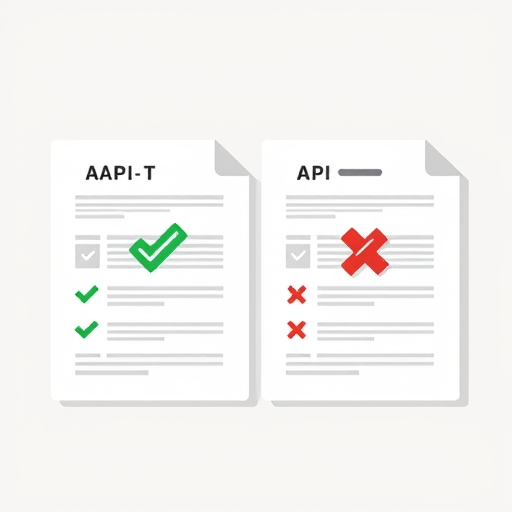
Teams shipping public REST APIs know the dread of a breaking change: a renamed field, a new required parameter, a subtly different error envelope — and suddenly a customer integration fails in production. Traditional URI versioning (think /v1/users vs. /v2/users) hides the problem behind a new path, but it does not solve it. In 2026, the most resilient API programs have moved beyond path-based versioning toward a contract-first strategy that treats the API specification as a living, testable artifact. This guide explains how to design, govern, and evolve REST APIs without breaking clients, using semantic contracts and automated backward-compatibility checks.
Why URI Versioning Alone Is No Longer Enough
URI versioning feels safe because every major change gets a fresh path. In practice, it creates three problems:
- Operational drift: Teams maintain multiple codebases, multiple docs, and multiple deprecation timelines indefinitely.
- Hidden breaking changes: A “minor” tweak inside
v2— like changing a date format or removing an optional field — can still break clients who treated it as stable. - Slow feedback: Compatibility issues surface only when a consumer reports a bug, often weeks after release.
A contract-first approach flips the workflow: the specification (OpenAPI, AsyncAPI, or a custom DSL) becomes the source of truth, and the implementation is generated, validated, or continuously checked against it.
The Core Idea: Treat the API Contract as a Product
When the contract is a first-class artifact, three things become possible that URI versioning cannot deliver:
- Semantic versioning of the schema, not just the URL.
- Automated diffing between contract revisions to flag breaking changes before they ship.
- Consumer-driven visibility into which fields and endpoints each client actually depends on.
Adopting this mindset is less about tooling and more about governance: who can change the contract, how changes are reviewed, and how breaking changes are negotiated with consumers.
Designing Semantic Contracts That Evolve Gracefully
A semantic contract is a specification enriched with versioning rules, compatibility policies, and machine-readable metadata. In practice, it means three things layered on top of OpenAPI 3.1.
1. Versioned Schema Components
Instead of versioning whole APIs, version the reusable schemas and parameters. A Money object, a UserId, or a Pagination envelope each carry their own semver. When a schema changes, the diff is localized and the impact surface is computable.
2. Compatibility Annotations
Annotate fields with their stability and lifecycle stage. A common vocabulary includes:
- stable — guaranteed backward-compatible for the lifetime of the major version.
- beta — may change with notice; consumers opt in.
- experimental — no guarantees; subject to removal.
- deprecated — still functional but scheduled for removal with a sunset date.
These annotations travel with the contract and feed directly into compatibility tooling.
3. Explicit Breaking-Change Catalog
Maintain a curated list of what counts as a breaking change in your domain — for example: removing a response field, tightening an enum, changing a status code, or altering array pagination semantics. This catalog becomes the rule set your automated checks enforce.
Automated Backward-Compatibility Checks in CI
Once the contract is versioned and annotated, the next step is making compatibility violations impossible to merge. Three layers of automation cover most cases.
Schema Diffing Tools
Tools like oasdiff, openapi-diff, and Spectral with custom rulesets compare a proposed contract revision against the last released version. The diff output is classified into:
- Breaking — blocks the pipeline.
- Risky — requires manual review and a waiver ticket.
- Safe — merged automatically.
Consumer-Driven Contract Tests
Tools such as Pact, Cloud Native Buildpacks’ schemathesis, and Microcks let downstream teams record their expectations against the contract. When a provider change violates those expectations, the provider’s CI fails before the new version is published.
Runtime Compatibility Probes
Even with perfect tooling, some changes are only visible at runtime — new validation rules, caching behavior, or rate limits. Canary routes that replay a sample of production traffic against the new contract version catch what static analysis misses. Treat the probe results as a release gate.
A Practical Workflow for Shipping Without Breaking Clients
Putting the pieces together, a modern contract-first workflow looks like this:
- Author the contract in a shared repository using OpenAPI 3.1 and the compatibility annotations above.
- Review contract changes through pull requests, with diff comments and breaking-change flags visible inline.
- Test using both schema diffing (provider side) and consumer-driven contracts (consumer side).
- Stage the new contract behind a feature flag or routing rule, replaying canary traffic.
- Release the implementation only after all three gates pass; otherwise, route the breaking change to a new contract major version and repeat the cycle.
The payoff is that “breaking change” becomes a deliberate, negotiated event rather than an accidental side effect.
Communicating Change to Clients Without Chaos
Even with perfect backward compatibility, clients need signal. A contract-first program publishes a machine-readable changelog alongside every release, derived automatically from the contract diff. Each entry carries:
- The semantic version delta.
- The affected endpoints, schemas, and stability tiers.
- The sunset date for deprecated elements.
- A pointer to migration guidance.
Consuming applications subscribe to the changelog feed and can automate their own upgrade workflows. This is where semantic contracts meet developer experience: instead of scraping blog posts, integrations stay healthy on their own.
When You Still Need URI Versioning
Path-based versioning is not obsolete. It remains useful in two scenarios:
- True architectural shifts — for example, moving from a resource-oriented design to an event-sourced one where the same name means something fundamentally different.
- Compliance boundaries — regulated environments where major version separation simplifies audit and certification.
The difference is that URI versioning is now a deliberate, rare choice rather than the default escape hatch for every change.
Conclusion
Versioning REST APIs without breaking clients is no longer about picking the right URL prefix. It is about treating the API contract as a versioned, testable product with semantic rules, automated compatibility gates, and a machine-readable changelog. Teams that adopt this discipline in 2026 ship faster because they catch breaking changes before release, negotiate the rare ones transparently, and give consumers the signals they need to upgrade on their own terms. The result is an API program that evolves continuously — without the 2 a.m. pages.