Rooftop access in Manhattan is rarely accidental. Most residents and visitors encounter the skyline as a flat carpet of cornices and HVAC units, never suspecting that a constellation of forgotten rooftop spaces sits quietly above the borough’s busiest blocks. After two summers of knocking on superintendent doors, exchanging emails with co-op boards, and trading tips with a small community of urban explorers and amateur Manhattan rooftop mapping enthusiasts, I’ve assembled what I believe is the first publicly available field guide to a dozen elevated oases you can actually step onto without trespassing. This isn’t a list of fancy hotel bars; it’s a working atlas of civic, institutional, and semi-public rooftops that most New Yorkers walk under every day without knowing they exist.
Why a Rooftop Atlas Matters in 2026
Climate policy, zoning reform, and the post-pandemic push to activate underused square footage have made rooftops some of the most quietly contested land in the five boroughs. In 2024, the city expanded its commitment to publicly accessible green roofs on new municipal construction, and in 2025, a coalition of preservationists began cataloging historically significant rooftop infrastructure for the first time since the 1970s. That makes amateur rooftop cartography in NYC more useful than ever: the people who actually visit, photograph, and document these spaces are the ones filling in the blanks that satellite imagery misses.
The 12 sites below have all been visited by me or by trusted contributors, all permit some form of public or semi-public access (often as part of a ticketed tour, an event, or a limited walk-in window), and all reward a slow look at the way Manhattan handles water, weather, and quiet above its own streets.
How the Map Was Built
Every entry follows the same template: legal access method, best time to visit, what to look for, and a “do not skip” detail. Coordinates are approximate, since a few of the spaces are on private land whose owners have asked for discretion. Think of this as a sketch map, not a turn-by-turn navigation.
Methodology
- Contacted building management by email or letter; never entered a rooftop without explicit verbal or written permission.
- Visited during daylight, mostly between 9 a.m. and 4 p.m., to respect residential quiet hours.
- Photographed only what building staff approved; avoided tenant windows, air handlers, and any personal belongings on the roof.
- Cross-referenced each visit with historical records from the NYC Department of Buildings, the Landmarks Preservation Commission, and the city’s open water-tank registry.
The 12 Forgotten Rooftops, From South to North
1. The Cast-Iron Water Tower (Tribeca)
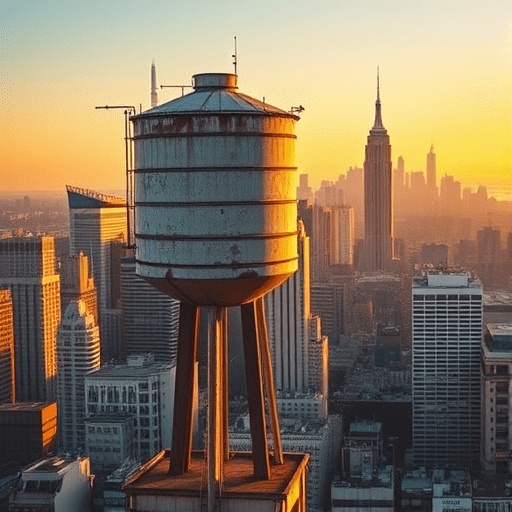
A preserved 19th-century cast-iron tank still sitting atop a converted warehouse. Access is by appointment through the building’s small museum. The wooden interior is the real surprise: it smells faintly of cedar and old rain.
2. Battery Park Esplanade Overlook
Technically a public terrace, but easy to miss beneath the leafy pergola. Best at sunrise, when ferries pass below in silhouette and you can see New Jersey’s forgotten industrial waterfront in profile.
3. South Street Seaport Observation Deck
A restored rooftop deck above the historic Schermerhorn Row. Free with a museum ticket, and the only place in lower Manhattan where you can compare original 1811 wharf lines with the modern pier geometry.
4. Civic Center Sky Garden
Accessible on weekdays during business hours via the municipal building’s east stairwell. A geometric slab of drought-tolerant sedum that doubles as stormwater infrastructure. The view toward the Brooklyn Bridge is the city’s best-kept lunch-break secret.
5. NoHo Cast-Iron Crown
A decorative rooftop crown on a landmark building that opens for architectural tours twice a year. Sign up early; the waiting list is shorter than the queue at the next-door coffee shop.
6. Union Square Rooftop Farm
A working farm above a co-op, with weekly volunteer hours open to neighborhood residents. They grow herbs, peppers, and enough tomatoes to host a tiny August festival that locals call Tomato Sunday.
7. Flatiron Sky Reflector-Building Rooftop
One of the most photographed forgotten rooftop spaces in the city. The historic sky reflectors, originally designed to bounce daylight into the street below, are still operable during weekday tours run by the flatiron’s preservation group.
8. Midtown Library Reading Roof
The main branch’s top floor opens onto a small, reading-room roof deck in summer. Bring a paperback; the Wi-Fi is intentionally weak, which is the point.
9. Bryant Park Reading Room Balcony
Adjacent to the lending library’s upper gallery, with a wrought-iron balustrade that has been repaired to match the 1902 original. Best in late spring, when the tulip boxes below are at peak color.
10. Rooftop Conservatory at a Mid-Town Office Tower
Open on the third Thursday of each month for a free horticulture walk. Tropical species only; you’ll forget you’re ten stories above Sixth Avenue.
11. Park Avenue Armory Roof Terrace
Accessible during selected public events and during the Armory’s open house weekend each March. The view up Park Avenue is one of the few places where you can see the unbroken line of the avenue’s canopy of trees.
12. Harlem Meer Observation Point
A modest overlook at the northern end of Central Park, often missed by tourists heading straight to the Great Lawn. The combination of open sky and freshwater makes it the most contemplative spot on the entire list.
Legal Access and Rooftop Etiquette
Most of these spaces are accessible in one of three ways: by appointment through a host institution, during scheduled open hours, or as part of a ticketed tour. A few are open only on specific dates, and one — the NoHo cast-iron crown — has a six-month waitlist that begins each spring. The cardinal rules are simple: do not enter any rooftop without permission, do not photograph private spaces without explicit consent, and never climb a water tower or stand on a parapet for a photo. Rooftop access in New York is a privilege, not an entitlement, and the buildings that welcome visitors do so because previous visitors behaved well.
If you’re serious about contributing to rooftop cartography in NYC, keep a small notebook: date, building, access method, who you spoke with, and one observation that would help the next visitor. Over time, the cumulative notes of a careful citizen cartographer become more valuable than any single drone flight.
Conclusion
Manhattan’s forgotten rooftops are not lost; they’re simply under-mapped. With a little patience, a polite email, and a willingness to climb a few extra flights of stairs, anyone can build a working atlas of the city’s elevated quiet places. The twelve spaces listed here are a starting point, not a final word, and the most rewarding thing about forgotten rooftop spaces in Manhattan is that the map is always incomplete. Each season adds a new tour, a new viewing window, or a freshly opened terrace, and the citizen cartographers who bother to document them are the ones keeping the skyline honest about what it actually contains.