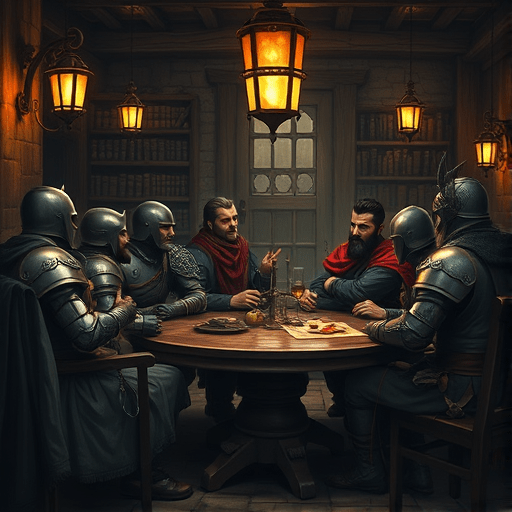
If you have ever logged into your favorite MMORPG only to find guild chat flooded with passive-aggressive vent threads, loot drama, or whispered accusations, you already understand why recovery systems for toxic raid groups have become one of the most pressing design challenges in live-service games. In 2026, the conversation has moved well beyond simple kick buttons and mute lists. Designers, community managers, and guild leaders are collaborating on structured frameworks that rebuild broken raid cultures from the inside out. The most promising of these frameworks borrows heavily from real-world organizational psychology, adapting peer-led accountability circles and written behavioral codexes into a format that guilds of any size can adopt overnight.
This case study walks through how a high-end raiding guild on a flagship fantasy MMO went from near-collapse to a thriving, retention-positive community in under one expansion cycle, and what other raid leads can learn from the process.
Why Traditional Punishment Models Stop Working at Scale
For years, the standard response to toxic behavior in raid groups was reactive moderation: a player says something inflammatory, an officer warns them, repeat offenders get removed. It is a model that works in small five-man groups and breaks down the moment a guild scales to sixty or more active raiders. The reasons are familiar to anyone who has run a large roster:
- Officers become exhausted and start making inconsistent calls.
- Repeat offenders learn the exact threshold for punishment and deliberately stay just under it.
- Good players quietly leave because they do not want to be associated with the drama, hollowing out the roster from the top.
- Toxic behavior evolves into subtler forms that are hard to moderate, like quiet sabotage, log-shaming, or coordinated social exclusion.
By the time leadership notices the roster bleeding, the damage is cultural rather than individual. Replacing the worst offenders rarely fixes the underlying dynamic, because new members are recruited into a guild that has already normalized the wrong things.
The Pivot: Treating Toxicity as a Cultural Design Problem
The guild featured in this case study, a heroic-plus focused raiding group on a major subscription-based MMO, hit that exact wall in late 2025. Attendance was dropping, recruitment was a chore, and three officers had stepped down inside a single tier. Rather than recruit a new officer team and hope things improved, the remaining leadership took a different approach: they treated the guild itself as a system that needed redesign.
The guiding insight came from a community manager with a background in organizational change management. Toxic raid groups, she argued, do not become toxic because of one or two bad actors. They become toxic because the absence of a clear behavioral framework leaves the loudest, most aggressive players to define the social contract by default. Recovery, therefore, is not about removing individuals. It is about replacing the vacuum with something better.
The Accountability Circle: A Small-Group Model for Behavioral Repair
The first new structure introduced was the accountability circle, a borrowing from restorative justice practices that several real-world communities have used to repair harm without resorting to expulsion. In the guild context, an accountability circle is a voluntary, facilitated small group of four to six players who meet in voice chat for twenty to thirty minutes once per week.
Each circle is moderated by a trained peer facilitator, not an officer with disciplinary authority, and follows a rotating format:
- A short check-in where each member describes their current raid experience in one or two honest sentences.
- A single shared topic, chosen that week by the group, ranging from loot distribution frustrations to burnout and performance anxiety.
- A round of reflections where no advice is given unless explicitly requested.
- One concrete commitment per member for the coming week.
The crucial design choice was that participation was framed as a leadership opportunity, not a remedial program. Within three weeks, sign-ups exceeded available circle slots, and a waiting list formed. Toxic behavior dropped noticeably not because anyone was punished, but because the cultural norm had visibly shifted.
Why Peer-Led Works When Officer-Led Fails
Officers are structurally incentivized to minimize problems, because problems reflect on their leadership. Peers, by contrast, are invested in the group but not in its public reputation. They can name what they are seeing without it feeling like an indictment of the guild. The accountability circle creates a private, low-stakes space where that naming can happen early, before resentment calcifies into the kind of vent-thread drama that defines a failing raid culture.
The Behavioral Codex: Writing the Rules Everyone Agrees To
The second pillar of the recovery system was a behavioral codex. This was not a typical rules document buried in a Discord channel. It was a collaboratively drafted, openly editable document that every active raider was asked to read, discuss, and co-sign at the start of the new tier.
The drafting process itself was the intervention. Rather than have officers write a top-down list of prohibitions, the guild held three town-hall style meetings where any raider could propose, defend, or amend specific clauses. The resulting codex covered four categories:
- Communication norms, including expectations for critique during pulls and tone in guild chat.
- Loot and progression norms, including a transparent priority system and an explicit ban on log-shaming.
- Attendance and life-event norms, including how to signal burnout without judgment.
- Repair norms, describing what happens when someone breaks the codex, including the option to request a facilitated conversation rather than an instant removal.
By the end of the process, 94 percent of active raiders had digitally signed the codex. That number mattered less than the conversations that produced it: the document became a shared reference point that new recruits could be onboarded against, and that long-time members could cite when a norm was being tested.
Measuring What Actually Changed
Culture is famously hard to measure, but the guild leadership tracked four leading indicators across the tier and compared them against the previous two tiers:
- Weekly raid attendance variance, which stabilized at under three percent after fluctuating by twice that amount previously.
- Voluntary officer applications, which doubled as the new structures became visible.
- Mid-tier recruitment conversion, meaning the percentage of trial raiders who converted to full members, which climbed from 41 percent to 73 percent.
- Player-reported belonging, measured through an anonymous weekly pulse survey, where positive responses rose by twenty-eight percentage points.
None of these metrics replaced the lived experience of raiders, but together they suggested that the recovery system was doing what it was designed to do: replacing a culture that pushed good players away with one that invited them to stay.
Lessons for Other Raid Leads in 2026
There is no single template that fits every guild, but the underlying design principles transfer well. Recovery systems for toxic raid groups work best when they are preventive rather than reactive, when they distribute responsibility across peers rather than concentrating it in officers, and when they treat behavioral norms as something to be co-authored rather than handed down. The accountability circle provides the social infrastructure for ongoing repair. The behavioral codex provides the written reference that keeps everyone honest.
If your guild is showing any of the familiar early warning signs, vent threads that never resolve, recruitment droughts, officer burnout, it may be time to stop recruiting around the problem and start redesigning the system that produced it.
Conclusion
The guild in this case study is not unique. Across MMORPGs in 2026, raid groups are discovering that the fastest way out of a toxic culture is to treat it as a design problem with human answers. Peer-led accountability circles give raiders a place to be honest before resentment builds. A collaboratively written behavioral codex gives everyone, from the newest trial to the longest-tenured officer, a shared map of what the guild expects and what it offers in return. Together, they form a recovery system that scales with the roster, survives leadership turnover, and most importantly, gives good players a reason to keep logging in.