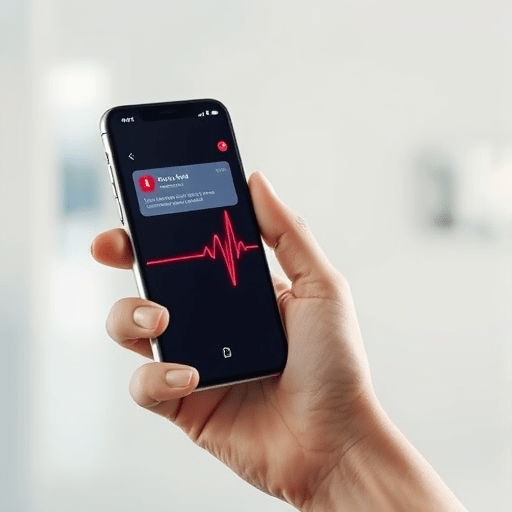
For years, medication adherence apps were built around a simple assumption: if patients forgot to take their pills, they needed a reminder. That assumption is finally being retired. The new generation of AI-powered patient apps is doing something far more valuable — predicting non-adherence days or even weeks before it happens. By analyzing subtle behavioral signals, these apps give care teams a narrow window to intervene, not after a patient has already stopped treatment, but while there is still time to change the outcome. Machine learning is turning adherence from a retrospective metric into a forward-looking, actionable insight.
The shift matters because non-adherence is rarely a single, sudden event. It develops as a quiet pattern: missed doses become more frequent, engagement with health data falls off, and communication with care teams becomes sparser. Traditional tools only reacted once that pattern was well underway. AI-powered patient apps, by contrast, are designed to notice the smallest deviations early — the kind that are invisible in a monthly refill report but unmistakable to a well-trained algorithm.
Why Traditional Reminders Hit a Wall — and What Machine Learning Does Differently
Reminder-based systems treat every patient as though they skip medication for the same reason: forgetfulness. In reality, non-adherence is driven by side effects, cost anxiety, low health literacy, lack of social support, even the well-documented “white coat fatigue” of chronic disease management. A push notification cannot fix chest discomfort or the belief that a drug is no longer working.
Machine learning takes a much wider view. Instead of asking “did the patient take today’s dose?” it asks “what does this patient’s overall behavior look like compared with their own baseline — and compared with thousands of similar patients?” When an AI model identifies that a patient is deviating from their normal confidence — missing more doses, logging fewer symptoms, skipping mood checks — it can compute a risk score for non-adherence with surprising accuracy. The care team is then alerted to investigate the actual cause, not merely to repeat a reminder.
The Signals Machines Can See That Humans Often Can’t
AI-powered patient apps draw on a range of data sources that were once considered too noisy or too personal to be useful. The key is the way machine learning models process them, looking for correlations across multiple weak signals rather than relying on any single strong one.
- Engagement decay: A patient who used to open the app five times a day but now opens it twice a week — even if they are still taking medication — is often an early sign of waning motivation.
- Session behavior: How long a patient lingers on side-effect information, or precisely when they pause while entering a mood score, can subtly indicate anxiety or confusion.
- Telehealth speech patterns: In apps with virtual visits, natural language processing can flag tone and hesitation patterns that correlate with patients who intend to stop treatment.
- Wearable and environmental context: Changes in sleep quality, physical activity, or even local weather and transit disruptions that complicate pharmacy visits can be woven into the model’s risk calculation.
- Medication supply chain data: When integrated with pharmacy data, the app can detect refill gaps earlier than any manual check.
These signals are not interpreted in isolation. A single skipped dose means little; a trend combined with declining sleep and a longer time-to-open for patient messages is far more predictive. That is the real advantage of machine learning — it recognizes the full silhouette of non-adherence, not just the outline of a single mistake.
From Alert Fatigue to Actionable Risk Scores
The clearest change in 2026 is the way predictions are delivered. Several years ago, the fear was that AI would generate endless alerts, overwhelming nurses who already have too much on their plates. In practice, the best systems work in reverse: they aggregate dozens of behavioral signals into a single, contextualized risk score for each patient, updated only when it changes meaningfully.
Care teams can then triage patients on a spectrum. A patient with a mild risk score might receive an automated check-in message. A patient with a moderate risk score may be routed to a pharmacist for a telephone call. A patient with a high risk score — for instance, one whose app behavior resembles that of previous patients who stopped treatment within ten days — gets a proactive outreach from a case manager with the full context of what may be going wrong. This layered approach ensures that the intervention itself is calibrated to the patient’s actual level of need.
Designing Apps Patients Actually Keep Using
Prediction is only possible if patients keep opening the app. This is why the most successful AI-powered patient apps in 2026 are designed as companions, not surveillance tools. They avoid judgmental language. They celebrate small wins. They help patients see the connection between daily actions and their own long-term goals, whether that means being present for family events or simply feeling well enough to walk the dog.
Explainability is also on the rise. Instead of showing a mysterious “risk score” to the patient, the app explains its reasoning in plain language: “It looks like you’ve been feeling more tired than usual and have missed a few doses. Could we help you talk to your doctor about adjusting your schedule?” This transparency builds trust, which is itself a protective factor against non-adherence.
Privacy, Consent, and the Ethics of Predictive Engagement
Any discussion of machine learning in health care inevitably raises the question of privacy — and rightly so. The best implementations treat patient data with a high degree of caution. Federated learning, which lets AI models train on device-specific data without ever centralizing it, is becoming the standard in more mature apps. On-device inference means that much of the behavioral analysis never even leaves the patient’s phone.
Consent is also becoming more granular. Patients can now choose exactly which signals the app may analyze: activity data, app usage, voice patterns, or all of the above. The ethical principle that guides the best teams is simple: the AI should never feel like paternalistic surveillance. Its job is to empower patients and their care teams to make better decisions together.
What the Clinical Evidence Shows So Far
Early clinical validation is encouraging. In several recent pilot programs, care teams using machine-learning risk stratification saw a measurable reduction in missed doses and, in some chronic disease cohorts, a lower rate of hospital readmission linked to treatment interruption. The most striking results come from programs where the AI is used not as a replacement for human outreach but as a prioritization tool that allows nurses and pharmacists to focus their time on the patients who need it most.
The evidence is far from complete, and the field still suffers from a lack of large, randomized trials. But the direction is consistent: when predicting non-adherence is done early and paired with a supportive human response, patients are significantly more likely to remain engaged with their treatment plan.
Looking Ahead: The Next Step for Adherence Prediction
As large language models and multimodal AI continue to mature, the next generation of apps will go beyond risk scoring. They will generate personalized, empathetic conversations that address the root cause of a patient’s hesitation — explaining a side effect in a different way, offering a cost-saving alternative that fits the patient’s situation, or simply acknowledging the emotional weight of long-term treatment. Combined with smarter wearables and deeper integration with electronic health records, the goal is a health system where no patient silently falls off their treatment plan.
The human element remains irreplaceable. AI-powered patient apps cannot be the ones who call a worried patient, hold space for their doubts, or adjust a care plan based on their life circumstances. But they are becoming remarkably good at knowing when those human interactions are needed, and that knowledge is changing the course of care.
Predicting non-adherence is no longer about looking at the past and counting missed pills. It is about using every available signal, responsibly and transparently, to ensure that no patient is left behind.