Building a seasonal slow travel routine around monsoon climates isn’t about escaping rain or suffocating in humidity — it’s about treating the monsoon as a predictable, moving window. The old advice of “follow summer” is giving way to a smarter approach: use the planet’s shifting rain belts to anchor three-month stays in places where work feels possible and tourism feels uncrowded. For remote workers, digital nomads, and long-term travelers, this means reading the sky like a schedule, not a surprise.
Why Monsoon Patterns Are the New Travel Calendar
Monsoons are no longer a vague seasonal afterthought. Climate data shows that tropical rain systems are drifting, intensifying, and occasionally skipping their usual cues. A routine built on outdated charts will fail. Instead, the most durable slow travel practice is to monitor rain-free windows within monsoon zones — the hours and microseasons when precipitation pauses, allowing for focused work and outdoor exploration.
The beauty of a monsoon climate is its rhythm. Unlike unpredictable thunderstorms, monsoons usually arrive in a defined arc: a build-up, a peak, and a retreat. That arc maps perfectly onto a three-month stay. You arrive during the early rains when the landscape bursts green, settle into a workspace as daily downpours become routine, and depart right as the dry season begins to lure crowds. This is not just a strategy — it’s a lifestyle that turns weather from an inconvenience into a structural pillar.
Designing a Three-Month Stay Around the Monsoon Curve
Three months is long enough to settle, but short enough to avoid monsoon fatigue. The trick is dividing your stay into three distinct phases, each with its own focus and work rhythm.
Phase One: The Arrival (First Two Weeks)
Your first weeks are for orientation. Pick a base on the northern edge of the monsoon zone, where rains are still building rather than hammering. This gives you time to find a workspace with decent lighting, test internet reliability during storms, and map out the coffee shops and co-working spaces that stay open in wet weather. Resist the urge to plan every day. Instead, build a mental log of “rainsafe” routes — covered walkways, tunnel-connected cafes, and libraries with long hours.
Phase Two: The Core (Weeks Three to Ten)
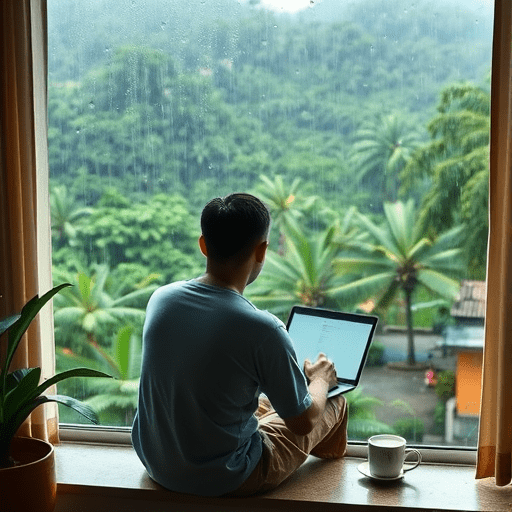
This is your productive middle. The monsoon is in full swing, but that’s an advantage. Daily downpours force structure. You’ll naturally develop a routine: deep work in the morning, a break when the sky darkens, an afternoon walk during the lull, and another work block in the evening. Because tourism is low, accommodation is cheaper and workspaces are less crowded. Use this time for focused projects, writing, or coding — not for sightseeing marathons.
Phase Three: The Retreat (Last Two Weeks)
As the monsoon wanes, the weather becomes clearer. This is when you transition into off-peak tourism. The crowds haven’t arrived yet, but the sun is out. Take short trips to waterfalls, temples, or coastal paths that were too slippery earlier. Reflect on your work and decide if you want to stay for another cycle or move to the next monsoon region. This phase is also ideal for networking with local remote workers who have a different monsoon schedule.
Workspace Planning in High-Humidity Zones
Rain-free workspaces are a myth in a monsoon climate — you need weather-tolerant workspaces. Prioritize locations with covered windows, dehumidifiers, and backup power. A generator or battery bank is non-negotiable because monsoon storms often knock out electricity. Look for accommodations with a dedicated desk away from windows, not just a kitchen table. Acoustics matter too: heavy rain on a tin roof is charming until you’re on a client call.
For digital infrastructure, carry a mobile hotspot with a local SIM. Wired internet can be stable, but it fails when trees fall on lines. Test your hotspot’s signal from inside your rental before signing a lease. Also, invest in a simple weather app that shows hourly precipitation — not just daily forecasts. That hourly view lets you schedule video calls and live meetings during rain breaks, which can be surprisingly reliable in tropical climates.
Shifting Monsoon Patterns and How to Track Them
In 2026, the old monsoon maps are being redrawn. The North American monsoon is expanding, West African monsoons are becoming more erratic, and Southeast Asia’s rain season is starting later in some years. Building a routine requires a flexible toolkit. Follow regional meteorological agencies on social media and use satellite-based rainfall trackers. The goal isn’t to predict every downpour, but to identify a 90-day window where early and late rains sandwich a reasonably wet middle — a window that moves year to year.
One practical strategy is to choose a destination with two monsoon seasons, like parts of Sri Lanka, southern India, or Vietnam. These regions experience a northeast and southwest monsoon, meaning there’s often a dry pocket for a few months in between. That pocket can stretch your three-month stay into four or five months if you plan carefully. However, keep an eye on transition months. The edges of monsoon seasons are when cyclones form, so avoid scheduling a stay during the shoulder of June or October in tropical basins.
Off-Peak Tourism: The Underrated Reward
Most travelers avoid monsoon zones during the wet season, which is exactly why slow travel thrives there. Tourist sites that are packed in winter become open, atmospheric, and peaceful. The rain adds a layer of drama to landscapes — heritage buildings look richer, forests look greener, and waterfalls run full. You’ll also get better service because staff have more time to talk. Local guides are often cheaper and happier to adjust their pace to rain delays.
Food is another highlight. Monsoon markets sell seasonal produce that disappears quickly: mangoes, lychees, and certain leafy greens. Street food stalls that close during tourist season reopen for the hungry local population, giving you a more authentic culinary experience. Just remember to bring proper rain gear — a lightweight, breathable jacket and waterproof shoes are worth their weight in gold.
A Sample Year of Monsoon Chasing
To make this concrete, here’s a possible 12-month routine using shifting monsoon patterns. Adjust it based on your own travel style and work obligations.
- November to February: Southern India or Sri Lanka’s northeast monsoon retreat. Clear skies, moderate prices, and incredible beaches before peak season.
- March to May: The dry season in Southeast Asia — but choose mountains like Chiang Mai or Da Lat for cooler temperatures and fewer tourists.
- June to August: Central America’s green season. Follow the rains to places like Nicaragua or Costa Rica’s Caribbean coast for lush landscapes and empty surf breaks.
- September to November: West Africa’s monsoon tail. Head to Ghana or Benin after the heaviest rains for vibrant festivals and lower costs.
This pattern isn’t about escaping weather — it’s about moving with it. Each three-month stay becomes a chapter in your year, and the rain becomes a constant companion that shapes your daily schedule, your work hours, and your memories.
Logistics That Make or Break the Routine
Finally, don’t overlook the boring but essential details. Pack according to the monsoon’s intensity. A small umbrella is fine for light drizzle, but for a real downpour, you need a rain shell with sealed seams and quick-dry clothing. Choose accommodations with a balcony or covered courtyard so you can step outside without getting soaked. Learn a few words in the local language about weather — locals are the best forecasters.
For your budget, remember that off-peak tourism means lower airfare, cheaper apartment rentals, and less competition for co-working desks. Use that saved money to stay an extra month or upgrade to a place with better ventilation. Also, consider travel insurance that covers weather-related cancelations. Monsoon patterns are shifting, and a three-month stay increases your odds of encountering an unusual storm.
Conclusion
A seasonal slow travel routine around monsoon climates is a modern way to turn weather unpredictability into a creative framework. By structuring three-month stays around rain intensity, choosing workspaces that adapt to humidity, and embracing off-peak tourism, you gain a deeper connection to place and a more sustainable travel rhythm. The monsoon isn’t a barrier — it’s a calendar written by the sky. Learn to read it, and you’ll never need to chase a season again.