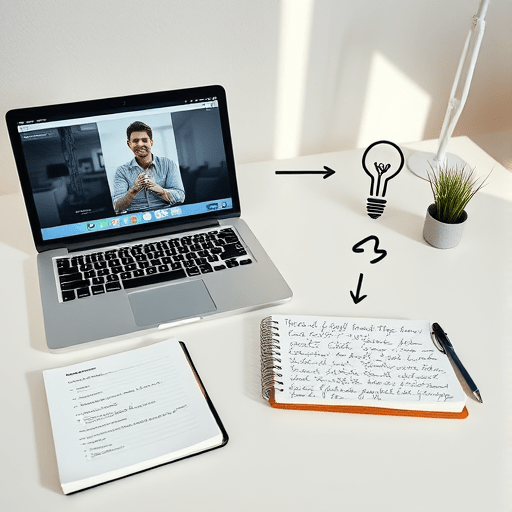
Six months ago, our engineering and product teams were bleeding time into daily standup calls – 45 minutes each day when you added late starts, tangents, and the inevitable “one more thing.” We estimated that each team member lost nearly 12 hours a week to meetings that were supposed to keep us aligned. The solution wasn’t another meeting about meetings. It was a framework for replacing daily standups with async written updates that ultimately let us cut meeting hours by 60% across the company.
This is the exact framework we built, the mistakes we made, and the results we now track every sprint.
The Real Cost of the Daily Standup Habit
Daily standups were invented to give teams a fast, synchronous check-in. But in a startup with remote workers, distributed time zones, and deep-focus tasks, the 15-minute standup consistently became a 30-minute event. Before we made any changes, we ran a two-week meeting audit. The data was sobering: the five-person core team was spending 7.5 hours per week in standup calls alone. The full company, including design, marketing, and operations, averaged 22.5 hours weekly. Even when no one had a blocker, the meeting happened. That’s sunk cost, not collaboration.
We wanted to keep the transparency of a standup without forcing everyone to be online at the same time. The answer was asynchronous, written standups – a format that preserves accountability and removes the scheduling tax.
The Async Written Update Framework
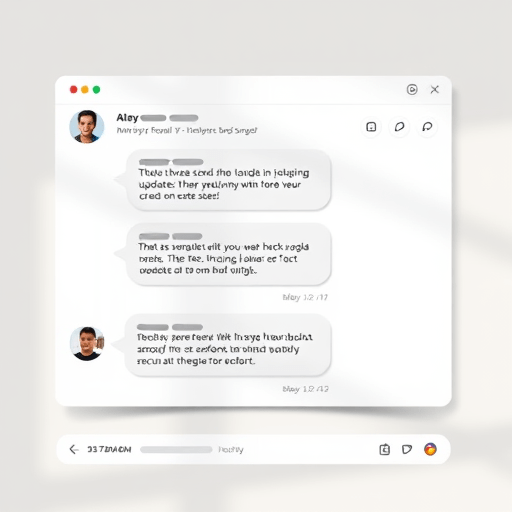
We designed a simple structure called the “3-Part Written Update.” It is short, scannable, and requires no more than five minutes to write and two minutes to read. Each update is posted in a shared channel before 10:00 AM, every working day.
Part 1: What I Completed Yesterday
This is not a list of every commit. We asked team members to list the top two or three results they delivered – things that moved a project forward, unblocked someone else, or closed a loop. This builds a living record of progress that anyone can search later.
Part 2: What I’m Working On Today
One or two items with an expected outcome. This helps the team see priorities without needing a live status meeting. It also discourages multitasking because the written format makes it obvious when someone is planning to juggle three unrelated things.
Part 3: Blockers and Requests for Help
Instead of waiting for a standup call to raise a blocker, team members tag a specific person or use a “help wanted” label in the channel. This changes the dynamic from “I’ll mention it in the meeting” to “I need input now.” The written format forces clarity because you have to describe exactly what kind of help you need.
We added one extra rule: no replies in the main thread. If someone needs to discuss an update, they move to a separate thread or a short direct message. This keeps the feed clean and readable.
Rollout Without Resistance
We did not delete the daily standup call on day one. The transition took two weeks to avoid culture shock and to let people adjust their morning routines. We started with one team – the four-person backend group – and asked them to post updates for five days while we kept the call as an optional “office hour.” By the third day, three of the four people had stopped joining the call. They said the written updates were more detailed than what they usually said verbally.
After that pilot, we rolled the framework out to the rest of the company. We kept one short weekly synchronous meeting – the “weekly showcase” – where teams could highlight wins, demo work, and talk through anything that needed a live brainstorm. That meeting was 60 minutes and became the only recurring all-hands slot. Everything else was asynchronous.
One of the most surprising outcomes was that introverts reported feeling more heard. In verbal standups, two or three people often dominated. The written format gives everyone equal floor time, and because updates are permanent, ideas don’t disappear when the call ends.
The Tooling – and What We Didn’t Use
We deliberately avoided buying a new “async standup” SaaS product. A shared Slack channel worked fine. We created a simple template using a text shortcut, so typing /standup inserted the three-part structure. Later, we moved to a private Discord server for our remote contractors, but the principle stayed the same. The tool has to be where your team already communicates. If you force people into a second app, they’ll forget to post.
We also considered using a kanban board as the update medium, but that only tracked tasks, not the nuance of blockers or context. Our written updates live in the same channel conversation flow as everyday messages, which means they are hard to ignore and easy to find.
Measuring the 60% Drop in Meeting Hours
We tracked everything for two full months before and after the change. The engineering team’s weekly meeting load went from 13.2 hours per person to 5.1 hours per person – a 61% reduction. The company-wide average dropped by 58%, which aligned with our 60% target. We reclaimed approximately 11 hours per week per person. That time went back into focused development, design work, and customer support.
Productivity did not collapse. The number of completed story points actually increased by 18% in the first month, and our lead time for resolving internal requests dropped by a third. Perhaps more importantly, the number of “broken context” moments fell. When someone asked, “What did we decide about the database migration?” the answer was found by searching the channel history rather than interrupting a colleague.
We also tracked meeting anxiety. A simple pulse survey showed that 71% of employees felt less stressed about missing an update because they could read the digest at any time.
Pitfalls We Hit and How We Fixed Them
This framework is not a magic bullet. We learned that async written updates fail if there is no discipline. Here are the three biggest problems we encountered and the fixes that made the system stick.
Inconsistent Posting Times
Some people posted at 9:00 AM, others at 5:00 PM. That made the channel useless as a daily digest. We enforced a 10:00 AM cutoff and made it a social norm: if you miss the cutoff, you owe the team a short video message that explains the delay. That playful penalty worked.
Updates That Were Too Vague or Too Long
People either wrote “working on code” or a full five-paragraph essay. We solved this with the three-part template and a character limit of 500 per section. The limit forces prioritization and prevents the channel from becoming a novel.
Losing the “Watercooler Moment”
Async standups remove the informal chit-chat that often has real value. We did not want to lose the human connection. Our fix was a dedicated #random channel and a short “virtual coffee” pairing system that matched two random people each week. This retained the social glue without adding another mandatory meeting.
Is This Framework Right for Your Team?
If your team is fully remote or works in two or more time zones, this framework is almost certainly better than a synchronous daily standup. If you work in person and your standup is truly limited to 15 minutes with no tangents, you may not need to change. But if you have ever finished a standup and realized you didn’t actually say anything, or you can’t remember what your colleagues are working on, then an async written update will give you more clarity with less overhead.
Start with a small pilot team for one week. Use a simple channel and a template. Compare the time spent on the standup call versus the time spent writing and reading updates. You will likely see a difference within three days.
Our team has not gone back. The async written update framework has become part of our company operating rhythm. We still meet synchronously for planning, reviews, and the occasional high-stakes decision. But the daily “round the table” update is gone, and we don’t miss it.