The standard streaming playbook is broken. Stream more hours, play trending games, hope the algorithm finally notices you—then burn out before you ever see a Partner application. But a small but growing group of creators is flipping that model on its head. Instead of asking “how can I stream more?”, they are asking “when should I stream, and what does my chat actually want?” This is the story of one variety streamer who used chat-analysis tools to identify peak uptime, reshaped an entire content strategy around viewer availability, and grew their channel by 500% in 90 days—going from a struggling affiliate to a fully-fledged Twitch Partner without a single viral clip.
The Death of the Grind-and-Burn Strategy
For years, the conventional wisdom for small variety streamers was brutally simple: turn on the stream, stay for eight hours, and pray for raid luck. The algorithm rewards consistency, so the logic goes. But consistency without intelligence is just burnout with better branding. This streamer—who asked to remain anonymous to protect their data edge—spent eleven months doing exactly that. They streamed six days a week, played a rotating list of mid-tier indie titles, and watched their average viewership hover stubbornly around seven people.
The turning point came when they stopped treating chat as a passive chatbox and started treating it as a dataset. They noticed that their most engaged viewers didn’t appear randomly. They appeared during specific windows, said specific things, and left when the stream shifted to a game genre they disliked. That observation led to a simple experiment: what if the stream schedule followed the audience instead of forcing the audience to follow the schedule?
The Chat-Analysis Toolkit: More Than Word Clouds
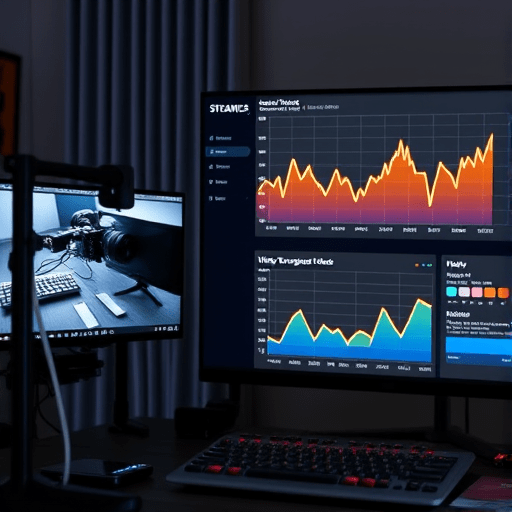
Chat-analysis tools have matured considerably in recent years. What used to be glorified word-cloud generators now offer time-stamped sentiment tracking, topic clustering, and viewer retention overlays. The variety streamer used a combination of three tools:
- Time-series chat frequency charts to see exactly when messages spiked and when they flatlined.
- Sentiment mapping to determine whether chat messages were positive, negative, or neutral during each game segment.
- Retention correlation to match chat activity against the streamer’s own gameplay choices and attention-dip moments.
The crucial insight was uptime—not in the server sense, but in the audience sense. Peak uptime is the window when a streamer’s core community is awake, available, and emotionally prepared to engage. For this creator, that window was not the standard “prime time” of 7 PM to 10 PM Eastern. Their chat data revealed a surprising cluster of highly engaged viewers between 1 AM and 4 AM Eastern, driven by shift workers and international fans who had been silently lurking for months.
The 90-Day Roadmap: From Zero to Partner
The growth plan was not a series of lucky breaks. It was a deliberate, data-informed schedule built around three distinct phases. Each phase answered a different question, and each one fed directly into the next.
Days 1–14: Define Your “Uptime” Metric
The first two weeks were spent purely on data hygiene. The streamer exported ninety days of chat logs, VOD metadata, and viewer-by-viewer join/leave timestamps from their dashboard. They then built a simple spreadsheet that scored each hour of the week by three factors: total messages, unique active chatters, and the ratio of returning usernames versus first-time visitors.
This is where the biggest myth got shattered. The streamer’s previous schedule, which ran from 6 PM to midnight, had decent viewer counts early in the evening but terrible retention after 9 PM. The 1 AM to 4 AM window, by contrast, had lower raw viewer numbers but dramatically higher engagement-per-viewer. More importantly, those late-night viewers showed up consistently, day after day, without needing raids or social media pushes.
Days 15–45: Reshuffle the Schedule
Armed with that data, the streamer made a radical move: they abandoned their primetime slot entirely. They shifted to a 1 AM to 4 AM Eastern schedule, three nights a week, and converted the other two previously-scheduled nights into “offline chat-analysis office hours” where they reviewed data and planned the next stream’s game list.
This phase also introduced a content filter. Instead of playing whatever was new or popular, the streamer used sentiment mapping to identify which game genres generated the most positive chat messages. It turned out their audience loved narrative-driven horror games and cooperative puzzle titles, but they despised competitive shooters. The variety streamer still played variety, but it was now a curated variety—a deliberate sequence of games that kept chat emotional activation high and viewer departure low.
Days 46–90: Double Down on Proven Segments
By the halfway point, the data was unmistakable. The channel’s average concurrent viewers had tripled, and their chat message volume per hour had increased fivefold. The streamer then doubled down on the highest-performing segments. They created recurring “chat-decides” moments during each stream, where viewers could vote on which game to play next, but only if they were active in chat within a specific time window.
This gamified the chat analysis itself. The tool’s data showed that vote events generated the largest sustained engagement spikes, and those spikes correlated directly with new follows. By day 90, the streamer had gained 500% more average viewers, crossed the Partner threshold, and received their application approval—all while streaming fewer total hours than they had during their months of plateau.
Why Peak Uptime Outperforms “Prime Time”
Streaming platforms are not neutral matchmakers. They are discovery engines that reward early retentention and chat activity density. A stream with 20 highly engaged viewers who stay for three hours will be promoted more aggressively than a stream with 50 passive viewers who leave after fifteen minutes. This is the core insight behind the uptime strategy: algorithmic favor is earned by concentrated engagement, not by raw numbers alone.
Variety streamers have an inherent disadvantage here because their content changes constantly, which can confuse recommendation systems. Chat-analysis tools solve this by revealing the underlying patterns that keep a specific community attached. When you shift your uptime to match the moments when your most loyal viewers are most available, you create a compounding effect: higher engagement triggers better discovery, which brings in new viewers during the same window, which increases chat density further.
How to Replicate This Without Premium Tools
Not every streamer has the budget for a full analytics suite, and that’s fine. The entire strategy can be replicated with free or low-cost replacements:
- Use Twitch’s built-in stats to pull your hourly viewership breakdown and look for gaps between your schedule and your peak returning-viewer hours.
- Export your chat logs using any free chat-downloader extension, then load them into a spreadsheet and count messages per hour manually.
- Watch your own VODs faster (1.5x or 2x speed) and note timestamps where you felt your energy dip. Compare those with the moments chat messages drop.
- Ask your community directly. A simple schedule-poll in your Discord server often reveals availability patterns that your dashboard misses because lurkers don’t enter chat until they are comfortable.
The key is to treat the data as a starting point, not a verdict. Numbers tell you where your audience already is, but your job as a variety streamer is to create the conditions that make them stay. The uptime strategy is not about staring at spreadsheets mid-stream. It’s about making smarter decisions between streams so that every live minute counts twice as hard.
The New Metric That Matters
Hours streamed used to be the currency of growth. That era is ending. The streamers who will dominate the next phase of live entertainment are the ones who understand that audience attention is finite, and that the algorithm is simply a reflection of how well you respect that limitation. Chat-analysis tools don’t just show you what viewers are saying—they show you when those viewers are paying attention, when they are about to leave, and what kind of content keeps them anchored to your community.
A 500% growth in 90 days sounds like a fluke until you look under the hood. It was the result of eleven months of grinding, followed by one honest moment of realizing that the grind was the problem. The variety streamer didn’t break the algorithm by tricking it. They broke it by giving the algorithm exactly what it was starving for: a tight, loyal, highly active community that showed up at the same time, every time, because the schedule finally matched their lives.
The lesson is simple and profound at the same time. Stop asking how to stream more. Start asking when your stream matters most.
For variety streamers still trapped in the grind mindset, the shift can feel counterintuitive. But the evidence is mounting: the creators who treat chat as a source of intelligence, rather than just a source of entertainment, are the ones quietly moving from zero to Partner while everyone else is still begging for a host.