Marathon training during menopause: 4 surprising adjustments that can make the difference between a miserable cycle of injury and your strongest marathon yet. If you’ve been told to simply “slow down,” “hydrate more,” and “listen to your body,” you already know those clichés aren’t enough. Menopause changes how you regulate heat, how your joints and tendons respond to load, and how your nervous system recovers. The 2026 training picture is less about pacing charts and more about biomechanical and physiological retuning. Here are the four adjustments that matter most — with practical tweaks for heat, recovery, and joint pain.
Adjustment 1: Rethink Your Heat Strategy — It’s Not Just Sweat
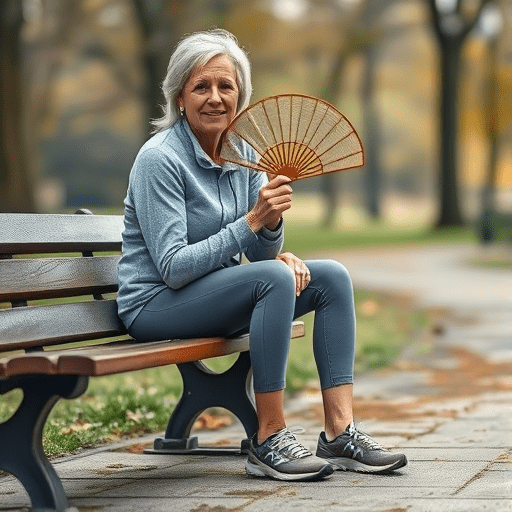
Most runners think of heat management as “drink more sports drink and wear a visor.” For women in the menopause transition, that’s dangerously incomplete. Fluctuating estrogen affects the hypothalamus, the part of the brain that acts as your core temperature thermostat. During a hot run, your body may think you’re overheating even when your actual core temperature is normal. This is why perimenopausal and postmenopausal runners often feel like they’re suffocating at a pace that felt comfortable a month earlier.
Why Menopause Amplifies Core Temperature
Lower estrogen levels lead to a narrower thermoneutral zone. In practice, that means your sweat and skin vasodilation responses kick in earlier and less efficiently. You might sweat more on your back but less on your forehead, which impairs evaporative cooling. The result: your heart rate rises disproportionately to perceived effort, and your fatigue sets in before your muscles have truly run out of energy.
The 2026 Approach: Pre-Cooling and Post-Cooling
Hydration is still essential, but the surprising adjustment is to cool before you start, not just during. Cold water immersion for your hands and feet, ice packs on your neck, or even a cold-mist fan for 10 minutes before a long run can bloat your heat storage capacity by up to 20 minutes. During the run, use a “wet glove” strategy: douse your cycling gloves or lightweight running mitts in cold water, put them on, and swap them at aid stations. It’s an older thermal trick that ultra-runners use, and it works especially well when estrogen-related thermoregulatory misfires are in play.
- Use pre-cooling only on hot days, and stop 10 minutes before your warmup to avoid muscle stiffness.
- Take a magnesium or electrolyte drink with sodium and chloride, not just potassium, to support sweat production efficiency.
- Do not rely on “perceived coolness” from menthol products; they trick the skin but do not lower core temperature.
Adjustment 2: Recovery Is Nonlinear — Sleep and Protein Are Your Primary Workouts
Runners in menopause tend to recover differently than their younger selves. Muscle repair after a long run becomes a two-stage process: the initial inflammatory response is stronger, but the resolution phase is slower, especially when sleep quality is disrupted by night sweats. The surprising adjustment is that the recovery workout — the one that counts as a workout — should be scheduled and tracked just like your interval session.
The Estrogen-Sleep-HGH Connection
Estrogen helps modulate the release of growth hormone, which is essential for muscle repair and tendon remodeling. As estrogen levels drop, your nocturnal growth hormone pulse weakens, especially if deep sleep is interrupted. That means the single most impactful recovery session is a block of uninterrupted sleep. But rather than just saying “get more sleep,” the adjustment is to make sleep as time-bound as a speed workout. Schedule a 60- to 90-minute “sleep recovery block” on weekday evenings after hard runs, not just on weekends.
Protein Timing and Upside-Down Fueling
Another overlooked recovery factor is protein distribution. Postmenopausal runners often eat a large dinner when their muscle protein synthesis is least sensitive. Instead, front-load protein earlier in the day, and include a slow-digesting casein source like cottage cheese or Greek yogurt 30 minutes before bed. The result is a steady amino acid supply during the night that supports collagen synthesis in tendons and muscle repair without relying on a late post-run shake that would impair sleep.
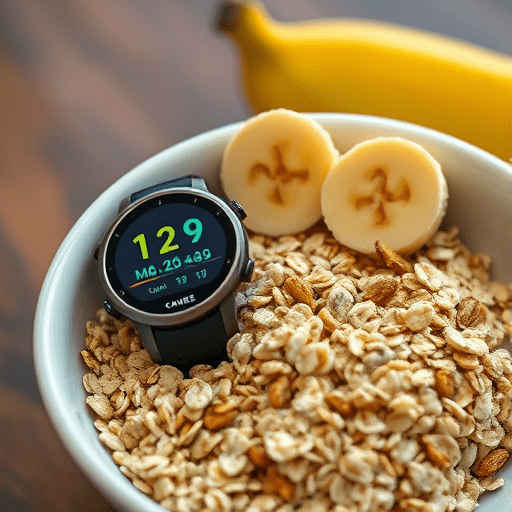
- Treat sleep as a performance session: track deep sleep with a wearable, and move a hard run earlier if you wake up above 6 a.m.
- Apply a cold compress to your wrists and neck if night sweats wake you mid-cycle; it reduces the stress hormone bump that can hamper recovery.
- Space protein into 3 to 4 equal doses of 25 to 35 grams throughout the day, rather than one giant post-long-run dinner.
Adjustment 3: Joint Pain Is a Signal to Up-Strength (and Down-Volume)
Joint pain during marathon training during menopause isn’t just “creaky knees” from years of mileage. Estrogen has a direct effect on the lymphatic drainage and nutrient exchange in your articular cartilage. When estrogen recedes, cartilage loses its ability to hydrate quickly under compressive load. This leads to a shallow “cushion” that makes single-leg movements and descents feel jangly and sore. The common response is to stop running entirely or to add more yoga. Neither is optimal.
The Role of Reduced Estrogen on Tendons and Cartilage
Tendons also change: collagen turnover becomes less responsive to the mechanical strain from running. That doesn’t mean you should avoid loading them. The surprising adjustment is to increase the load frequency but decrease the impact amplitude. Instead of cutting out hills completely, do short hill strides at a walk-back recovery. Eccentric loading — the lowering phase of exercises like weighted step-downs — has the strongest evidence for tendon remodeling in postmenopausal runners.
Eccentric Loading and Plyometric Overload
Replace two of your weekly easy runs with a “joint-stability circuit” that mimics the exact joint angles of running. Slow squats with a three-second lowering phase, single-leg Romanian deadlifts with a pause at the bottom, and heel-drop exercises on a step are far more effective at reducing knee, hip, and Achilles pain than foam rolling alone. You can also add light plyometric hops for 30 seconds after each strength set — this “reloading” teaches the tendons to tolerate the snap of each footstrike without breaking down.
- Do eccentric strength work the day after a long run, not before, to avoid fatigued form.
- Avoid anti-inflammatory medication before a run, as it can blunt the tendon adaptation you’re trying to build.
- If you experience sharp pain, it’s not “bad luck” — it’s a signal to adjust your stride width and cadence, not merely to stop.
Adjustment 4: Train by Perceived Exertion, Not Pace Zones
Your marathon training during menopause requires a different metric. Using pace-based zones or heart-rate zones derived from running a decade ago is guaranteed to underfuel and overtax your current physiology. The surprising adjustment is to shift to a dynamic measure of effort: rate of perceived exertion (RPE) combined with a changing “heat-cost” variable. This means training in a range where you can say a full sentence without gasping, but your perceived effort is allowed to drift higher on hotter days without you becoming anxious.
The Heart Rate Variability Reset
Many runners wear heart rate variability (HRV) monitors, but the default advice to “stay in green” is not nuanced enough for menopause. Instead of looking at a 30-day average, look at your HRV trend after a hard session plus one night of disruptive sleep. If your HRV drops by more than 5% after a week where you added a strength session, that’s a warning signal to reduce your treadmill speed, not your volume. The point is to make adjustments on a rolling 72-hour basis, not to panic at a single low reading.
Your Menstrual-Cycle-Aligned Long Runs (Even Post-Menopause)
If you’re still having irregular periods, you can align long-run intensity with the luteal and follicular phases. But for post-menopausal runners, the smarter predictor is your perceived thermal discomfort. Use a simple 0–3 “heat-discomfort” scale: 0 means you’re not aware of body temperature; 1 means you’re warm; 2 means you’re sweating but comfortable; 3 means you feel flushed and your hands are swollen. Keep your run in the 0 to 1 zone for the first half; only in the second half allow yourself to reach 2, but never 3. That’s the surprising adjustment — not using a target pace until the last mile.
- Run by effort on uphills and downhills; don’t force a specific pace, and do not use Strava segment comparisons during menopause.
- Use a wearable that tracks skin temperature, not just heart rate, to catch a hot flash before it becomes a run-stopper.
- Practice your finish-line kick in the heat of the day once a week, but only on an easy day, to rewire how your brain maps effort.
Conclusion
Marathon training during menopause is not a downhill slide; it is a rigorous test of elasticity — heat re-setting, recovery as a structured workout, strengthening what hurts, and trusting a renewed sense of effort. Adjusting your training to honor the hormonal shift does not mean lowering your goals; it means updating the inputs. The four adjustments above give you a practical starting line for a 2026 season that feels less like survival and more like intelligent adaptation.